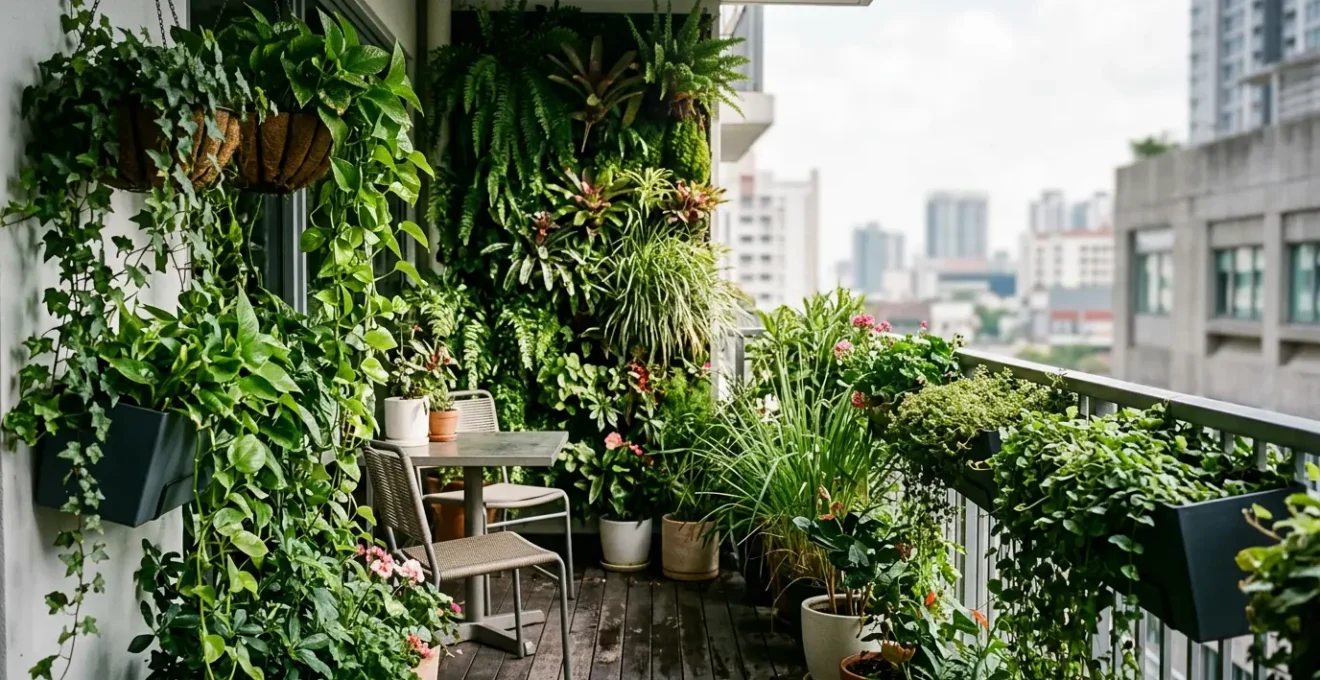
True balcony privacy comes not from a single, flat screen, but from architecting a multi-layered ecosystem of seclusion that creates a genuine sense of enclosure.
- Vertical space is your greatest asset; use trellises, hanging baskets, and wall planters to build upwards.
- Strategic plant selection is crucial, balancing growth speed, density, and maintenance for optimal visual screening.
- Always verify your condo’s regulations *before* buying anything to avoid costly fines and disputes.
Recommendation: Start by analyzing your specific sightlines—where the unwanted views are—and design your green layers specifically to interrupt those lines of sight.
That feeling of being watched. For apartment residents, it’s the subtle but persistent reality of urban life. Your balcony, intended as a personal patch of sky and fresh air, often feels more like a stage, with neighbors as an unwilling audience. The common advice is predictable: put up a bamboo screen, get a few tall plants. While these ideas have merit, they often result in a flat, uninspired barrier that screams “I’m trying to hide” rather than whispering “this is my private escape.” They solve the problem of being seen, but they don’t create the feeling of a sanctuary.
But what if the key to genuine seclusion wasn’t about building a wall, but about cultivating an ecosystem? The true art of balcony privacy lies in a more clever, architectural approach. It’s about manipulating sightlines, creating layered depth, and engaging the senses to build a psychological sense of enclosure. This method moves beyond simple blockage and towards the creation of a dynamic, living space that not only shields you from view but also nourishes your well-being. It is the difference between a fence and a forest.
This guide will walk you through the strategic principles of designing your own green sanctuary. We will explore how to build vertically when you have no floor space, choose the right botanical allies for the job, navigate the critical legal hurdles, and master the structural techniques to ensure your haven is both beautiful and secure. Prepare to stop blocking and start architecting.
Contents: How to Transform a Small Balcony into a Private Green Sanctuary?
- Why Does a Green Balcony Improve Life Quality in Dense Cities?
- How to Grow Upwards When You Have Zero Floor Space?
- Bamboo or Ivy: Which Fast-Growing Plant Block Neighbors Best?
- The Regulation Mistake That Gets You Fined by the Condo Board
- When to Choose Built-In Planters Over Freestanding Pots?
- Chain or Rope: Which Suspension Material Withstands Wind Better?
- How to Anchor Tall Plants on Windy Rooftop Terraces?
- How to Create a Potted Plant Jungle on a Concrete Terrace?
Why Does a Green Balcony Improve Life Quality in Dense Cities?
Before placing a single pot, it’s vital to understand the profound “why” behind this project. Creating a green balcony is not merely a decorative act; it’s a powerful investment in your mental and physical health. In the concrete-dominated landscape of a dense city, a personal green space acts as a crucial micro-dose of nature. It becomes a buffer, not just against prying eyes, but against the stresses of urban existence. The simple act of tending to plants, of watching life grow, provides a tangible connection to the natural world that is often severed in apartment living.
The scientific evidence supporting this is compelling. Exposure to green spaces is directly linked to improved psychological well-being. For instance, studies have shown that people with access to nature have a 16% lower risk of developing certain mental health issues. This isn’t just a vague feeling of “feeling better”; it’s a measurable physiological response. The practice of horticultural therapy, even on a small scale, triggers a calming effect in our bodies. In fact, some research demonstrates cortisol reductions of up to 12% from engaging with plants.
Therefore, your mission to create a private sanctuary is also a mission to build a personal wellness retreat. It’s about engineering an environment that actively lowers stress, improves mood, and provides a quiet space for reflection. The visual seclusion is the means, but the enhanced quality of life is the ultimate, invaluable end.
How to Grow Upwards When You Have Zero Floor Space?
The most common constraint on a small balcony is the lack of horizontal real estate. Once you add a small table and a chair, the floor is gone. The amateur sees this as a dead end; the privacy architect sees it as an opportunity. The solution is to stop thinking in two dimensions and start designing in three. Growing vertically is the single most effective strategy for creating lushness and privacy without sacrificing your usable living area. By drawing the eye upward, you create an illusion of space while building an effective green screen at eye level and above.
This vertical approach involves using walls, railings, and even the “airspace” of your balcony as a canvas. It’s about creating layers of green that cascade, climb, and hang, forming a tapestry of foliage. Here are several proven techniques to achieve this:
- Wall-Mounted Planters & Pockets: These are perfect for creating a “living wall” effect with herbs, succulents, or trailing plants without cluttering walkways.
- Layered Shelf Systems: A simple set of weather-resistant shelves can triple your planting capacity, allowing you to tier plants by height and light needs.
- Trellises with Tension Support: For vining plants, a trellis is essential. Tension-based systems that wedge between your balcony floor and ceiling (or an overhang) are ideal as they often require no drilling.
- Hanging Baskets at Varying Heights: Don’t just hang one basket. Hang several at different levels to create a dynamic, chandelier-like effect that provides layered depth and privacy from above.
- Repurposed Ladders: A decorative ladder leaned against a wall becomes an instant, stylish plant stand where each rung holds a different pot.
- A-Frame Structures: These provide a two-sided planting surface, perfect for a mix of climbing vegetables and flowers in the center of a balcony.
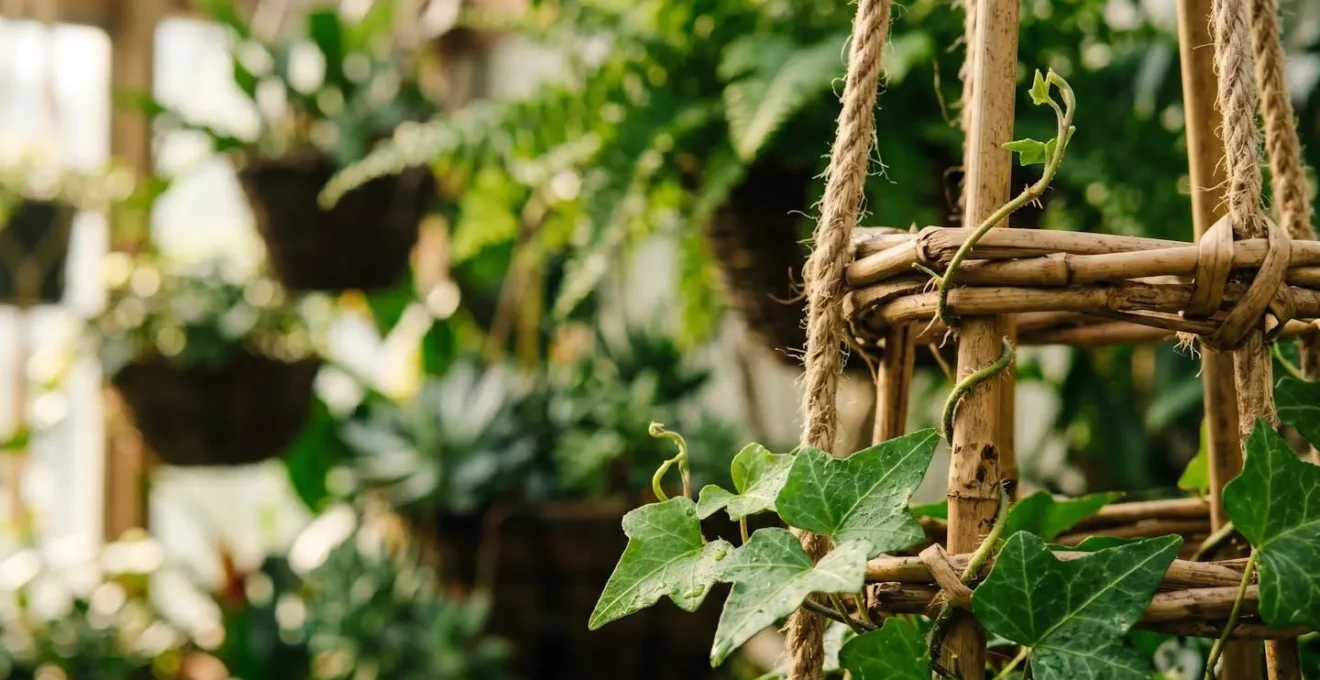
As you can see, the strategy is to occupy every available vertical plane. By combining these methods, you can construct a dense, multi-dimensional garden that maximizes both greenery and seclusion, transforming a barren space into a vibrant, private retreat.
Bamboo or Ivy: Which Fast-Growing Plant Block Neighbors Best?
Once you’ve committed to a vertical strategy, the next question is plant selection. The desire for quick results often leads people to two popular choices: bamboo and ivy. Both are famous for their rapid growth, but they are not interchangeable. Choosing the right one is a strategic decision that depends on your specific needs for speed, maintenance, and long-term control. Bamboo, for example, is a biological marvel; it holds the world record for the fastest growing land plant, with some species capable of extraordinary growth spurts, a fact confirmed by observations of nearly 47 inches in a single day.
However, speed isn’t the only factor. You must also consider invasiveness, year-round coverage, and the aesthetic you wish to create. English Ivy can be highly invasive and damaging to buildings, while only certain types of bamboo are suitable for container life. A “clumping” bamboo variety, for instance, is well-behaved and won’t try to take over your neighbor’s balcony, unlike its “running” cousins. To make an informed choice, a direct comparison is necessary.
| Factor | Clumping Bamboo (Gracilis) | Ivy (English Ivy) | Mixed-Species Hedge |
|---|---|---|---|
| Growth Speed | Great screen in 18 months | Moderate to fast, 3-5 years | Fast, 2-3 years with strategic layering |
| Height Potential | 15-25 feet (controllable) | 6-10 feet (climbing support needed) | Variable 10-20 feet depending on mix |
| Year-Round Coverage | Evergreen, dense all seasons | Evergreen in mild climates | Evergreen with strategic plant selection |
| Invasiveness Risk | Non-invasive clumping variety | Highly invasive in many regions | Low with proper species selection |
| Maintenance | Once-yearly pruning | Frequent trimming to control spread | Moderate, seasonal pruning |
| Visual Appeal | Graceful, architectural | Traditional, dense foliage | Dynamic, textural variety |
The table reveals a crucial insight: while bamboo offers incredible speed and architectural beauty, a mixed-species approach often provides the most resilient and visually interesting screen. By layering different types of plants, you create a more natural look and a more robust ecosystem that isn’t dependent on a single species thriving.
The Regulation Mistake That Gets You Fined by the Condo Board
Here lies the single most catastrophic and costly mistake an aspiring balcony gardener can make: assuming your balcony is your castle. Before you buy a single bag of soil, you must understand a critical legal distinction that governs most multi-unit buildings. Your balcony is likely not considered private property. Instead, it’s often classified as a “limited common element”—a space owned by the association but reserved for your exclusive use. This subtle distinction has massive implications.
Because the balcony is technically common property, the Condominium Owners Association (COA) or condo board has the right to regulate almost everything you do on it. This includes the weight of your planters, the types of plants you can grow (especially climbers that can damage siding), drainage systems, and any structures you attach to the railings or walls. As a real-world example, the Illinois Condominium Property Act provides a clear framework for this classification, making it plain that owner modifications are subject to association bylaws. Ignoring these rules can lead to hefty fines, orders to remove your entire garden, and even legal action. A proactive, professional approach is non-negotiable.
To avoid this nightmare scenario, you must engage with your condo board from a position of preparation and respect. Don’t ask for permission; present a solution. Create a detailed plan that anticipates their concerns about weight, water, and structural integrity.
Your 5-Step Proactive Balcony Approval Plan
- Review Documents: Locate and carefully read your building’s Declarant Documents (received at purchase) for any specific restrictions on balcony construction, weight limits, and plant types.
- Create a Detailed Project Plan: List all proposed plant species, container types, and crucially, the estimated weight of each pot when filled with wet soil. Detail all attachment methods.
- Specify Drainage Solutions: Clearly outline your plan to prevent water runoff. Mention deep saucers, self-watering reservoirs, or custom drip trays to show you’ve considered the units below you.
- Clarify Attachment Methods: Emphasize non-permanent, non-damaging solutions. Highlight the use of tension rods, weighted bases, or freestanding structures that avoid drilling into common elements.
- Submit for Written Approval: Present your complete, professional plan to your Property Manager or Condo Board and wait for written approval *before* you make any purchases.
This simple process transforms you from a potential rule-breaker into a responsible, forward-thinking resident. It is the most important step in ensuring the long-term survival of your sanctuary.
When to Choose Built-In Planters Over Freestanding Pots?
As you architect your private haven, you’ll face a fundamental design choice: should you use a collection of freestanding pots or invest in built-in planters? The answer hinges on your long-term vision and your desire for a seamless, integrated aesthetic. Freestanding pots offer flexibility. They are easy to move, rearrange, and replace, allowing your garden to evolve with the seasons or your changing tastes. This modularity is perfect for renters or those who enjoy constant experimentation.
Built-in planters, however, represent a commitment. They are a statement of permanence and intention. By integrating planters into the very structure of your balcony—as part of a bench, a railing, or a dividing wall—you create a powerful sense of cohesion and purpose. This approach is for the owner who sees the balcony not as a temporary display but as a true extension of their indoor living space. The result is a clean, architectural look that can make a small space feel more designed and substantial.
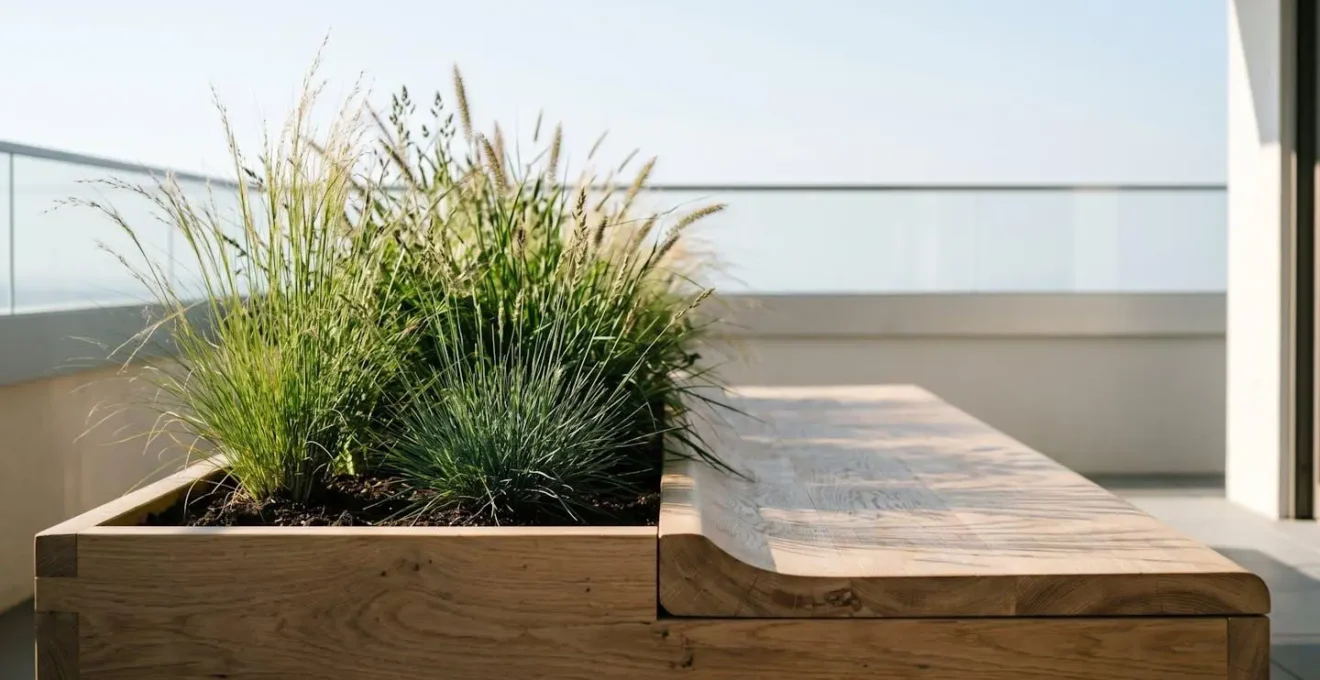
The key advantage of built-ins is their ability to serve dual functions. A planter can double as a storage bench; a low wall of greenery can also serve as a safety railing. This multifunctional design is the hallmark of clever small-space architecture. Built-ins also allow for a larger soil volume, which supports bigger, more impactful plants—like small trees or dense shrubs—that are essential for creating substantial privacy. Of course, this option requires more planning, a larger initial investment, and, critically, explicit approval from your condo board, as it constitutes a permanent modification.
Ultimately, the choice is between adaptability and integration. Freestanding pots are about flexible decoration, while built-in planters are about permanent architecture. For the ultimate private sanctuary, a thoughtful combination of both often yields the best results, using built-ins for the foundational privacy screen and freestanding pots for seasonal color and texture.
Chain or Rope: Which Suspension Material Withstands Wind Better?
In the quest for verticality, hanging baskets and planters are invaluable tools. But suspending a heavy pot of wet soil and plants several stories in the air introduces a significant engineering challenge: wind. Choosing the right suspension material isn’t just an aesthetic decision; it’s a matter of safety and structural integrity. A failure can be catastrophic. The two most common options, chain and rope, have fundamentally different ways of dealing with wind forces.
A metal chain offers superior tensile strength. It excels at resisting the direct, downward pull of gravity and the shear forces of a strong, sustained gust. Its rigidity, however, means that it transfers energy directly to the anchor point. Natural fiber rope, like jute or manila, has more flexibility. It can absorb and dampen the energy of sudden gusts, acting like a shock absorber. This reduces the peak stress on the anchor point, but the rope itself may be more susceptible to wear and degradation over time. The optimal choice depends on the weight of your planter and the specific wind conditions of your balcony.
For a more detailed breakdown, consider the performance characteristics of various modern materials that blend strength with aesthetics.
| Material | Wind Resistance Mechanism | Load Capacity | Aesthetic | Best Use Case |
|---|---|---|---|---|
| Natural Rope (Jute/Manila) | Absorbs and dampens gusts through flexibility | Moderate (lighter plants) | Bohemian, natural look | Trailing herbs, lightweight hanging baskets in sheltered balconies |
| Metal Chain | Superior shear force strength against direct pull | High (heavy pots, mature plants) | Industrial, modern feel | Large planters, exposed windy rooftops |
| Vinyl-Coated Steel Cable | Combines strength with minimal sway | Very high | Sleek, nearly invisible | Contemporary minimalist designs, multi-tier systems |
| Stainless Steel Cable + Fittings | Maximum tensile strength, corrosion-resistant | Highest | Ultra-modern, disappears visually | Permanent installations, coastal/high-humidity environments |
As the table shows, for heavy-duty applications on exposed, windy balconies, vinyl-coated or stainless steel cable offers the best combination of strength, durability, and a clean aesthetic. While a natural rope may be charming for a light pot of herbs in a sheltered corner, prioritizing safety and strength is paramount when hanging significant weight.
How to Anchor Tall Plants on Windy Rooftop Terraces?
Tall plants are the backbone of any privacy screen, but on an exposed balcony, they become sails. A strong gust of wind can easily topple a top-heavy planter, creating a dangerous situation. The brute-force solution is to use an enormous, impossibly heavy pot, but this is impractical and often violates condo weight limits. A privacy architect uses physics and cleverness, not just mass, to ensure stability. The goal is to create a low center of gravity and secure the plant without creating an unsightly mess of stakes and ropes.
The first principle is strategic ballasting. Instead of filling the entire pot with soil, fill the bottom third with heavy material like gravel, broken bricks, or sand. This anchors the base of the pot, creating a low center of gravity that makes it dramatically more resistant to tipping. You then fill the rest of the pot with a lightweight potting mix to keep the overall weight manageable. This simple technique is remarkably effective.
Beyond ballasting, several professional techniques can be employed to secure your vertical assets:
- The Pot-in-Pot Method: Use a wide, heavy decorative pot as a permanent anchor. Place your tall plant in a slightly smaller, lightweight plastic nursery pot that fits inside. This allows for easy removal for maintenance while the heavy outer pot provides constant stability.
- Invisible Anchoring: For securing a plant stem or a trellis, use clear fishing line or thin, green-coated wire. Discreetly tie it to a nearby railing or a wall-mounted eyelet (if permitted). This provides powerful support that is nearly invisible from a few feet away.
- Multi-Point Attachment: When securing a large trellis, never rely on a single anchor point. Use several attachment points to distribute the wind load evenly, preventing any single point from failing under stress.
- Weighted Base Clusters: Instead of isolating a single tall plant, group three to five pots of varying sizes together. The collective weight and the way they shelter each other from the wind makes the entire “island” of plants far more stable than any single pot would be on its own.
By combining these methods, you can confidently grow tall, beautiful plants that provide the privacy you crave, knowing they are securely engineered to withstand the elements.
Key Takeaways
- True privacy is achieved through strategic, multi-layered design, not just a single barrier.
- Vertical gardening is the most critical strategy for maximizing greenery and seclusion in limited floor space.
- Proactively securing written approval from your condo board by presenting a detailed plan is the most important step to prevent fines and disputes.
- The structural integrity of your garden—from planter weight to anchoring—is a matter of safety and must be engineered, not guessed.
How to Create a Potted Plant Jungle on a Concrete Terrace?
Now, we assemble all the principles. Creating a “potted plant jungle” is the ultimate expression of the privacy architect’s craft. It’s about more than just having a lot of plants; it’s about arranging them to create an immersive experience that transforms a sterile concrete slab into a lush, layered oasis. This final stage is where you combine plant selection, vertical layering, and clever placement to create an illusion of depth and wildness.
The key is to abandon linear thinking. Do not line your pots up against the railing like soldiers. Instead, create dense “plant island” groupings of 3 to 5 pots. These clusters, with plants of varying heights, create a more natural, forest-like feel. They break up the space, create winding pathways, and provide pockets of seclusion. This technique also enhances stability, as the pots shelter one another from the wind.
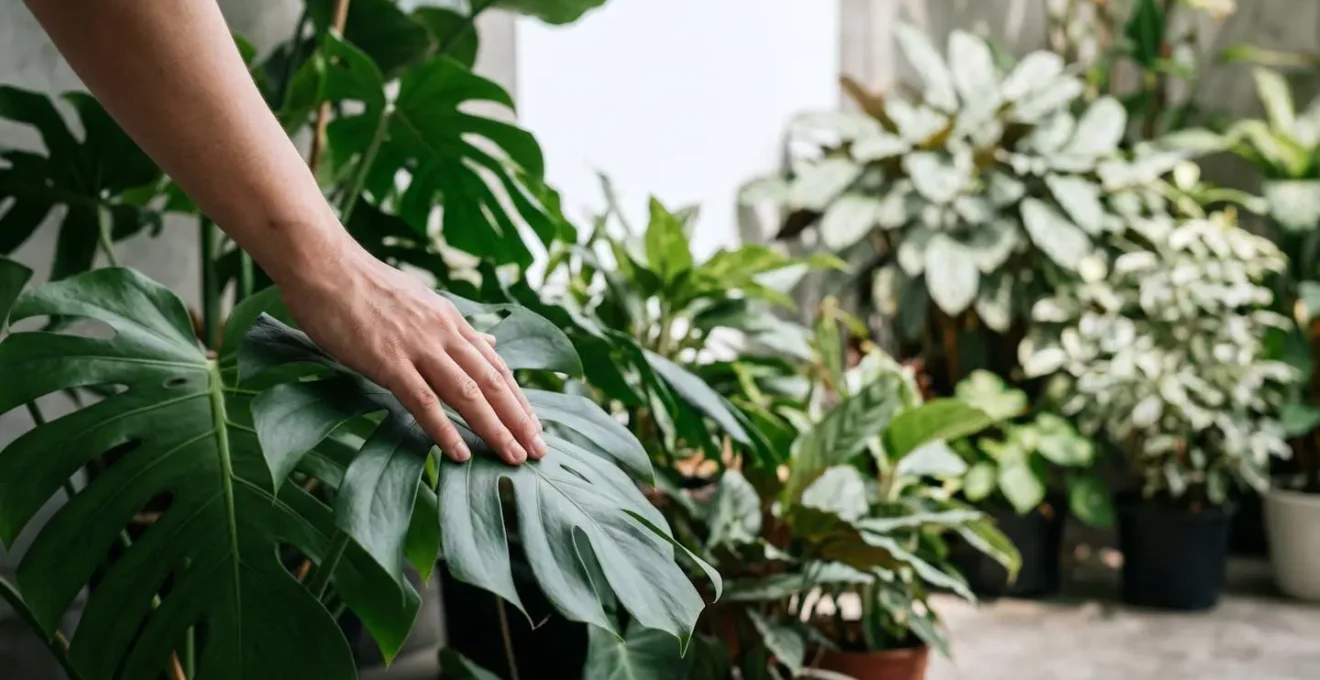
To further enhance the jungle effect, you must master the depth illusion technique. This is a trick used by landscape designers to make small spaces feel larger and more mysterious. Place plants with large, dark green leaves (like a Monstera or elephant ear) in the foreground. In the mid-ground and background, use plants with smaller, finer-textured, and lighter green or silvery leaves. The dark, bold leaves advance visually, while the lighter, finer leaves recede, creating an optical illusion of greater distance and depth. You can also combat the harshness of the concrete by elevating pots on “pot feet” to prevent root overheating and by using outdoor rugs to add softness and define your planted zones. By combining low, sprawling plants with upright specimens and tall, architectural grasses, you complete the three-dimensional tapestry, creating a truly immersive private jungle.
Begin designing your seclusion ecosystem today. Start not with a trip to the nursery, but with a simple assessment of your space’s unique sightlines, wind patterns, and structural limits to build a sanctuary that is as smart as it is beautiful.