
The steep price of a premium rose isn’t about luxury; it’s a direct reflection of superior floral engineering, geographical advantage, and post-harvest discipline.
- A high petal count isn’t just for show—it dictates a slower, more dramatic opening, which is a key marker of advanced breeding.
- Roses from high-altitude regions like Ecuador possess anatomically larger heads and thicker stems due to a longer, sun-intensive growth cycle.
- Professional conditioning by florists involves scientific hydration and nutrition protocols that can double a rose’s vase life compared to unconditioned grocery store flowers.
Recommendation: To guarantee value, use tactile freshness tests like the calyx squeeze and learn to request specific, proven varieties by name.
Walking into a flower shop, it’s easy to wonder: why does one rose stem cost $5 while a dozen at the supermarket are barely twice that? The common answer, “quality,” is true but unhelpful. It masks a fascinating world of agricultural science, logistical precision, and anatomical differences that define a rose’s true value. Most advice focuses on generic tips like checking the leaves or seeking a pleasant scent, but these are merely surface-level indicators. They don’t equip you with the discerning eye of a professional.
The real distinction lies not just in what you can see, but in understanding the invisible journey and inherent structure of the bloom. It’s about recognizing the signs of meticulous cultivation versus mass-market efficiency. This guide moves beyond the platitudes. We will not just tell you to “look for bigger blooms.” We will break down *why* a high petal count creates a superior visual experience and *how* a rose’s country of origin engineers its very anatomy. This is not a simple shopping guide; it is an auditor’s manual to deconstruct the value of a rose.
By understanding the key checkpoints—from petal structure and geographical terroir to the science of hydration—you’ll be able to assess a rose not by its price tag, but by its intrinsic, engineered potential. You’ll learn the difference between a flower bred for a fleeting visual and one designed for a lasting performance, finally answering the question: is that expensive rose truly worth it?
This article provides a detailed audit, breaking down the seven key markers of quality that separate a premium bloom from a common one. Discover the professional techniques to see, feel, and choose a rose that delivers on its promise of beauty and longevity.
Summary: The Auditor’s Checklist for Rose Quality
- Why Does High Petal Count Matter for the Opening of the Rose?
- Should You Remove the Ugly Outer Petals or Keep Them?
- Why Do Ecuadorian Roses Have Larger Heads Than Kenyan Ones?
- David Austin vs. Standard: Is the Scent Worth the Short Vase Life?
- The Squeeze Test: How to Tell if a Rose Is Fresh Without Damaging It?
- Why Custom Arrangements Cost 30% More but Last Longer?
- How to Choose a Red Rose Variety That Actually Smells Like a Rose?
- How to Build a 5-Minute Daily Routine for Flower Maintenance?
Why Does High Petal Count Matter for the Opening of the Rose?
The most immediate difference between a premium and a standard rose is the density of the bud. This is not simply a matter of size, but of floral engineering. A high petal count is a direct indicator of a more complex, genetically superior variety. While a supermarket rose might have 17-25 petals, a premium garden rose is classified as ‘Very Full’ when it boasts over 41 petals. This density is the engine behind the rose’s “performance”—its ability to open.
This intricate structure is what creates the coveted slow, dramatic unfurling. The high number of petals creates multiple layers that reveal different gradients of color and texture as the bloom opens over several days. An in-depth analysis of bloom forms confirms that roses with 41+ petals provide a theatrical transformation that lower-count roses physically cannot achieve. Their opening is a brief, one-stage event. A premium rose’s opening, by contrast, is a multi-day journey.
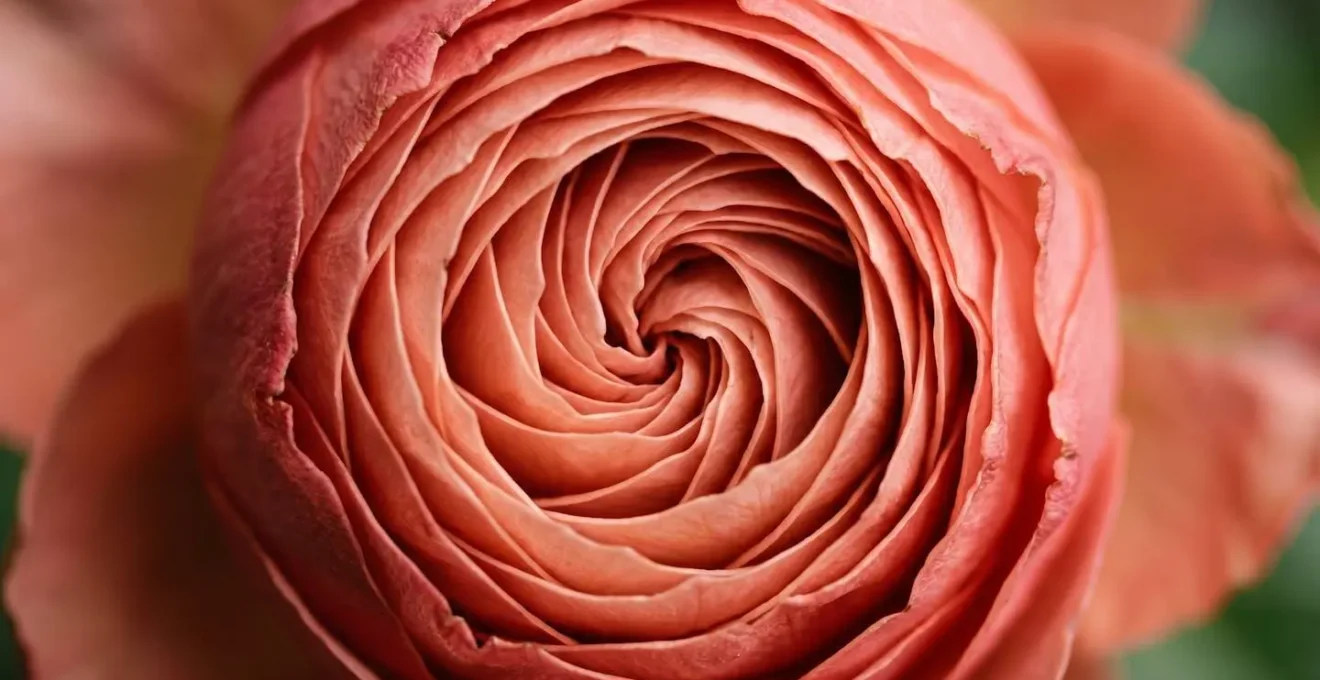
This complex architecture is why premium roses often have a larger bud diameter to begin with, a key specification for growers. The dense, spiraled center you can see in a top-tier rose is a promise of the display to come. You are paying for a flower that evolves in the vase, offering a different kind of beauty on day one, day three, and day five. A supermarket rose, in contrast, is designed to look its best at the moment of purchase and declines from there.
Should You Remove the Ugly Outer Petals or Keep Them?
Guard petals protect roses during shipping. Simply remove these outer guard petals to reveal the pristine beauty of your blooms.
– Calyx Flowers, Rose Care Guidelines
Those tough, often discolored or bruised outer petals on a fresh rose are a source of confusion for many buyers. Far from being a sign of a defective flower, they are a hallmark of a rose that has been professionally handled. These are known as guard petals, and their sole purpose is to serve as natural armor, absorbing the shocks and scrapes of transport from the farm to the florist. Their presence indicates that the delicate inner bloom has arrived untouched.
Removing them is standard practice, but *when* and *how* you do it can influence the rose’s vase life. A professional two-stage technique yields the best results. Upon arrival, remove only the 2-3 most damaged petals. After the rose has hydrated for a day and begins to open, you can then remove any remaining guard petals that might be constricting the bloom’s unfurling. For exceptionally dense premium roses, keeping these petals on for the first 48 hours acts as a natural corset, supporting the heavy bud and preventing it from “blowing open” too quickly, which shortens its life.
It’s crucial to distinguish between a functional guard petal—which may have brown edges but a firm texture—and signs of poor storage, such as a slimy feel, mold, or desiccated spots. The former is a sign of a well-traveled, protected bloom; the latter is a red flag for a breakdown in the cold chain.
Why Do Ecuadorian Roses Have Larger Heads Than Kenyan Ones?
The origin of a rose is a critical, yet often overlooked, factor in its quality. When you see a rose with a remarkably large head and a thick, long stem, it is very likely from Ecuador. This isn’t an accident of nature; it is a direct result of the country’s unique terroir. Ecuadorian rose farms are located at high altitudes, between 2,800 and 3,200 meters above sea level. This elevation provides two key advantages: intense, direct sunlight and cool nighttime temperatures.
This unique environment forces a much slower growth cycle. Research from breeders shows that an Ecuadorian rose can take up to 15 weeks to grow, compared to just 8 weeks for a rose grown at sea level. This extended period allows the plant to develop a larger bud and a more robust, woody stem to support it. The intense solar radiation at the equator contributes to more vibrant, deeper colors, a phenomenon known as “bicolor tipping.” In essence, the environment itself is a tool of floral engineering.
This table clearly illustrates the quantifiable differences that result from these distinct growing strategies, as detailed in a comparative analysis of the two origins.
| Characteristic | Ecuadorian Roses | Kenyan Roses |
|---|---|---|
| Altitude Range | 2,800-3,200 meters | 1,500-2,500 meters |
| Bud Size (Diameter) | 5-7 cm (up to 2 inches larger) | 3-5 cm |
| Stem Length | 60-100+ cm | 40-70 cm |
| Vase Life | 10-14 days | 7-10 days |
| Primary Market | Luxury American market | Fast-paced European auction market |
| Growth Strategy | Slower growth, impressive size | Speed and volume efficiency |
| Price Point | Premium-priced | More affordable |
Kenyan roses, grown at a slightly lower altitude, have a faster growth cycle, making them ideal for the high-volume European auction market. They are excellent flowers but are bred for speed and efficiency. Ecuadorian roses are cultivated for size and impact, targeting a luxury market willing to pay for superior anatomy.
David Austin vs. Standard: Is the Scent Worth the Short Vase Life?
For decades, rose lovers have lamented the loss of fragrance in modern commercial varieties. This wasn’t an oversight but a deliberate genetic trade-off. In breeding roses for the commercial market, traits like disease resistance, straight stems, and—above all—a long vase life were prioritized. Unfortunately, the genes responsible for fragrance are often linked to those for faster aging and delicate petals. This created the classic scent-longevity trade-off: a beautiful, long-lasting rose often had no scent, while a fragrant one wilted in days.
David Austin Roses famously challenged this paradigm by prioritizing the reintroduction of fragrance, creating the iconic “English Rose” style with a garden-fresh feel and powerful scent. Initially, this came at the cost of vase life. However, this is a rapidly evolving field. According to the breeder himself, a significant breakthrough has been made. In fact, David Austin guarantees their fragrant cut roses will stay fresh for at least 5 days with proper care, with many varieties lasting much longer.
As master breeder Carl Bennett explains, achieving beauty, fragrance, robustness, and vase life simultaneously is the pinnacle of the craft. Newer varieties like ‘Rose Millicent’ and the deep red ‘Darcey’ or ‘Tess’ are the result of this complex balancing act. They successfully combine a rich fragrance with a respectable vase life, closing the gap between the ephemeral garden rose and the durable commercial hybrid. So, is the scent worth it? Increasingly, you don’t have to choose.
The Squeeze Test: How to Tell if a Rose Is Fresh Without Damaging It?
While visual cues are helpful, the true freshness of a rose can be determined by touch. A professional floral auditor relies on a series of gentle, tactile tests to assess a bloom’s anatomical integrity and hydration level without causing any damage. These are the secrets to avoiding a rose that looks good on the shelf but wilts within 48 hours. The most important of these is the calyx squeeze test.
The calyx is the green bulb at the very base of the flower head where the petals connect to the stem. This small part acts as a proxy for the entire bloom’s turgor pressure. A fresh, well-hydrated rose will have a firm, slightly springy calyx. If it feels soft, mushy, or squishy, it’s a clear sign the rose is old and has begun to break down internally. This is a far more reliable indicator than the appearance of the petals alone.
Beyond the squeeze test, there are other physical checks that can confirm a rose’s condition. Professional florists identify freshness by checking that fresh cut stems appear green with a white center; a brown or frayed core indicates an older bloom that will struggle to absorb water. By combining these tactile inspections, you can confidently assess a rose’s true age and potential longevity.
Action Plan: Professional Rose Freshness Audit
- The Calyx Squeeze Test: Gently pinch the calyx (the green bulb at the base of the petals) between your thumb and forefinger. It should feel firm and resilient, not soft or squishy.
- The Head Wiggle Test: Hold the stem an inch below the bloom and give it a gentle wiggle. A fresh rose head will feel sturdy and responsive. An older one will feel droopy or “sleepy.”
- The Stem Firmness Check: Run your fingers along the stem. It should feel sturdy and turgid. A soft or easily compressible stem is a red flag for age and poor hydration.
- The Foliage Gloss Inspection: Examine the leaves. They should be vibrant green and have a healthy sheen. Dull, yellowing, or spotted leaves indicate the rose has been stressed or is past its prime.
- The Cut End Inspection: If visible, look at the bottom of the stem. A fresh cut is clean, green, and white inside. A brown, frayed, or slimy end means the rose is old and its vascular system is compromised.
Why Custom Arrangements Cost 30% More but Last Longer?
The dramatic difference in longevity between a florist’s arrangement and a supermarket bouquet comes down to an invisible but critical process: professional conditioning. A florist’s higher price tag doesn’t just cover design expertise; it covers the labor and materials for a scientific post-harvest protocol that supermarkets almost always skip. When roses arrive from the grower, they are dehydrated and stressed from travel. A florist’s first job is resuscitation.
This process is meticulous. Stems are immediately re-cut, often underwater, to prevent air bubbles (embolisms) from blocking the vascular system. Excess lower foliage, which would otherwise rot in the water and draw energy from the bloom, is stripped away. Most importantly, the flowers are placed in a professional-grade hydrating solution. This isn’t just the simple “flower food” packet. As industry experts point out, these are specific formulas containing a precise balance of three key ingredients: a biocide to kill bacteria, an acidifier to lower the water’s pH for better uptake, and sugars to provide energy for the bloom to open.
Supermarket roses, in contrast, often sit in plain tap water in shallow buckets after a long, temperature-variable journey. They are rarely re-cut properly and are handled by staff without floricultural training. This lack of conditioning means their vascular systems are often blocked, they are starved of nutrients, and they sit in bacteria-laden water. The extra 30% you pay a florist is an investment in this crucial, science-based care that can easily double the vase life of the exact same flower.
How to Choose a Red Rose Variety That Actually Smells Like a Rose?
Finding a classic, deep red rose with a true, rich fragrance can feel like an impossible quest. As discussed, many modern red hybrid tea roses were bred for their vibrant, non-fading color and long-distance shipping durability, often at the expense of scent. To find that classic “rose” smell, you need to know what to ask for, moving beyond color to specific varieties and categories.
The first step is to use the right terminology. Ask your florist for “garden rose” or “heirloom” varieties. These terms signal that you prioritize scent and form over the uniform perfection of a standard hybrid. Better yet, request fragrant red varieties by name. “Mister Lincoln” is a classic hybrid tea renowned for its powerful damask fragrance. “Crimson Glory” is another celebrated for its rich, old-rose perfume. For a more modern, cabbage-rose form, David Austin’s ‘Darcey’ and ‘Tess’ are excellent choices. Critically, these modern fragrant reds have been bred for better performance, with David Austin’s deep red fragrant roses offering an impressive 10-12 days of vase life.
Finally, trust your own nose, but use a professional trick to enhance it. In a cold flower shop, scent compounds are less volatile. To get a true sense of the fragrance, cup your hands around the bloom without touching it and breathe gently into the center. The warmth and moisture from your breath will help release the aromatic oils, making even subtle scents much more detectable. This allows you to audit the fragrance profile on the spot.
Key Takeaways
- A premium rose is an engineered product; its value lies in measurable attributes like petal count, stem thickness, and growth cycle duration.
- Geographical origin, particularly high-altitude cultivation in places like Ecuador, directly contributes to a rose’s superior size and anatomical structure.
- The “scent vs. longevity” trade-off is being overcome by advanced breeders, but you must know which specific fragrant varieties to request by name.
How to Build a 5-Minute Daily Routine for Flower Maintenance?
Investing in a premium rose is only the first step. Protecting that investment requires a consistent but minimal daily care routine. The goal is not just to keep the flower alive, but to help it perform to its full potential. A simple, three-step daily refresh, taking less than five minutes, can dramatically extend the beauty and life of your blooms by combating the three primary enemies of cut flowers: bacteria, dehydration, and ethylene gas.
The most critical daily task is a water check. Roses are incredibly thirsty, and water levels can drop quickly. Top up the vase with fresh, cool water every day. This also replenishes oxygen in the water. A full water change with a freshly cleaned vase is only necessary every 2-3 days, or as soon as the water appears cloudy, which is a sign of bacterial proliferation. While you’re at the vase, quickly scan for and remove any leaves or petals that have fallen into the water, as they are a primary food source for bacteria.
Finally, consider the environment. A quick scan to ensure the vase isn’t in direct sunlight, near a heating or cooling vent, or next to a bowl of ripening fruit can make a huge difference. Ripening fruit releases ethylene gas, a natural plant hormone that signals flowers to mature and die more quickly. Even a rose with a drooping, “bent neck” can often be revived. This is typically caused by an air bubble (embolism) in the stem. The emergency fix is to submerge the entire rose, head and all, in a basin of cool water for 30-60 minutes. This forces hydration and can dislodge the bubble, often restoring the rose to its upright glory within hours.
Now that you are equipped with the knowledge of a floral auditor, the next step is to apply these principles confidently. By looking for the right anatomical markers and performing these simple care steps, you ensure that every premium rose you purchase is a worthy investment in lasting beauty.