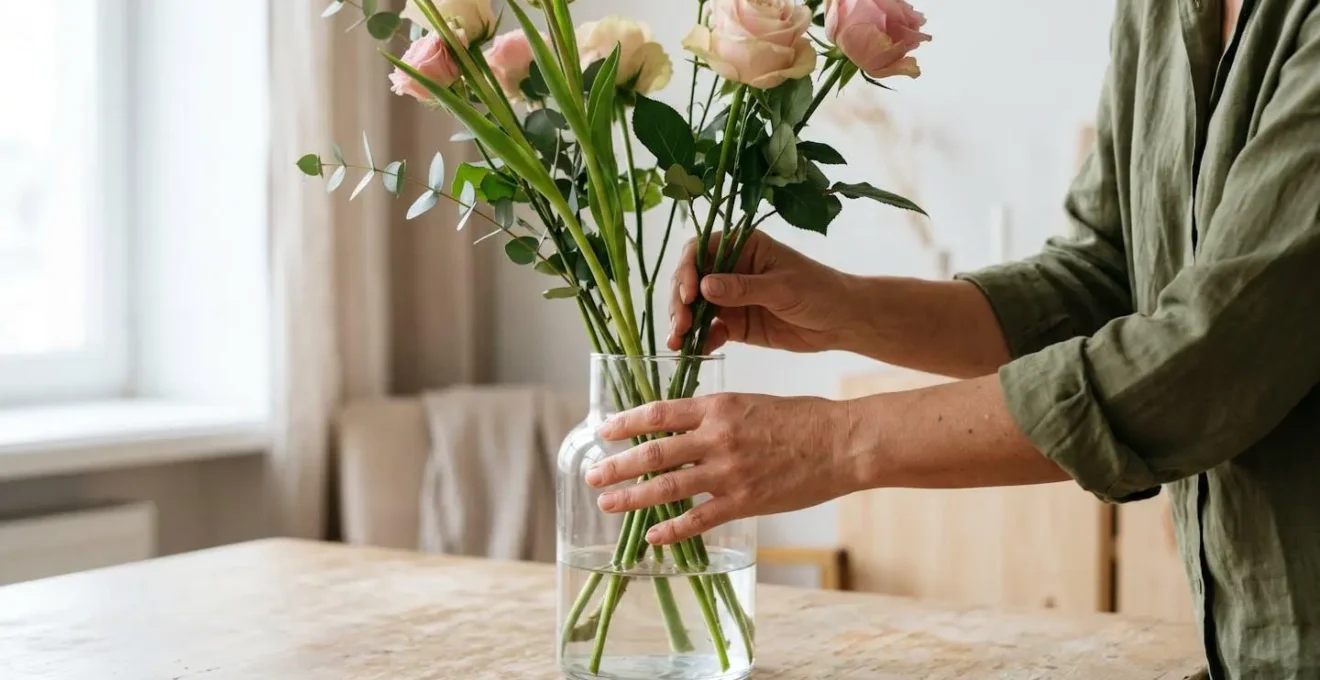
In summary:
- Effective flower care is a system of proactive hygiene and metabolic control, not a list of chores.
- A daily 5-minute routine focuses on preventing the two main causes of decay: bacterial growth and accelerated aging.
- Key actions include disinfecting vases, managing temperature, preventing air blockages in stems, and avoiding ethylene gas.
- Customizing care based on flower type can further extend the beauty and value of your bouquet.
For any homeowner who enjoys the beauty of fresh-cut flowers, there is a shared and familiar frustration: the fleeting lifespan of a vibrant bouquet. You bring home a stunning arrangement, and within days, the petals begin to droop and the water turns cloudy. The investment, both financial and emotional, seems to evaporate far too quickly. Common advice often revolves around simple tips like changing the water or trimming the stems, but these actions often feel reactive and don’t always yield significant results. They are pieces of the puzzle, but not the whole picture.
What if the key to longevity wasn’t just performing these tasks, but understanding the science behind them and executing them as an efficient, daily system? The secret to maximizing your floral investment lies not in more effort, but in smarter, routine-based actions. This guide reframes flower care from a series of chores into a strategic 5-minute daily system designed to combat the two primary enemies of a cut flower: bacterial contamination and an accelerated metabolic rate. It’s a home economist’s approach to getting the most value and enjoyment from every stem.
This article will guide you through the core principles of this system. We will explore the critical role of vase hygiene, the science of temperature control, the unseen damage from household items, and the precise techniques that ensure maximum hydration. By transforming your approach into a consistent and efficient routine, you can dramatically extend the life of your flowers.
Summary: A Systematic Approach to Flower Longevity
- Why Must You Bleach Your Vase Before Every Use?
- Fridge at Night: Does Putting Flowers in the Cold Really Help?
- The Rotting Leaf Error: Why Submerged Leaves Kill Flowers Fast?
- Why Is the Fruit Bowl the Worst Neighbor for Your Vase?
- Every 2 Days or 3:Why Do Bespoke Bouquets Create Stronger Emotional Connections Than Premade Ones?
- Why Cutting Stems Underwater Changes Everything for Hydration?
- When to Refresh Water to Prevent Odors in Shared Spaces?
- How to Extend Vase Life Based on Specific Flower Families?
Why Must You Bleach Your Vase Before Every Use?
The first step in any efficient system is to establish a clean foundation. When it comes to cut flowers, the single greatest threat to longevity is invisible: bacteria. A vase that has been simply rinsed is a breeding ground for microorganisms left over from a previous bouquet. These bacteria multiply at an astonishing rate, creating a toxic environment that clogs the flower’s stems and prevents water uptake. This isn’t a minor issue; it’s the primary reason flowers wilt prematurely despite being in water. The water becomes a soup of life-shortening contaminants.
To quantify the problem, scientific research shows that flower vase water can harbor up to 450 million organisms in a standard 500ml vase. Using a small amount of bleach (about 1/4 teaspoon per quart of water) or scrubbing the vase with soap and hot water before each use isn’t about feeding the flowers; it’s an act of proactive hygiene. It sterilizes the environment, ensuring the water your flowers drink is clean and life-sustaining, not a bacterial cocktail. This simple 30-second step eliminates the biggest variable in vase life before the first stem even goes in.
Fridge at Night: Does Putting Flowers in the Cold Really Help?
Once you’ve addressed the external threat of bacteria, the next step is to manage the flower’s internal processes. A cut flower is still a living organism, and its life is a race against time governed by its metabolic rate—how quickly it breathes, matures, and ultimately, ages. Heat is an accelerator for this process. Just as florists keep their inventory in large walk-in coolers, you can use your home refrigerator to achieve the same effect on a smaller scale. Lowering the temperature dramatically slows down the flower’s respiration and ethylene production, the hormone responsible for aging.
This isn’t just an old wives’ tale; it is proven science. Placing your bouquet in the refrigerator overnight can effectively put its aging process on pause. This act of metabolic control can slow the flower’s life cycle significantly, keeping petals firm and colors vibrant for much longer. The ideal temperature range is between 33-35°F (1-2°C), but even the standard temperature of a home fridge provides a substantial benefit. However, be sure to keep flowers away from fruits, especially apples and bananas, which release ethylene gas and will counteract the benefits of the cold. This nightly routine is one of the most powerful and efficient ways to extend the life of your arrangement.
The Rotting Leaf Error: Why Submerged Leaves Kill Flowers Fast?
Proactive hygiene extends beyond the vase itself and into the preparation of the flowers. A common and critical mistake is allowing foliage to remain on the parts of the stems that will be submerged in water. While seemingly harmless, these leaves are a primary source of contamination. Once underwater, they begin to break down and rot almost immediately. This decaying organic matter serves as a potent food source for bacteria, exponentially increasing the bacterial load in the water.
As these bacteria feast and multiply, they create a biofilm that not only clouds the water and creates an unpleasant odor but also produces toxins. More importantly, this bacterial sludge can be drawn up into the flower’s vascular system (the xylem), physically blocking the channels that transport water to the petals. The flower is then effectively dying of thirst while sitting in a full vase. Stripping all leaves from the lower portion of each stem is a non-negotiable step in your daily routine. It takes only a minute but directly prevents the fouling of the water, keeping the hydration pathways clear and functional.
Bacteria in vase water can clog stems and shorten the vase life of flowers, so keep the water clear at all times to ensure the longevity of your blooms.
– Society of American Florists, SAF Flower & Plant Care Tips
Why Is the Fruit Bowl the Worst Neighbor for Your Vase?
One of the most insidious threats to your flowers is completely invisible and may be sitting right next to them on your kitchen counter. This threat is ethylene, a natural plant hormone in the form of a gas that triggers the process of ripening and, subsequently, aging and decay. While all plants produce some ethylene, certain fruits and vegetables are “super-producers,” and their presence can dramatically shorten the vase life of your bouquet. Your beautiful, fresh flowers are highly sensitive to ethylene contamination in the air.
The fruit bowl, particularly one containing apples, bananas, avocados, or tomatoes, is constantly emitting this aging gas. Placing a vase of flowers nearby is like putting them in a hyper-aging chamber. The gas signals the flowers to mature faster, leading to premature wilting, petal drop, and loss of color. The effect is so potent that even sources like cigarette smoke or engine exhaust can have a noticeable impact. As part of your efficient routine, a quick environmental scan is essential. Ensure your vase is placed far from any high-ethylene fruit producers. This costs nothing and takes no time, yet it protects your floral investment from an unseen but powerful enemy.
Every 2 Days or 3:Why Do Bespoke Bouquets Create Stronger Emotional Connections Than Premade Ones?
The title of this section poses a question about bespoke bouquets, but the underlying principle applies to any flowers you bring into your home. The emotional connection we feel to flowers deepens not just from their initial beauty, but from the act of caring for them. The routine itself—the daily or every-other-day ritual of refreshing water, checking for wilting leaves, and ensuring their environment is optimal—transforms a static object into a living part of our home. This is the heart of system efficiency: the routine becomes a rewarding, mindful practice, not a chore.
Whether you change the water every two days or three depends on factors like room temperature and the flower type, but the consistency of the interaction is what matters. This regular, gentle tending builds a connection. You become an active participant in sustaining the flower’s life, which makes its beauty feel more personal and earned. This small investment of time, just a few minutes, pays dividends in both the flower’s longevity and your own enjoyment. It shifts the experience from passive consumption to active appreciation, strengthening the bond with the natural beauty you’ve invited into your space.
Why Cutting Stems Underwater Changes Everything for Hydration?
You’ve cleaned the vase and prepared the water, but the final step before arranging is arguably the most critical for hydration: how you cut the stems. When a stem is cut in the open air, a tiny air bubble can be immediately sucked into the xylem. This creates an embolism—an air lock—that physically blocks the passage of water up the stem. No matter how fresh the water or how clean the vase, a flower with an air-locked stem cannot hydrate properly and will wilt quickly. This is a common point of failure that undermines all other efforts.
The solution is simple and highly effective: cut the stems underwater. By submerging the end of the stem in a bowl of water while you make the cut, you ensure that the stem immediately draws up water instead of air. This maintains an unbroken column of water from the vase all the way to the petals. A landmark 1995 Dutch study found that nearly 70% of retail florists were using water with bacteria levels high enough to reduce vase life, highlighting how easily hydration can be compromised even by professionals. Using a sharp knife or shears to make a fresh 45-degree cut underwater is a professional-grade technique that ensures the hydration pathways are wide open from the very start.
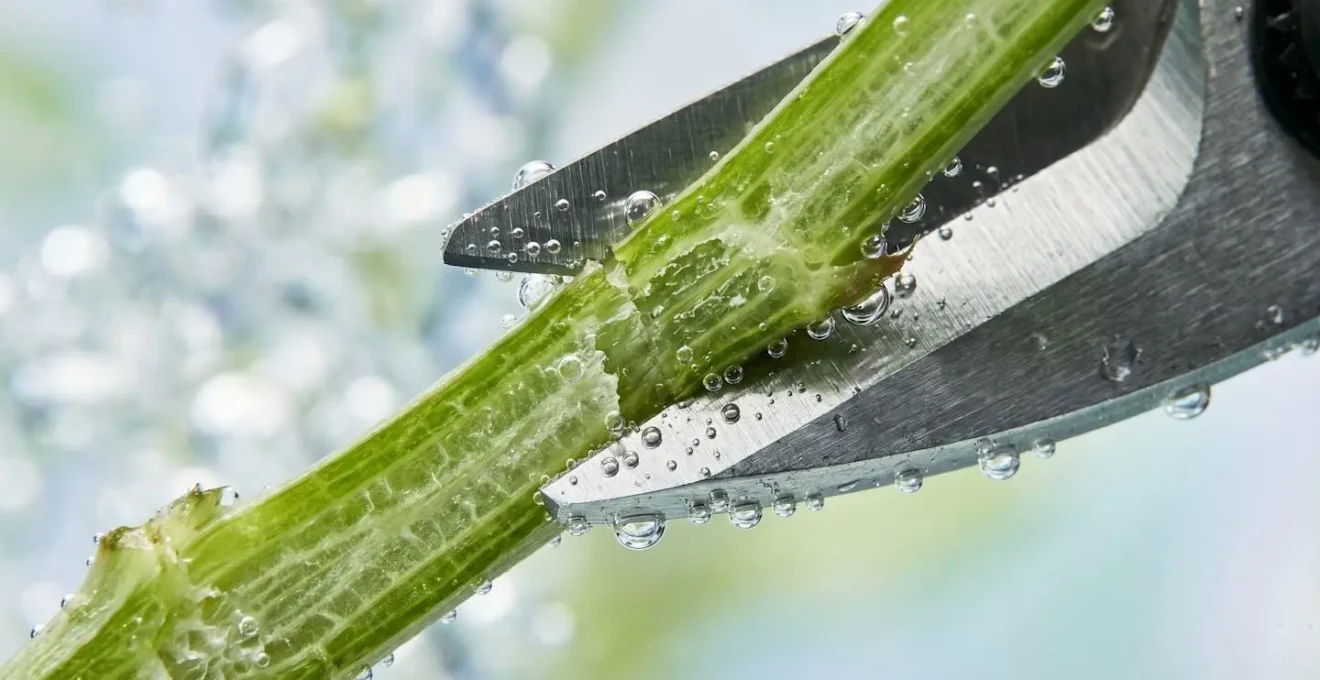
As this image demonstrates, the underwater cut is a precise intervention. It prevents the formation of a life-limiting air bubble, guaranteeing that the stem’s vascular system is primed for maximum water uptake. This single technique can make a more significant difference in a flower’s hydration than almost any other factor.
When to Refresh Water to Prevent Odors in Shared Spaces?
By the time you can smell your flower water, the battle for longevity has likely already been lost. An unpleasant odor is the final, unmistakable sign of a massive bacterial bloom. The water has become a stagnant, toxic environment, and the flowers are actively decaying. The goal of an efficient daily routine is not to react to cloudy, smelly water, but to act proactively to ensure it never reaches that state. Refreshing the water is a preventative measure, not a cure.
The ideal frequency is to change the water every one to two days. This regular flush removes the bacteria that have begun to multiply and replenishes the clean water supply. It disrupts the cycle of contamination before it can overwhelm the system. This is not just about aesthetics or odor control in shared spaces; it’s about the fundamental health of the flowers. As your routine becomes a habit, you will learn to change the water long before it shows any visible signs of cloudiness, keeping the bacterial load consistently low and the vase environment pristine.
Case Study: The Unseen World in Your Vase
A 2023 study published in the journal PLOS One provided a clear window into this process. Researchers tracked bacterial communities in the vase water of roses, gerberas, and lilies over a seven-day period. The results were dramatic: the diversity and population of bacteria exploded over time, with harmful species known to cause plant disease proliferating rapidly. The study confirmed that the single most influential factor in this bacterial growth was time, highlighting with scientific certainty why frequent water changes are absolutely critical for extending vase life.
Key takeaways
- Proactive Hygiene is Paramount: A sterilized vase and the removal of all submerged leaves are non-negotiable first steps to prevent bacterial growth.
- Metabolic Control is Key: Slow the flower’s natural aging process by using cold temperatures (like a refrigerator overnight) and keeping bouquets far from ethylene-producing fruits.
- Maximize Hydration at the Start: Always cut stems at an angle and underwater to prevent air bubbles from blocking water uptake, ensuring the flower can drink effectively.
How to Extend Vase Life Based on Specific Flower Families?
The 5-minute daily routine provides a powerful and universal foundation for extending the life of any bouquet. However, for the home economist looking to truly maximize their investment, a final layer of optimization comes from understanding that not all flowers are created equal. Different flower families have unique characteristics and care requirements. Woody stems like roses have different hydration needs than soft stems like tulips, while some flowers have unique sensitivities or properties.
Adapting your care based on the specific flowers in your vase is an advanced but highly effective strategy. For example, tulips famously continue to grow after being cut and will bend towards a light source, requiring a tall, straight vase and occasional re-trimming. Lilies have prominent anthers loaded with pollen that should be removed immediately to prevent staining petals and furniture. Mastering these nuances allows you to provide tailored care that addresses the specific needs of each flower, pushing their vase life to the absolute maximum. The following table provides a quick-reference guide for some of the most common flower types.
This comparative table breaks down the specific preparation and maintenance needs for three popular flower types. As the data shows, details like water temperature and stem preparation can vary significantly, and applying this knowledge can dramatically improve results.
| Flower Type | Stem Type | Special Preparation | Water Temperature | Water Change Frequency | Special Considerations |
|---|---|---|---|---|---|
| Roses | Woody | Trim at 45° angle; remove guard petals; split stem base vertically | Lukewarm | Every 2 days | Re-trim stems to maximize water uptake; remove submerged leaves |
| Lilies | Soft | Clean cut; remove pollen-dusted anthers immediately | Cool, fresh | Daily | Prevent pollen staining on petals and furniture; keep in shaded area |
| Tulips | Soft | Clean cut; trim every few days as they continue growing | Cool with lemon juice | Every 2-3 days | Flowers continue to grow after cutting; bend toward light; use straight vase |
Action Plan: The Daffodil Quarantine Method
- Identify Incompatibilities: Recognize that daffodils release a toxic sap that is harmful to other flowers, especially tulips, when placed in the same vase.
- Isolate New Stems: Place freshly cut daffodils in a separate container of water by themselves for at least 4 to 6 hours.
- Allow Sap to Seal: During this quarantine period, do not re-cut the daffodil stems, as this will release a fresh wave of sap.
- Rinse Gently: After the quarantine period is over, carefully remove the daffodils and gently rinse the stems under cool running water to wash away any residual sap.
- Combine Safely: Only after this full process is complete is it safe to add the quarantined daffodils to your mixed flower arrangement.
Integrate these steps into a consistent 5-minute daily habit. By doing so, you will not only extend the life and beauty of your flowers but also maximize the return on your weekly floral investment, enjoying every petal to the fullest.