Floral decoration
Floral decoration transforms ordinary spaces into vibrant, living environments that engage all our senses. Whether adorning a dining table, celebrating a milestone, or simply brightening a room, thoughtfully arranged flowers possess a unique ability to convey emotion, establish atmosphere, and reflect personal style. The art of working with flowers combines aesthetic principles with botanical knowledge, allowing anyone to create displays that feel both intentional and effortlessly beautiful.
While professional florists spend years mastering their craft, the foundational concepts of floral decoration are surprisingly accessible. Understanding how colors interact, why certain flowers pair naturally together, and which techniques suit different occasions empowers you to move beyond simply placing stems in a vase. This exploration covers the essential design principles, practical techniques, and creative considerations that will help you approach floral decoration with confidence, whether you’re creating a simple centerpiece or planning decorations for a significant event.
What Makes Floral Decoration an Essential Design Element?
Flowers occupy a unique position in interior design and event styling because they introduce an organic, temporal quality that permanent fixtures cannot replicate. Unlike static decorative objects, floral arrangements evolve throughout their lifespan, with buds opening, colors deepening, and forms shifting subtly each day. This dynamic characteristic creates visual interest that keeps spaces feeling fresh and alive.
The psychological impact of flowers extends beyond mere aesthetics. Research consistently shows that the presence of fresh flowers influences mood, reduces stress, and enhances creative thinking. In professional environments, floral elements humanize sterile spaces, while in homes, they establish welcoming focal points that reflect the seasons and mark special occasions. A well-placed arrangement draws the eye, anchors a room’s color scheme, and can even influence how guests perceive the formality or casualness of a gathering.
From a practical standpoint, floral decoration offers remarkable versatility. A single arrangement style can be scaled dramatically—the same design principles that create an intimate bedside bouquet apply equally to grand entrance installations. Flowers also possess the unique ability to bridge traditional and contemporary aesthetics, adapting to virtually any design philosophy through thoughtful selection and arrangement approach.
Understanding Core Design Principles in Floral Arrangements
Creating visually compelling floral decorations relies on several foundational design principles that professional florists apply instinctively. Mastering these concepts allows you to make intentional choices rather than relying solely on trial and error.
Balance and Proportion in Floral Design
Visual balance determines whether an arrangement feels stable or unsettling. Symmetrical designs place identical or similar elements on both sides of a central axis, creating formal elegance suitable for traditional settings. Asymmetrical arrangements distribute visual weight unevenly while maintaining overall equilibrium—imagine a tall orchid stem on one side balanced by clustered roses lower on the opposite side. The general guideline suggests that arrangement height should measure approximately one and a half times the height of the container, though this flexible rule adapts based on the setting and desired impact.
Color Harmony and Contrast
Color choices profoundly influence the emotional resonance of floral decorations. Monochromatic schemes use varying shades of a single color, creating sophisticated, calming displays that never compete with surrounding décor. Analogous combinations draw from neighboring colors on the color wheel—such as purples, blues, and violets—producing harmonious transitions that feel naturally cohesive. Complementary pairings like orange and blue or yellow and purple generate vibrant energy through contrast, making arrangements feel bold and contemporary.
Beyond basic color theory, consider the undertones within seemingly similar flowers. Not all whites match perfectly; some lean toward cream or ivory, while others appear stark and cool. These subtle differences matter when creating cohesive arrangements, particularly for formal occasions where precision enhances the overall effect.
Texture and Depth
Incorporating varied textures prevents arrangements from appearing flat or one-dimensional. Combine smooth petals like roses or tulips with delicate, airy elements such as baby’s breath or astilbe, then add structural contrast through spiky blooms like liatris or textured foliage. This interplay of surfaces creates visual interest that rewards closer inspection while adding perceived depth to the overall composition.
Choosing the Right Flowers and Materials for Your Vision
Successful floral decoration begins long before the actual arranging—it starts with thoughtful selection of materials that align with your aesthetic goals, practical constraints, and environmental conditions. Understanding flower characteristics helps you make informed choices that support your creative vision.
Consider the longevity and care requirements of different flowers. Hardy varieties like chrysanthemums, alstroemeria, and carnations maintain their appearance for two weeks or more with proper care, making them practical for long-lasting displays. Delicate blooms such as sweet peas, poppies, and garden roses offer extraordinary beauty but typically last just a few days, suited for special occasions rather than everyday arrangements. When selecting flowers, examine stems for firmness, check that foliage appears vibrant rather than yellowed, and choose blooms at the appropriate stage—generally partially opened rather than fully mature, allowing you to enjoy the opening process.
Beyond flowers themselves, supporting materials significantly impact the final result. Foliage creates volume, fills gaps, and provides essential greenery that makes flower colors appear more vibrant. Popular choices include:
- Eucalyptus: Offers silvery-green tones and pleasant fragrance while lasting exceptionally well
- Leather leaf fern: Provides traditional, sturdy greenery with a glossy finish
- Italian ruscus: Delivers elegant, arching lines that add movement
- Seeded eucalyptus: Contributes interesting texture through small seed pods
Popular Arrangement Styles and When to Use Them
Different occasions and settings call for distinct arrangement approaches. Familiarizing yourself with established styles provides a helpful framework for decision-making while leaving room for personal interpretation.
Structured and Symmetrical Designs
Traditional round arrangements create 360-degree displays ideal for tables where guests view them from all angles. These classic designs feature a dome-like shape with flowers distributed evenly around a central point, often using floral foam for structure. Formal events, wedding centerpieces, and ceremonial occasions frequently employ this timeless approach because it conveys elegance and careful planning. Triangle arrangements offer a variation on this theme, creating a more vertical focal point suited for mantels, entrance tables, or buffet displays.
Natural and Garden-Style Compositions
Garden-style arrangements embrace a looser, more organic aesthetic that mimics flowers growing naturally in a cutting garden. This approach layers different bloom types at varying heights, incorporates abundant foliage, and allows some stems to extend beyond the main mass, creating an effortlessly romantic appearance. These arrangements suit casual gatherings, rustic settings, and contemporary spaces where stiff formality feels out of place. The hand-tied bouquet, a related style, spirals stems naturally before binding them together, allowing the arrangement to stand beautifully in a simple vase with minimal additional support.
Modern Linear and Minimalist Approaches
Contemporary floral decoration often emphasizes negative space, architectural lines, and restrained color palettes. These arrangements might feature just a few statement blooms—perhaps three calla lilies or a single dramatic protea—combined with minimal greenery. The container becomes an integral design element rather than merely a vessel. This style particularly suits modern interiors, corporate environments, and situations where understated sophistication takes precedence over abundant florals.
Seasonal Approaches to Floral Decoration
Aligning floral decorations with seasonal availability offers multiple advantages: flowers at peak season cost less, last longer, and possess superior quality compared to out-of-season imports. Additionally, seasonal arrangements create a natural connection to the changing environment that feels both authentic and sustainable.
Spring celebrations naturally incorporate tulips, daffodils, hyacinths, and ranunculus, all offering vibrant colors and delicate forms that symbolize renewal. Summer’s abundance provides roses, peonies, sunflowers, and dahlias, allowing for bold, lush arrangements in saturated colors. Autumn shifts toward warmer palettes with chrysanthemums, dahlias, and seasonal branches featuring colorful foliage or berries. Winter arrangements often feature amaryllis, paperwhites, evergreen branches, and textural elements like pine cones or frosted berries.
Beyond specific flower choices, seasonal styling affects overall aesthetic direction. Summer arrangements might emphasize abundance and loose, garden-style compositions, while winter designs often incorporate more structured elements, metallic accents, and a sophisticated restraint that complements the season’s quieter mood. Thinking seasonally also means considering complementary colors—pastels for spring, vibrant primaries for summer, warm earth tones for autumn, and whites, silvers, and deep greens for winter.
Making Your Floral Arrangements Last Longer
The longevity of floral decorations depends largely on care practices implemented from the moment flowers arrive. Proper handling extends display life significantly, maximizing both aesthetic value and practical investment.
Begin by preparing stems correctly. Cut each stem at a 45-degree angle using sharp, clean shears—this increases the surface area for water absorption while preventing stems from sitting flat against the vase bottom. Remove any foliage that would sit below the waterline, as submerged leaves decay quickly, creating bacteria that shortens flower life. For woody stems like lilac or hydrangea, make vertical splits up the stem base to further enhance water uptake.
Water quality and maintenance matter considerably. Use clean, room-temperature water rather than cold, which can shock flowers. Commercial flower food provides essential nutrients and antibacterial agents, but if unavailable, a mixture combining a small amount of sugar (nutrients), lemon juice (acidity), and a drop of bleach (antibacterial properties) offers a reasonable alternative. Change water every two to three days, recutting stems slightly with each water change to remove blocked vessels.
Environmental placement dramatically affects longevity. Keep arrangements away from:
- Direct sunlight, which accelerates blooming and wilting
- Heat sources like radiators or appliances
- Ripening fruit, which releases ethylene gas that ages flowers prematurely
- Strong drafts from air conditioning or open windows
Cooler room temperatures consistently extend flower life. Some dedicated enthusiasts even move arrangements to cool garages or basements overnight, returning them to display during waking hours—this practice can double the lifespan of certain varieties.
Floral decoration rewards both careful planning and spontaneous creativity. Whether you’re drawn to structured traditional designs or prefer loose, organic compositions, understanding these fundamental principles provides a foundation for confident experimentation. As you work with different flowers, seasons, and styles, you’ll develop an intuitive sense for combinations that resonate with your personal aesthetic while creating spaces that feel genuinely inviting and thoughtfully curated.
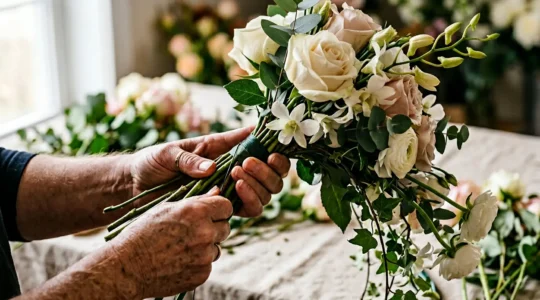
How to Wire a Shower Bouquet Without It Being Too Heavy?
Crafting a lightweight cascade bouquet is less about the flowers and more about mastering the underlying structural mechanics. Foam-free armatures and strategic hand-tying provide superior flow and dramatically reduce the final weight. Modern aesthetics rely on negative space and dynamic…
Read more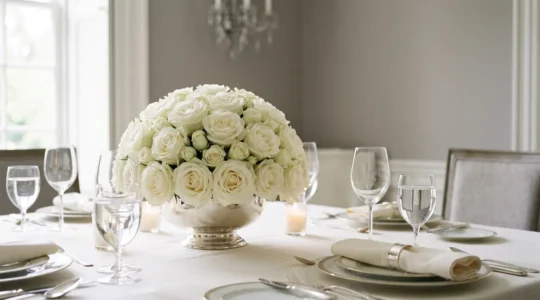
How to Construct a Classic Dome Arrangement for Formal Dining?
Crafting a formal dome is an exercise in discipline, not creativity; its success hinges on underlying principles of physics and geometry. The luminosity of white flowers in low light is a scientific advantage (albedo), not merely an aesthetic choice. An…
Read more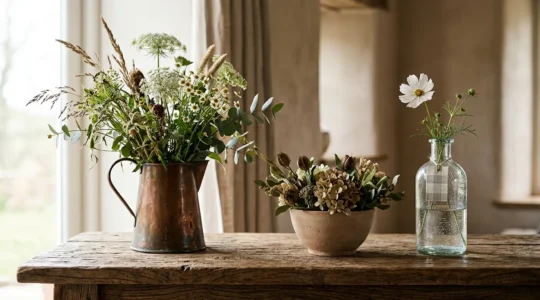
How to Elevate Rustic Chic from ‘Messy’ to ‘Curated’?
Contrary to popular belief, achieving an elevated rustic aesthetic isn’t about adding more burlap and mason jars. The true secret lies in intentional curation, embracing sophisticated textural contrasts, and knowing what to leave out. This guide moves beyond the clichés,…
Read more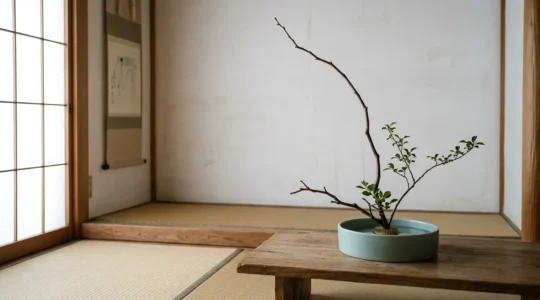
How to Practice Ikebana to Find Mental Clarity?
Most assume Ikebana is the Japanese art of arranging flowers. This is incorrect. The arrangement is merely a byproduct, the trace left in the physical world after a rigorous mental exercise. True Ikebana is a spiritual discipline that uses the…
Read more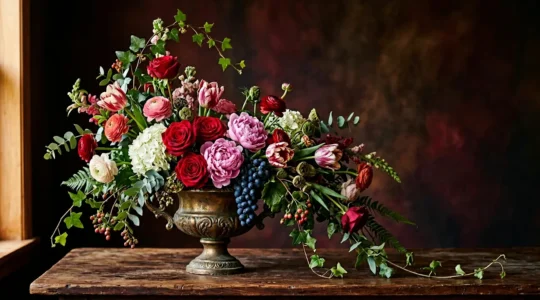
How to Distinguish Between Baroque and Flemish Floral Styles?
The essential difference between Baroque and Flemish floral design lies not in the flowers used, but in their philosophical approach to space and narrative. Baroque arrangements are dynamic, sculptural actors using dramatic S-curves and asymmetry to engage with and shape…
Read more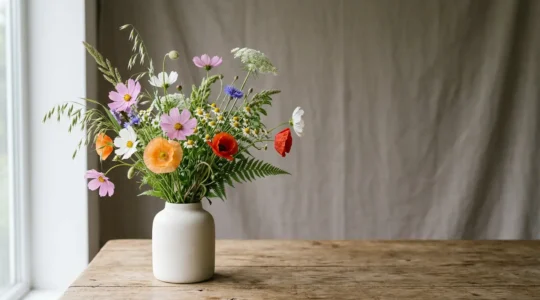
How to Create Loose Wildflower Bouquets That Look Professional, Yet Wild
Contrary to popular belief, the perfect “effortless” wildflower bouquet is a masterpiece of hidden engineering, not a happy accident. True wild style relies on structural mechanics like the spiral technique and chicken wire, not just random placement. Vase life is…
Read more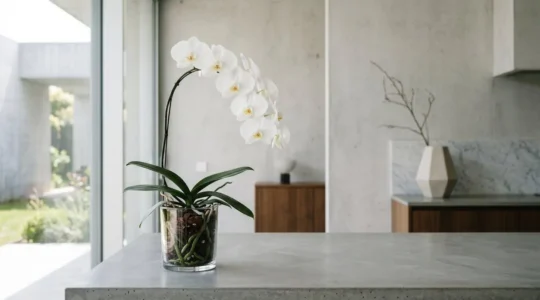
How to Keep an Elegant Orchid Blooming for Months in a Modern Home?
Keeping an orchid blooming isn’t about following rigid rules; it’s about understanding its botanical logic to avoid common, fatal mistakes like the ice cube trick. Transparent pots are not just for aesthetics; they are critical for fueling root photosynthesis and…
Read more
The Sculptor’s Eye: What Truly Distinguishes Floral Artistry from Mere Arranging
The greatest myth in floristry is that artistry comes from adding more; in truth, it is an act of profound subtraction and intention. Successful floral art treats botanicals as sculptural elements with inherent gesture, not just decorative color. Mastering negative…
Read more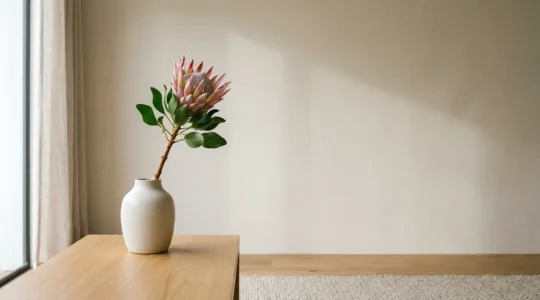
How to Style Single Stems for a Modern Look on a Tight Budget?
Contrary to popular belief, minimalist floral styling isn’t just about using less; it’s about making empty space a deliberate and powerful design element. The visual impact of a single stem comes from its relationship with the space around it, a…
Read more