In summary:
- Wilting is a medical emergency for flowers, caused by an air bubble (embolism) in the stem or severe dehydration.
- Immediate diagnosis is key: cloudy water points to bacteria, while a firm stem with a droopy head suggests an air lock.
- Radical interventions like a quick dip in boiling water or fully submerging the flower head are proven life-saving techniques.
- Environmental factors like air conditioning are silent killers; move your arrangement away from drafts.
- Proper stem preparation (splitting, not smashing) is the best form of preventative care.
It’s the moment every host dreads. The party is hours away, the table is set, but the glorious hydrangea centerpiece that was the star of your decor is now a tragic, drooping mess. The panic sets in. The common advice swirls in your head: “just add water,” “cut the stems again.” But these are often just guesses, not solutions. When your flowers are flatlining, you don’t have time for guesswork. You need a medic, an emergency protocol that works fast.
Forget the old wives’ tales. Reviving a wilted flower, especially a notoriously thirsty hydrangea, is a science. It’s about understanding plant physiology under duress. The true key isn’t just about providing water; it’s about clearing the pathway for that water to reach the bloom. The enemy is often an invisible air bubble, a bacterial blockage, or an environmental assault you hadn’t even considered.
This is not another gentle gardening guide. This is a floral emergency room. We will treat your flower as the patient it is, moving from radical intervention to precise diagnosis. You will learn to identify the specific cause of the wilt and apply the correct, science-backed treatment to resuscitate your blooms before your first guest arrives. We will cover the critical techniques, the environmental culprits, and the triage skills to know when a bloom is truly beyond saving. Your mission: bring that hydrangea back from the brink, STAT.
This guide provides a complete emergency protocol, from immediate life-support techniques to advanced diagnostics and preventative care. Follow these sections to become a floral first responder.
Summary: Your Emergency Hydrangea Revival Protocol
- When to Dip Stems in Boiling Water to Clear Air Locks?
- Can Soaking the Entire Flower Head Save a Wilted Rose?
- How to Tell if Wilting Is Due to Thirst or Bacteria?
- The AC Vent Culprit: Is Your Air Conditioner Dehydrating Your Flowers?
- Smash or Split: The Best Way to Hydrate Lilacs and Hydrangeas?
- How to Stop Poppies and Cosmos from Wilting in an Hour?
- When Is a Flower Too Far Gone to Be Saved?
- How to Master Floral Design Basics Without Expensive Courses?
When to Dip Stems in Boiling Water to Clear Air Locks?
This is the floral equivalent of using a defibrillator. It’s an extreme, last-resort measure for a specific and deadly condition: an air embolism. When a woody stem like a hydrangea is cut, a tiny air bubble can get sucked into its vascular system (the xylem), creating a blockage that stops water from reaching the bloom. The stem below the lock is hydrated, but the flower head above it is dying of thirst. You’ll see a firm stem with a severely drooping head.
The boiling water trick works by forcing the air bubble out. The heat causes the air to expand and be expelled, while simultaneously killing any bacteria at the stem opening. This is a high-risk, high-reward procedure that must be done with precision. Professional florists advise that this treatment requires a 30 seconds maximum exposure at near-boiling temperatures to be effective without cooking the stem tissue. You must protect the delicate petals from the steam by wrapping them in a towel or paper before you begin the procedure.
Immediately after the hot water dip, transfer the stem into a vase of cool, fresh water. The cleared xylem can now drink freely, and you should see a dramatic recovery within one to three hours. This technique is a powerful weapon in your emergency kit, but only for the specific diagnosis of an air lock.
Can Soaking the Entire Flower Head Save a Wilted Rose?
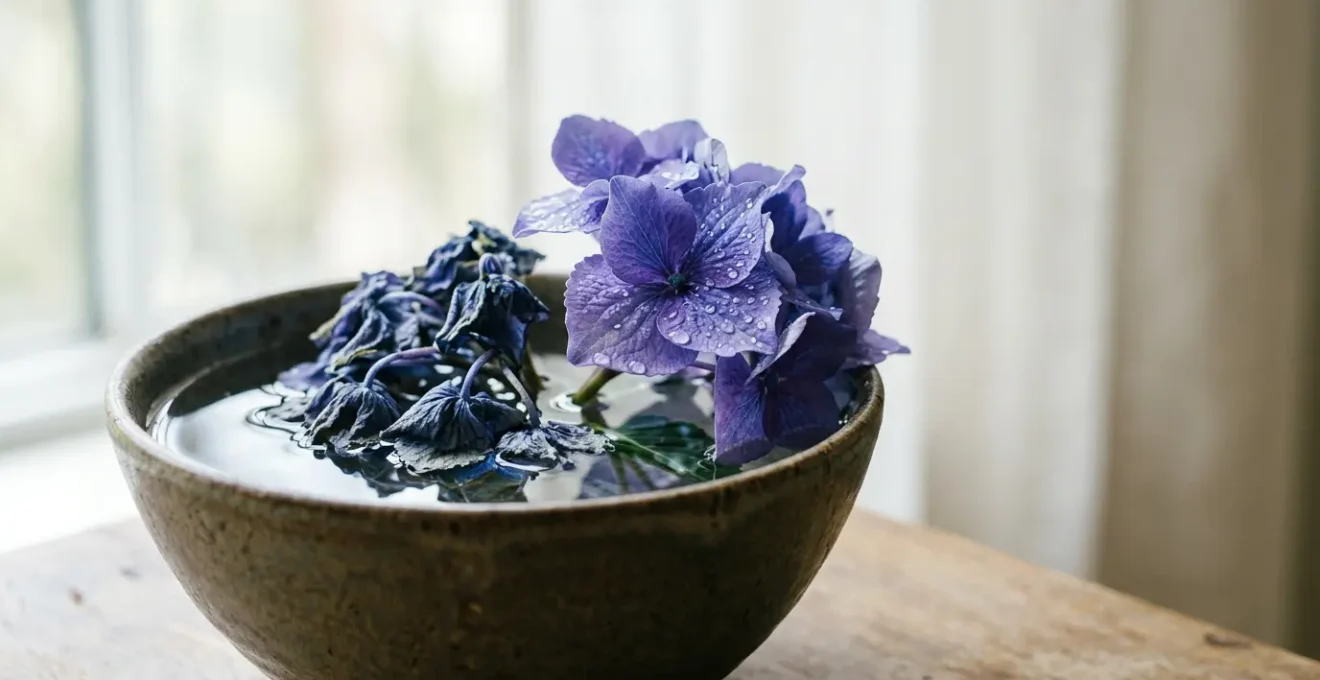
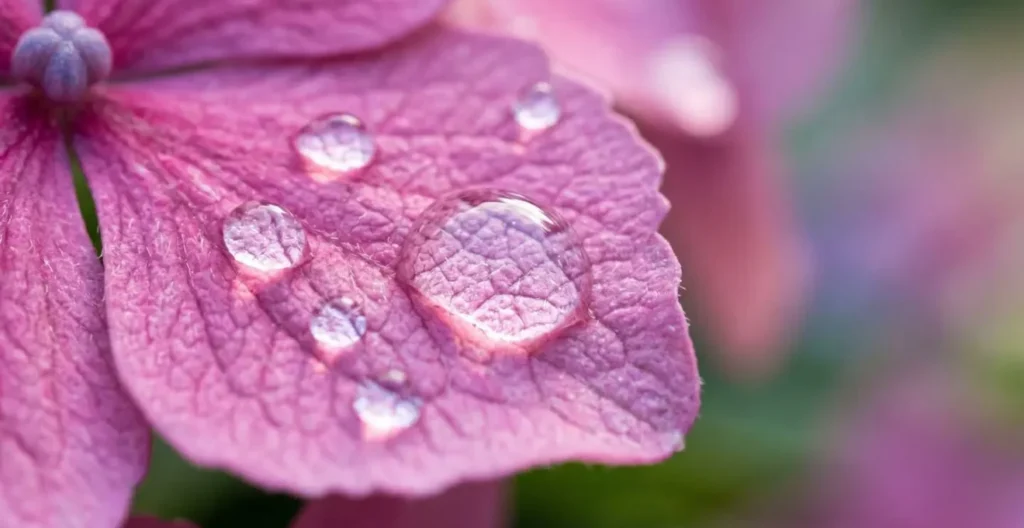
While the title mentions roses, this life-saving baptism is a technique uniquely suited for hydrangeas. Unlike most flowers that only drink through their stems, hydrangeas possess a remarkable ability: they can absorb water directly through their petals. This process, known as petal transpiration, makes them excellent candidates for full submersion when they are severely dehydrated.
This isn’t just folklore; it’s backed by science. A revealing case study was performed to understand this unique trait. As confirmed by FloraLife research showing hydrangeas absorb water through their petals even after all leaves were removed, the blooms themselves are a primary site of hydration. When a hydrangea is completely limp—both stem and bloom—it’s a sign of systemic water loss that a simple stem drink might not fix fast enough. Submerging the entire flower head in a basin of lukewarm water for 20-30 minutes allows the thousands of tiny surfaces on the petals to absorb water simultaneously, rapidly rehydrating the entire structure from the outside in.
After its bath, let the flower rest out of water for a few minutes, give the stem a fresh cut on an angle, and place it in a clean vase. This two-pronged attack—hydrating through both the petals and the stem—is one of the most effective methods for bringing a nearly-dead hydrangea back to life. For other flowers like roses, this technique can promote fungal growth and is not recommended.
How to Tell if Wilting Is Due to Thirst or Bacteria?
Before you perform any intervention, you must diagnose the patient. Applying the wrong treatment can be useless or even harmful. Wilting is a symptom, not a disease. The two main culprits are dehydration (caused by an air lock or simply not enough water) and a bacterial blockage. A bacterial infection clogs the stem’s vascular system with a slimy biofilm, preventing water uptake just as effectively as an air bubble.
Your first diagnostic tool is the vase water itself. Is it clear or is it cloudy and murky? Foul-smelling or cloudy water is a definitive sign of advanced bacterial growth. You must act immediately: discard the water, scrub the vase with soap and hot water, and give the flower stems a fresh cut to remove the slimy, infected portion. Conversely, if the water is clear and the stem feels firm but the bloom is droopy, you are likely dealing with an air lock, which calls for the hot water treatment.
The following table serves as your emergency room triage chart. Use it to quickly assess the symptoms and determine the correct course of action, as outlined in this diagnostic guide from the National Institutes of Health.
| Symptom | Likely Culprit | Immediate Action |
|---|---|---|
| Cloudy, murky vase water | Bacterial contamination | Dump water, scrub vase, re-cut stems 1 inch, fresh water + flower food |
| Slimy stem ends (soft/mushy texture) | Bacterial biofilm blockage | Cut away affected portion until firm tissue, clean vase thoroughly |
| Stem feels firm but bloom is droopy | Air lock in xylem | Re-cut stem underwater, dip in hot water for 30 seconds |
| Both stem and bloom are soft/limp | Severe dehydration | Full submersion of bloom in lukewarm water for 20-30 minutes |
| Foul odor from vase water | Advanced bacterial growth | Discard water immediately, sterilize vase, fresh cut + antibacterial treatment |
Your 5-Step Floral Triage Checklist
- Visual Inspection: Examine the vase water. Is it clear or cloudy? A cloudy appearance is your first red flag for bacterial contamination.
- Tactile Test: Feel the stem end. Is it firm or is it soft, slimy, and mushy? Slime indicates a bacterial biofilm has formed, blocking water uptake.
- Structural Check: Assess the entire flower. Is just the head drooping while the stem is firm (likely air lock), or are both the stem and bloom limp (severe dehydration)?
- Scent Analysis: Does the water have a foul, swampy odor? This confirms advanced bacterial growth, requiring immediate and aggressive cleaning protocols.
- Environmental Scan: Check the flower’s location. Is it in a direct draft from an AC vent, in direct sunlight, or near ripening fruit? These external factors can accelerate wilting.
The AC Vent Culprit: Is Your Air Conditioner Dehydrating Your Flowers?
You’ve provided fresh water and clean stems, yet your flowers are still wilting. It’s time to look for a silent assassin in the room: your air conditioner. While keeping a room cool seems beneficial, air conditioning units function as powerful dehumidifiers, stripping moisture from the air. This creates a dry, desert-like micro-environment that is brutal for cut flowers.
Plants “breathe” through a process called transpiration, releasing water vapor into the air. In a low-humidity environment, this process goes into overdrive. The flower loses moisture to the dry air much faster than it can drink it up through its stem, leading to rapid wilting. Studies show that standard air conditioning can reduce ambient humidity by 20-40%, creating a state of constant water stress for your arrangements. Placing flowers in the direct path of an AC vent is like putting them in a wind tunnel; it’s a death sentence.
The solution is to create a “humidity bubble” around your arrangement. The first and most important step is to move the vase at least six feet away from any direct air drafts. You can also supplement local humidity by placing a tray of water and pebbles near the vase or grouping your arrangement with leafy houseplants, which naturally release moisture. For hydrangeas specifically, a daily misting of the petals with room-temperature water can help counteract the drying effects of the air, supplementing hydration through their unique ability for petal absorption.
Smash or Split: The Best Way to Hydrate Lilacs and Hydrangeas?
Proper preparation is the foundation of floral longevity. For woody-stemmed flowers like hydrangeas and lilacs, simply cutting the stem is not enough. A common myth suggests smashing the stem ends with a hammer to increase water absorption. This is a catastrophic mistake. Smashing destroys the very structures you need to transport water: the delicate network of xylem tubes that make up the plant’s vascular system.
Instead of smashing, the correct professional technique is to split the stem. After making a fresh, sharp 45-degree angle cut with a floral knife (not scissors), gently split the bottom inch of the stem vertically, creating two or four “prongs.” This technique effectively increases the surface area available for water absorption without crushing the internal plumbing. Think of it as opening more doors for the water to enter, rather than demolishing the entire building.
Why not scissors? As leading horticulturists explain, scissors tend to crush the stem’s vascular system, pinching the tubes shut and inadvertently creating a new blockage right at the source. A sharp knife creates a clean slice that leaves the xylem open. The Brooklyn Botanic Garden’s official protocol for woody stems confirms that splitting is the superior method, as it maintains the integrity of the water transport tissues while maximizing surface area. This simple but crucial step, performed before the flower even enters the vase, is your first and best line of defense against wilting.
How to Stop Poppies and Cosmos from Wilting in an Hour?
While this guide focuses on hydrangeas, an ER doctor must be prepared for any patient. Certain flowers, like poppies, cosmos, and euphorbia, present a unique challenge: they secrete a milky latex sap the moment they are cut. This sap immediately clogs the stem’s vascular system, preventing any water uptake and causing them to wilt within an hour, no matter how much water is in the vase.
To save these delicate blooms, you must perform a procedure called searing. This involves cauterizing the cut end of the stem to stop the sap from bleeding and seal the pathways open. There are two primary methods for this, both requiring precision and care. You can either dip the very end of the stem into boiling water for exactly 30 seconds or apply a direct flame from a match or lighter to the cut end for about the same amount of time. Both methods achieve the same goal: they stop the bleeding and lock the vascular system open for hydration.
This is a one-time procedure. A critical rule, emphasized by institutions like the Brooklyn Botanic Garden, is that once a stem is seared, you must not re-cut it unless you are prepared to immediately sear it again. Cutting a seared stem will restart the flow of sap, undoing your work and re-clogging the system. Mastering this technique allows you to confidently work with some of the most beautiful but notoriously difficult cut flowers.
Key Takeaways
- Diagnose Before You Act: Wilting is a symptom. Check for an air lock (firm stem, droopy head), bacterial infection (cloudy water, slimy stem), or severe dehydration (limp all over) before choosing a treatment.
- Use Radical Interventions Precisely: The boiling water dip is for air locks. The full head submersion is for systemic dehydration in hydrangeas. Using the wrong one is ineffective.
- Control the Environment: Your air conditioner is a major threat. Keep arrangements far away from drafts and consider misting hydrangea petals to combat low humidity.
When Is a Flower Too Far Gone to Be Saved?
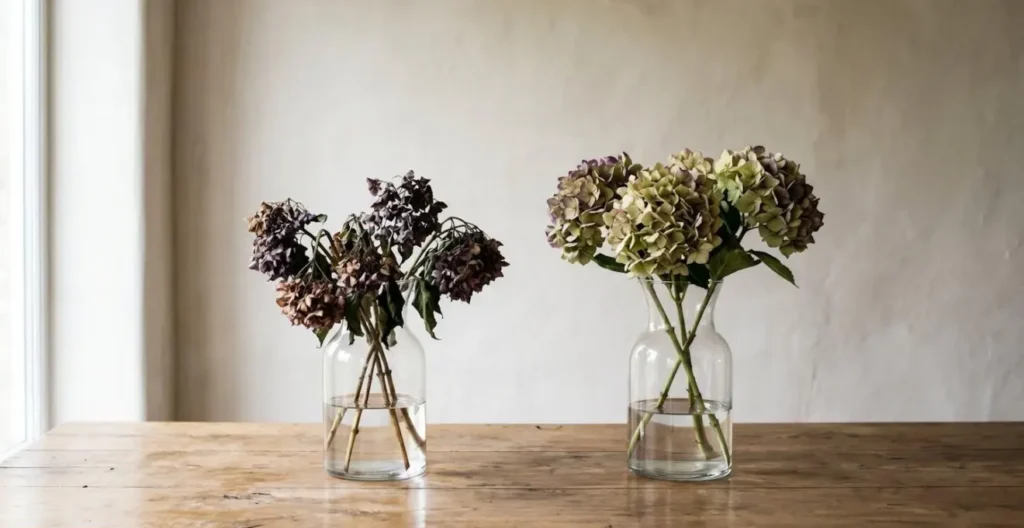
As an emergency floral doctor, you must also know when to call it. Triage is the art of knowing where to focus your life-saving efforts and when a patient is beyond recovery. For a cut flower, the point of no return is when the cells have become permanently damaged (necrotic) and can no longer be rehydrated. The visual signs are unmistakable: petals that are not just wilted, but dry, crispy, or turning brown and black at the edges. A stem that is mushy and discolored far up its length is a sign of systemic bacterial rot that cannot be fixed by a simple re-cut.
If you have tried the submersion technique and the boiling water trick and the flower shows zero signs of perking up after three hours, its cellular structure has likely collapsed. At this point, further efforts are futile. However, don’t lose hope too quickly. The difference between a severely wilted but recoverable hydrangea and a dead one is dramatic. According to a comprehensive 2025 review on postharvest treatments, proper interventions have been shown to increase the vase life of cut hydrangeas from a mere 3.6 days to an impressive 12.3 days, demonstrating the vast potential for revival.
Your goal is to intervene while the cells are still viable. A limp, pliable petal can be saved; a dry, brittle one cannot. Learning to recognize this difference will save you time and emotional energy, allowing you to focus on the blooms that still have a fighting chance and gracefully letting go of those that don’t.
How to Master Floral Design Basics Without Expensive Courses?
Resuscitating a dying bloom is a critical skill, but true mastery lies in prevention and understanding how flowers behave together. You don’t need expensive courses to grasp the fundamentals; you need to observe and apply a few key principles. One of the most common mistakes beginners make is treating all flowers in a mixed bouquet equally. This is especially dangerous when hydrangeas are involved.
As research from floral care experts BloomIQ shows, hydrangeas are exceptionally thirsty and can consume water at a much higher rate than other flowers like roses or tulips. In a mixed arrangement, they can quickly deplete the vase’s water level, leaving their less-thirsty companions high and dry. Furthermore, their large, dense stems cause significant water displacement. A vase that looks half-full of water can become dangerously low once several hydrangea stems are added. This means you must monitor water levels daily, not every few days.
A pro-level tip is to arrange by “thirst level.” Place water-guzzling hydrangeas in the deepest part of the vase, ensuring their stems are fully submerged. Be conscious of not overcrowding the vase, as this can prevent certain stems from reaching the water at all. By understanding the individual needs of each flower and anticipating challenges like water displacement, you move from simply arranging flowers to intelligently managing a small, living ecosystem. This mindset is the foundation of great floral design.
You now have the knowledge and the emergency protocol. The next time you face a wilting centerpiece, you can approach it not with panic, but with the cool confidence of a trained professional. Save these instructions and be ready to act as your flowers’ first responder.