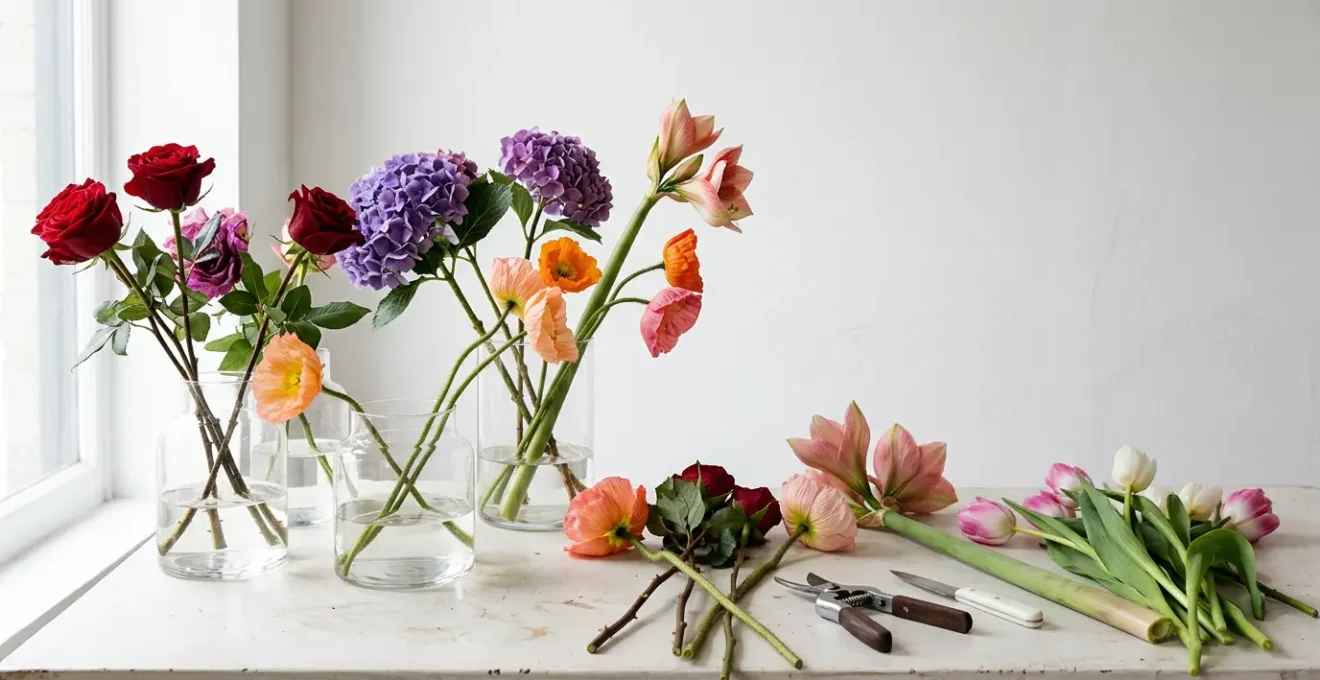
The key to long-lasting arrangements is not a universal rulebook, but a species-specific understanding of flower biology.
- Woody stems (like hydrangeas) require splitting to maximize water absorption, while hollow stems (like amaryllis) need internal hydration.
- Bulb flowers (like tulips) are prone to rot in deep water, whereas leafy roses require a full vase to combat high transpiration rates.
Recommendation: Stop treating all flowers the same. Identify the stem type and physiological needs of each bloom to apply the correct conditioning technique for a dramatically longer vase life.
There is a unique frustration reserved for the flower lover: watching a stunning, thoughtfully arranged bouquet begin to wilt and fade in just a few days. You followed all the conventional rules. You cut the stems at an angle, diligently changed the water, and even used that little packet of flower food. Yet, the hydrangeas are drooping, and the tulips are flopping over. This common experience leads many to believe that cut flowers are simply, and tragically, ephemeral.
The standard advice, while not wrong, is incomplete. It treats every flower as if it operates on the same biological system. But what if the secret to a vase life that extends beyond a week lies not in a universal checklist, but in the unique botanical identity of each flower? A lilac with its tough, woody stem has a completely different vascular system—its internal “plumbing”—than a delicate poppy with its latex-filled veins or a hollow-stemmed amaryllis. Understanding these differences is the shift from basic care to advanced floral preservation.
This guide moves beyond generic tips and into the specific science of floristry. We will explore the precise, evidence-based techniques tailored to different flower families. You will learn not just *what* to do, but *why* you are doing it—from searing poppy stems to managing the water levels for bulb flowers. By mastering this species-specific approach, you can unlock the full potential longevity hidden within every stem.
This article provides a detailed exploration of the tailored care techniques essential for maximizing the life of your cut flowers. Below, you’ll find a summary of the specific topics we will cover, from hydrating woody stems to understanding the science behind flower food.
Summary: The Advanced Guide to Flower-Specific Vase Life
- Smash or Split: The Best Way to Hydrate Lilacs and Hydrangeas?
- How to Sear Poppy Stems to Stop Sap Blocking Water Intake?
- The Upside Down Trick: How to Fill Amaryllis Stems with Water?
- Why Do Tulips Need Little Water While Roses Need a Full Vase?
- How Many Days of Vase Life Do You Lose per Hour of Direct Sun?
- How to Keep Cut Stems Fresh for Over 10 Days Without Chemicals?
- When to Cut Wildflowers for Maximum Vase Life?
- Sugar, Bleach, or Packet: Which Flower Food Actually Works?
Smash or Split: The Best Way to Hydrate Lilacs and Hydrangeas?
The common advice to smash the ends of woody-stemmed flowers like lilacs and hydrangeas is a persistent floral myth that does more harm than good. Smashing crushes the very vascular tissues—the xylem—responsible for water uptake. The goal is not to brutalize the stem but to increase the surface area for hydration. These flowers have tough, bark-like exteriors that are less permeable to water, so a simple angled cut is often insufficient for their high water needs. The correct professional technique is to split the stem.
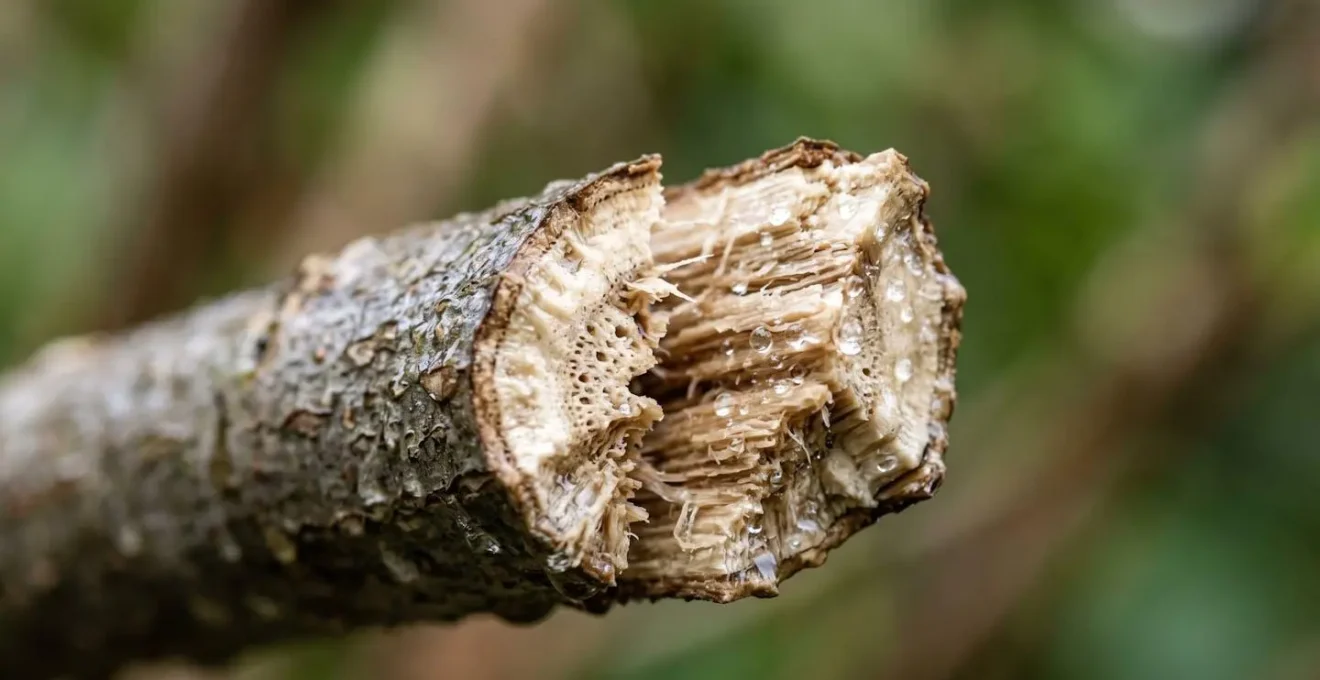
As the detailed view of a prepared stem shows, a clean split creates two or more surfaces that expose the internal xylem directly to water, dramatically improving the flower’s ability to drink. This method, combined with removing lower foliage and using tepid water (which is absorbed more easily than cold water), provides the best possible start for these thirsty blooms. For hydrangeas that have already wilted, a full submersion in cool water for about an hour can rehydrate the petals directly through osmosis, a rescue technique that often revives a seemingly lost flower head.
Your Action Plan: Woody Stem Conditioning for Maximum Water Uptake
- Angular Cut: Cut the woody stem at a sharp 45-degree angle using clean, sharp pruning shears or a floral knife.
- Split, Don’t Smash: Make a clean, vertical cut upwards from the base of the stem, about 1-2 inches (2-5 cm) long. For very thick stems, you can make a perpendicular second split to create four quadrants.
- Strip Lower Foliage: Remove all leaves that will sit below the waterline in the vase to prevent bacterial growth that clogs stems.
- Initial Hydration: Place the prepared stems in a bucket filled with several inches of tepid water, ideally with commercial flower food added. Let them condition for at least an hour before arranging.
- Emergency Rehydration: For wilted hydrangeas, fully submerge the entire flower head and stem in a basin of cool water for 30-60 minutes to revive them.
How to Sear Poppy Stems to Stop Sap Blocking Water Intake?
Flowers like poppies, and some varieties of euphorbia, present a unique challenge: they exude a milky latex sap the moment their stem is cut. This sap immediately begins to coagulate upon contact with air and water, forming a seal that effectively blocks the stem’s vascular system, preventing any water uptake. This is why unconditioned poppies often wilt and die within a day or two. The solution is cauterization—using a brief, intense application of heat to sear the stem end. This process instantly seals the wound, preventing sap leakage without damaging the water-conducting xylem channels inside. The difference is dramatic, extending vase life from a mere 1-2 days for an unconditioned stem to 5-7 days with proper searing.
There are two primary methods for professional cauterization. The first involves dipping the fresh-cut stem ends into boiling water for 7-10 seconds. The second, more direct method, is to hold the cut end over a candle or lighter flame just until the tip begins to blacken. With either technique, it is crucial to immediately plunge the treated stem into a vase of cool, clean water. This action stops the heat from traveling further up the stem and “cooking” it, while allowing the now-unobstructed xylem to begin hydrating the flower immediately. This simple but vital step transforms one of the most fleeting cut flowers into a long-lasting centerpiece.
The Upside Down Trick: How to Fill Amaryllis Stems with Water?
The magnificent, heavy blooms of flowers like amaryllis, delphiniums, and some large alliums are supported by surprisingly fragile, hollow stems. These stems are prone to two main problems: they can easily crush or split under the weight of the flower head, and their hollow nature can create airlocks that prevent water from reaching the bloom. The “upside-down trick” is an ingenious floristry technique that solves both issues simultaneously by providing both internal hydration and crucial structural support. A stem filled with water is significantly stronger and more resistant to kinking or collapsing than an empty one.
This method leverages the unique anatomy of the flower to ensure its longevity and stability in an arrangement. By turning the flower upside down and filling its hollow center with water, you create an internal reservoir that keeps the entire stem turgid and hydrated from within. This internal pressure is key to its structural integrity.
Case Study: The Cotton Ball Plug Technique for Hollow-Stemmed Flowers
Professional florists demonstrate the upside-down filling method for amaryllis. Hold the hollow flower stem upside down and carefully fill it with cool water. Then, use a small piece of a cotton ball to gently plug the opening at the base of the stem. This cotton plug acts as a stopper, holding the water inside the stem as you turn it upright and place it in a vase. Crucially, the cotton is porous, so it prevents water from rushing out but still allows the stem to absorb additional water from the vase. This technique provides both an internal water source and physical reinforcement, preventing the hollow stem from splitting. This method is also highly effective for other hollow-stemmed flowers like delphiniums and agapanthus, ensuring their heavy, tall spires remain upright and vibrant.
Why Do Tulips Need Little Water While Roses Need a Full Vase?
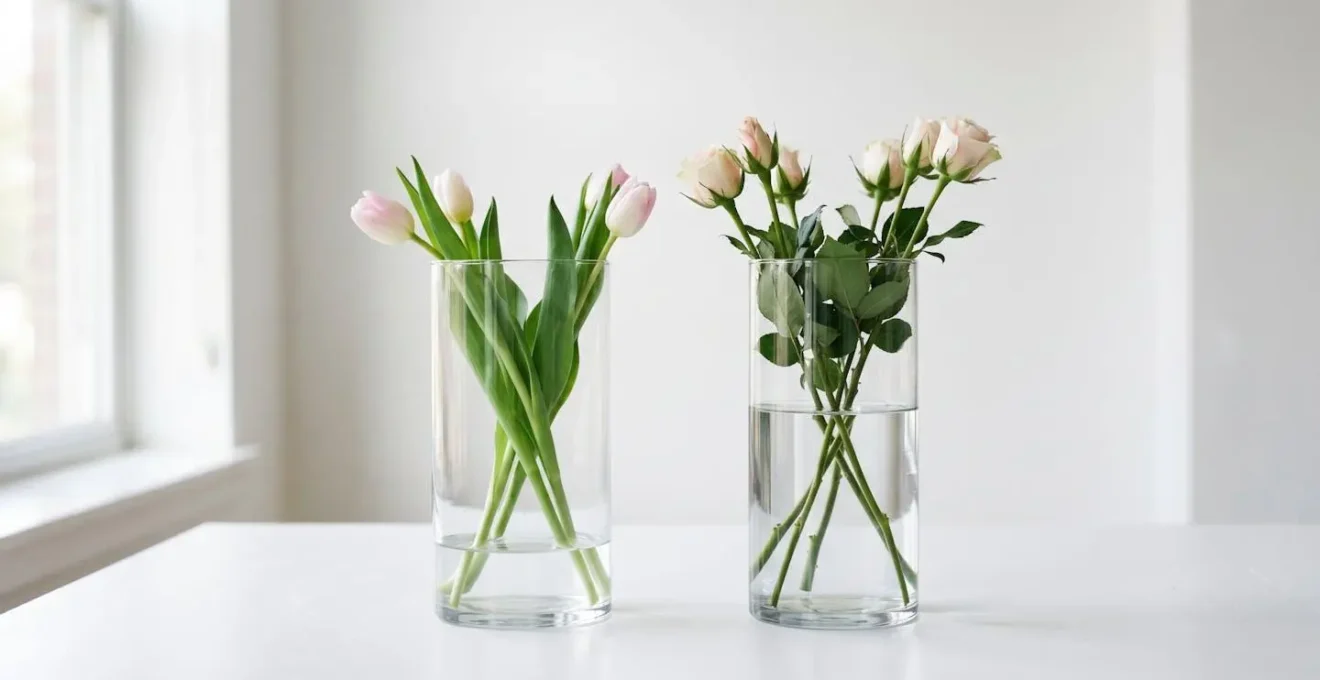
The amount of water a cut flower needs is directly related to its biological structure and rate of transpiration—the process of water evaporating from its petals and leaves. Not all flowers are created equal in this regard. A rose, with its dense layers of petals and abundant foliage, has a massive surface area and a very high transpiration rate. It is a “thirsty drinker” that requires a deep reservoir of water to constantly replenish what it loses to the air. In contrast, a tulip is a bulb flower. Its stem is designed to continue growing even after being cut, and its leaves and petals are smoother and less numerous than a rose’s, leading to a much lower transpiration rate.
Providing tulips and other bulb flowers like ranunculus with a full vase of water is counterproductive. The excess water not only encourages rapid, “leggy” growth that causes the stems to become weak and flop over, but it also creates an environment ripe for bacterial growth. Bulb stems are particularly susceptible to stem rot when submerged in deep water for extended periods. They are “sippers” that thrive in just a few inches of water, enough to keep them hydrated without promoting decay or excessive growth. Understanding this fundamental difference between thirsty, leafy flowers and rot-prone bulb flowers is essential for mixed arrangements.
The following table, based on an analysis of floral hydration needs, clarifies these distinctions.
| Category | Flowers | Water Level | Scientific Reason |
|---|---|---|---|
| Thirsty Drinkers | Roses, Hydrangeas, Sunflowers | Full vase (deep water) | High transpiration rate through many petals and abundant foliage requires large reservoir |
| Sippers | Tulips, Ranunculus, Anemones | Shallow water (2-3 inches) | Bulb flowers continue to grow in vase; excess water accelerates growth causing floppiness and promotes stem rot |
| Rot-Prone | Gerbera Daisies | Shallow water | Susceptible to bacterial stem rot in deep water conditions |
How Many Days of Vase Life Do You Lose per Hour of Direct Sun?
While there isn’t a simple formula to calculate days lost per hour, the biological impact of direct sunlight on cut flowers is swift and severe. The primary mechanism of damage is accelerated transpiration. Heat and light cause the stomata (pores) on the petals and leaves to open wider, releasing water vapor at a much faster rate. In fact, research on cut flower transpiration shows that there is a 5-10x accelerated water loss in direct sun versus a cool, shaded spot. The flower’s vascular system simply cannot draw water up the stem fast enough to replace what is being lost, leading to a rapid loss of turgor pressure, which manifests as wilting, drooping, and crispy petal edges.
Direct sunlight essentially puts the flower into a state of extreme dehydration stress, forcing it to expend its stored energy reserves just to survive, rather than to maintain its bloom. This stress rapidly shortens its vase life. However, the sun is not the only culprit. Many common household elements create a similar microclimate of dehydration and accelerated aging. Placing an arrangement near a heat vent, on top of a warm television, or next to a bowl of ripening fruit can be just as damaging. Ripening fruit is particularly insidious as it releases ethylene gas, a natural plant hormone that signals flowers to mature, fade, and die more quickly.
How to Keep Cut Stems Fresh for Over 10 Days Without Chemicals?
Achieving a vase life of ten days or more without relying on commercial chemical preservatives is entirely possible by adopting a technique used by professional florists: overnight chilling and diligent mechanical maintenance. The core principle is to drastically slow down the flower’s natural life processes. A flower’s aging is driven by respiration (consuming stored sugars) and transpiration (losing water). By placing freshly cut flowers in a cool environment, you effectively put these processes into slow motion. This is the single most powerful non-chemical method for preservation.
This technique doesn’t just pause aging; it also allows the stems to hydrate fully in a low-stress environment, maximizing their turgor pressure before they are even arranged. When combined with daily maintenance—specifically, re-trimming the stems to remove any microscopic bacterial blockages and changing the water to remove new bacteria—this method creates a system of pristine hydration that can sustain blooms for a remarkably long time. The key is consistency and recognizing that you are actively managing the flower’s environment to combat the three main enemies of vase life: dehydration, starvation, and bacterial infection.
Case Study: The Professional Florist Overnight Chill Method
To dramatically extend vase life, florists use an overnight conditioning technique. Immediately after purchasing or cutting, place the flowers in a deep bucket of clean, cool water. Move the entire bucket to a cool, dark location, ideally a refrigerator or a cool basement with a temperature between 33-36°F (1-2°C), for at least four hours or overnight. This deep chill drastically slows the flowers’ metabolism, effectively pausing the aging process. The flowers absorb water deeply without losing it to transpiration. A professional florist’s daily regimen then involves re-trimming about a half-inch from each stem under running water and placing them in a clean vase with fresh water. Any fading blooms are removed immediately, as they release ethylene gas that accelerates the aging of their neighbors. This combined mechanical preservation method regularly achieves a 10+ day vase life for many flower types without any commercial flower food.
When to Cut Wildflowers for Maximum Vase Life?
The secret to a long vase life for wildflowers begins long before they’re placed in a vase; it starts with the moment they are cut. The best time to harvest any flower is in the cool, dewy hours of the early morning. During the night, plants recover from the heat of the previous day and their stems become fully hydrated and rigid with water. This state is known as maximum turgor pressure. Cutting flowers at this peak hydration time means they start their vase life with a full tank of water, making them far more resilient. In contrast, studies on turgor pressure demonstrate that flowers cut in the heat of midday are already partially dehydrated and stressed, a deficit from which they may never fully recover.
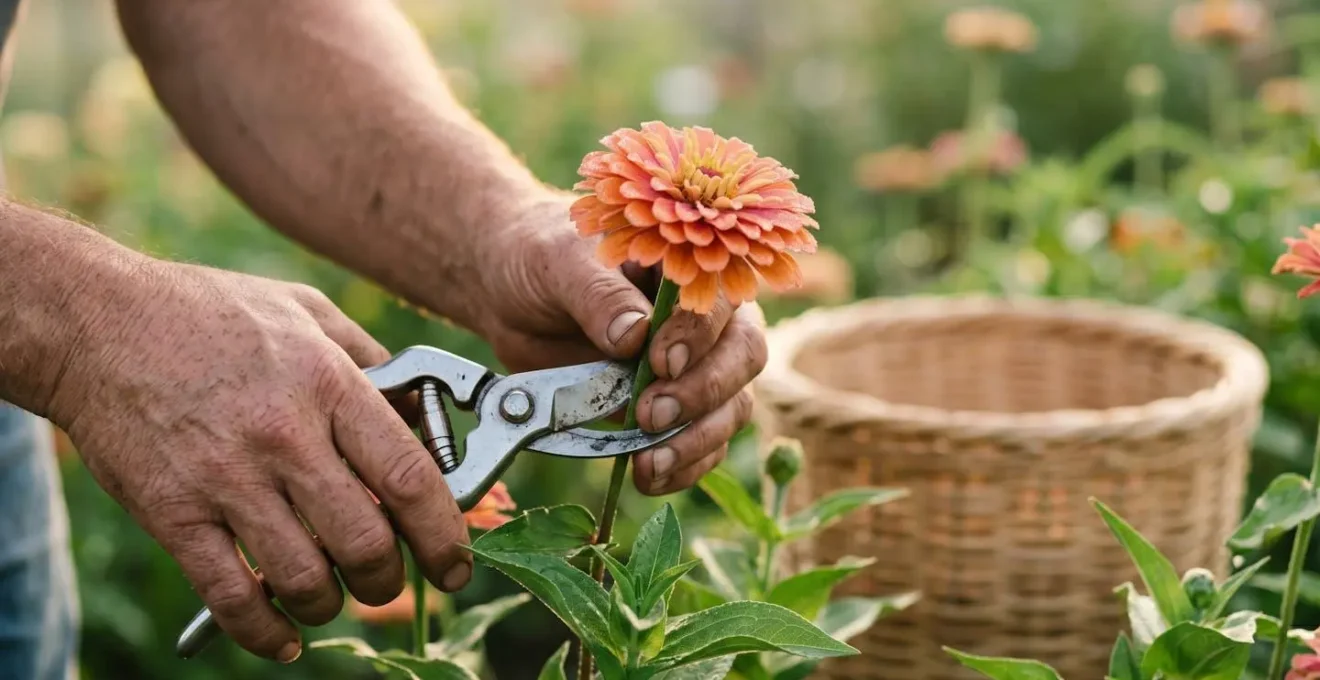
Beyond the time of day, the developmental stage at which a flower is cut is also critical and varies by species. Cutting a flower too early means it may never open, while cutting it too late means its vase life is already half over. Understanding the optimal cutting stage for different flower structures is key. For example, spiky flowers like delphiniums are best cut when the bottom third of the florets are open, as the rest will continue to open up the stem in the vase. Poppies, however, must be cut in a tight bud stage, just as the color begins to show. Regardless of the type, all wildflowers benefit from a conditioning period of several hours in a bucket of cool water in a dark place before being arranged. This allows them to stabilize and fully hydrate after the shock of being cut.
Your Action Plan: Optimal Cutting Stages for Different Wildflower Structures
- Composite flowers (e.g., zinnias, asters, cosmos): Cut when the flower is almost fully open. The petals should have their full color, but the very center might still be slightly green or tight.
- Spiky flowers (e.g., larkspur, delphiniums, gladiolus): Cut when the bottom one-third to one-half of the individual florets on the spike have opened. The upper buds will continue to open in the vase.
- Single-petal blooms (e.g., poppies, anemones): Cut when the flower is in the “cracking bud” stage. The bud should be swollen and showing a sliver of petal color, but not yet open. They will open fully indoors.
- Multi-bloom cluster flowers (e.g., Queen Anne’s Lace, yarrow): Cut when the main flower head is at least 75% open and feels firm and papery to the touch, not soft and tender.
- Conditioning: Immediately after cutting, place all stems in a bucket of cool water and move them to a cool, dark place for at least 2-4 hours before arranging. This crucial step reduces shock and ensures maximum hydration.
Key Takeaways
- Vase life extension is not about one-size-fits-all rules but about understanding the specific biological needs of each flower family.
- Stem anatomy is paramount: woody stems need splitting for surface area, hollow stems need internal support, and sap-filled stems need searing to prevent blockage.
- Environmental control—minimizing heat, direct sun, and ethylene gas while maximizing hydration through methods like overnight chilling—is more effective than most home remedies.
Sugar, Bleach, or Packet: Which Flower Food Actually Works?
The debate between commercial flower food packets, DIY recipes, and various home remedies is ongoing, but the science is clear. A properly formulated flower food is vastly superior to plain water or ineffective folklore solutions like adding a penny or aspirin to the vase. In fact, comprehensive research published in the Journal of Applied Horticulture found that all ten commercial preservatives studied significantly extended vase life compared to plain water. To understand why, you must look at the three essential components of an effective flower food.
First is sugar (carbohydrates), which serves as a food source. Once a flower is cut from its parent plant, it loses its ability to produce its own food through photosynthesis. The sugar in the solution provides the energy the flower needs to maintain its cellular functions and keep its bloom vibrant. Second is an acidifier, such as citric acid. Tap water is often slightly alkaline, but flowers absorb water most efficiently in a slightly acidic environment (pH 3.5-5.0). The acidifier adjusts the water’s pH to the optimal range for uptake. Third is a biocide (or disinfectant). This component, often a small amount of bleach, inhibits the growth of bacteria, fungi, and yeast in the water. These microorganisms feed on the sugar and dying plant matter, quickly multiplying and clogging the flower’s vascular system. A commercial packet is scientifically balanced to provide all three in the correct proportions, a feat that is difficult, but not impossible, to replicate with a precise DIY recipe.
This table, based on an efficacy comparison of various solutions, ranks the common options from most to least effective.
| Rank | Solution | Components | Effectiveness |
|---|---|---|---|
| 1 | Commercial Flower Food | Sugar (energy) + Acid (pH 3.5-5.0 for uptake) + Biocide (anti-bacterial) | Scientifically balanced, most effective |
| 2 | Precise DIY Recipe | 1 quart water + 1 tsp sugar + 1 tsp bleach + 2 tsp lemon/lime juice | Effective when measured accurately |
| 3 | Daily Water Changes + Stem Re-trimming | Fresh water + mechanical bacteria removal | Labor-intensive but effective and chemical-free |
| 4 | Plain Tap Water | Water only | Basic hydration, no preservation benefits |
| 5 | Home Remedies (pennies, aspirin, soda) | Incomplete or incorrect components | Ineffective or counterproductive |
Applying this species-specific knowledge transforms flower care from a game of chance into a predictable science. By recognizing the unique needs of each stem in your vase, you empower yourself to create arrangements that not only look beautiful upon creation but remain vibrant and fresh far longer than you thought possible. Start today by identifying the flower types in your next bouquet and applying the targeted techniques you’ve learned.