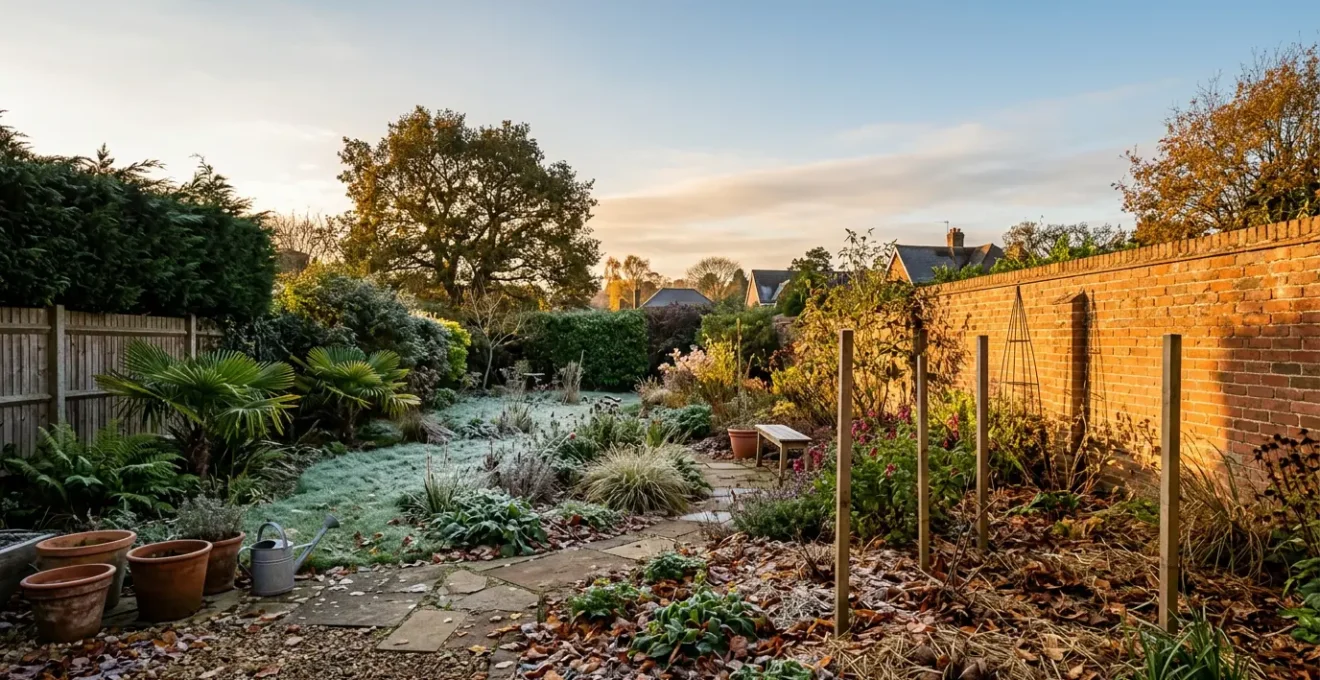
The number one reason gardeners lose expensive plants isn’t ignoring the USDA hardiness zone—it’s treating it as an infallible rule instead of a baseline climate model.
- Your garden contains multiple “microclimates” where temperatures can be significantly warmer or colder than the official zone rating suggests.
- New 2023 USDA data shows zones are shifting, making old maps and assumptions unreliable and costly.
Recommendation: Stop relying solely on the zone number and start analyzing your specific property’s thermal map to make data-driven planting decisions that save money.
It’s a frustratingly common story for any dedicated gardener: you invest in a beautiful perennial, checking meticulously that it’s rated for your USDA Hardiness Zone. It thrives all summer, only to be found lifeless after the first deep freeze. You followed the rules, so what went wrong? This experience isn’t just disheartening; it’s expensive. The common advice—”check your zone” and “add mulch”—is often a costly oversimplification of a complex climatic reality.
The core issue lies in a fundamental misunderstanding of what a hardiness zone represents. It is not a guarantee of survival; it is a large-scale data model based on average annual minimum winter temperatures over 30 years. It doesn’t account for the unique topographical and structural features of your specific property, sudden weather volatility, or other critical climate metrics like frost dates. To stop wasting money on plants that are doomed to fail, you must shift your mindset from that of a hobbyist to that of a field climatologist.
The true key to a resilient, cost-effective garden is not just knowing your zone, but understanding its limitations. It’s about learning to read the hidden climate map of your own backyard. By identifying your property’s unique microclimates—the warm pockets against a south-facing wall, the frost-prone hollow at the bottom of a slope—you can make strategic planting decisions that work with nature’s real-time data, not just a national average. This guide will teach you how to interpret hardiness zones correctly, diagnose your garden’s specific climate risks, and build a landscape that is both beautiful and built to last.
To help you navigate these critical concepts, this article breaks down the essential knowledge needed to move beyond basic zone ratings and truly understand your garden’s climate.
Summary: A Gardener’s Guide to Climate-Smart Planting
- Why Did My Zone-Appropriate Plant Die While the Neighbors’ Survived?
- How to Overwinter Tropical Plants in a Cold Zone Successfully?
- Native or Exotic: Which Is Safer for a Low-Maintenance Garden?
- The Climate Change Mistake: Relying on 20-Year-Old Zone Maps
- When Is the Safe ‘Frost-Free’ Date for Your Specific Zone?
- Evergreen or Deciduous: Which Creeper Suits Your Climate Goal?
- The Shade-Lover Error That Scorches Plants on South-Facing Patios
- How to Build a Perennial Garden That Requires Less Than 2 Hours of Care Monthly?
Why Did My Zone-Appropriate Plant Die While the Neighbors’ Survived?
The most likely answer is microclimate. Your garden isn’t a single, uniform climate zone; it’s a mosaic of smaller ones. A plant against a south-facing brick wall benefits from significant thermal mass, absorbing heat during the day and radiating it back at night. This can keep the immediate area several degrees warmer than a plant in an open, exposed lawn just a few yards away. This effect is powerful; research shows that some microclimates in urban areas can be 10°F warmer on clear, calm nights due to the urban heat island effect.
Your neighbor’s surviving plant might be sheltered from prevailing winter winds by a fence, a hedge, or the house itself. It might be located on higher ground where cold air, which is dense, drains away. Your failed plant, in contrast, could have been in a “frost pocket”—a low-lying area where cold air settles. Soil type and moisture also play a critical role. Drier, sandy soil freezes faster and deeper than moist, loamy soil, which retains more warmth. Even a slight difference in elevation, exposure, or proximity to a structure can mean the difference between life and death for a plant on the edge of its hardiness range.
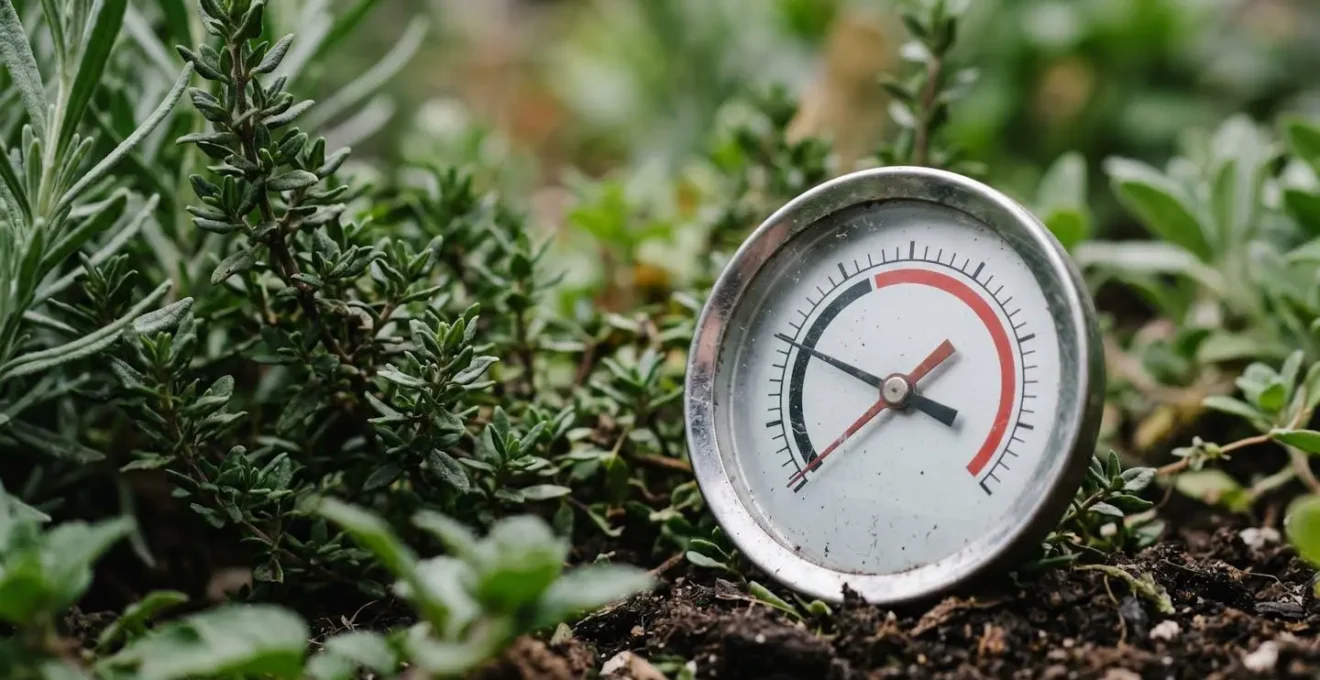
As the image above illustrates, a single garden can have multiple temperature realities. The key to preventing future losses is to stop thinking of your yard as “Zone 6b” and start mapping its specific thermal features. Identify the sheltered spots, the wind-swept corridors, and the frost pockets. This detailed understanding allows for strategic placement, turning a potential failure into a thriving success by matching the plant not just to your macro-zone, but to the precise microclimate it will inhabit.
How to Overwinter Tropical Plants in a Cold Zone Successfully?
Successfully overwintering tropical plants like Mandevilla, Hibiscus, or Elephant Ears in a cold zone is an exercise in active climate management. You have two primary strategies: forcing dormancy or maintaining active growth as a houseplant. The choice depends on the plant species and the indoor conditions you can provide. Forcing dormancy is often the most space- and energy-efficient method for many plants, effectively tricking them into a controlled hibernation until spring.
The alternative is to treat them as active houseplants. However, this requires simulating their native tropical environment, which is a significant challenge indoors during winter. According to research from Pennsylvania State University Extension, success hinges on maximizing two factors: light and humidity. Plants kept in the brightest possible sunny windows, supplemented with 8-12 hours of fluorescent light daily, and grouped together to increase ambient humidity, are far more likely to survive and even bloom. Without this intensive support, they often suffer severe leaf drop and decline, succumbing to the dry, low-light conditions of a typical centrally heated home.
Action Plan: Overwintering Tropicals via Forced Dormancy
- Transition Indoors Early: Bring tropical plants inside before temperatures drop below 50°F (10°C). This is typically in late summer, before they show any signs of stress or decline from the cold.
- Induce Dormancy: For non-bulbous plants, cut them back significantly and place them in a cool, dark location like an unheated basement or garage where temperatures remain between 40°F and 50°F (4°C to 10°C).
- Minimize Watering: During dormancy, water only sparingly to keep the soil barely moist, roughly twice per month. Overwatering is the fastest way to cause root rot in a dormant plant.
- Store Bulbs and Rhizomes: For plants like cannas or elephant ears, dig up the bulbs/rhizomes after the first light frost. Clean off the soil, let them dry, and store them in paper bags with peat moss in a cool, dry space around 45-55°F (7-13°C).
- Gradual Spring Wake-Up: About 4-6 weeks before your last expected frost, begin waking the plants. Move them to a warmer, sunnier spot and slowly increase watering and light exposure to prepare them for their return outdoors.
Native or Exotic: Which Is Safer for a Low-Maintenance Garden?
From a purely financial and low-maintenance perspective, the data points clearly toward native plants. Once established, plants that have evolved in your local climate are uniquely adapted to its soil, rainfall patterns, and temperature extremes. They require less water, no fertilizer, and minimal pest intervention, forming a resilient backbone for any garden. The cost savings are significant; studies demonstrate that gardens featuring primarily native plants cost 25-33% less annually to maintain after the initial establishment period. This makes them the safest bet for a gardener looking to reduce long-term costs and labor.
However, a sophisticated, climate-aware approach recognizes that the “native vs. exotic” debate is not a simple binary. The goal is a resilient garden ecosystem, and sometimes, well-chosen non-invasive exotic plants can play a valuable functional role. This is particularly true in urban environments and as climate patterns shift. For example, as native bloom times change or gaps appear in the season, certain exotic plants can provide a crucial, alternative food source for generalist pollinators like bees and hoverflies.
A fascinating 2020 study published in the journal Oecologia found exactly this. Researchers in Germany observed that as visits to native plants declined later in the summer, insect visits to exotic plants increased significantly. Gardens with a higher proportion of flowering exotics maintained a richer diversity of pollinator species late in the season. The takeaway is not to replace natives, but to think functionally. The safest garden isn’t necessarily 100% native; it’s one where the majority of plants are natives perfectly suited to your zone, supplemented by a few carefully selected, non-invasive exotics that fill seasonal gaps and enhance ecological function.
The Climate Change Mistake: Relying on 20-Year-Old Zone Maps
If you’re basing planting decisions on a hardiness zone map you learned a decade ago, you are operating with outdated climate data—a costly mistake. In November 2023, the USDA released its first major update to the Plant Hardiness Zone Map since 2012, and the changes were significant. The new map, based on 30 years of temperature data from 1991 to 2020, confirms what many gardeners have observed anecdotally: winters are getting warmer. The update revealed that approximately half of the U.S. shifted to a warmer half-zone (e.g., from 6a to 6b).
This shift is not just a number on a map; it reflects an average temperature increase of 2.5°F across the contiguous U.S. While this might tempt gardeners to experiment with less hardy plants, the climatological reality is more complex and dangerous. A warmer average does not eliminate weather volatility. In fact, warming trends can lead to more erratic weather, including unseasonably warm early springs that trigger premature plant growth, followed by a devastating late frost. These new, vulnerable leaves and buds are far more susceptible to cold damage than dormant ones, meaning a plant can be killed by a 30°F night in April even if it survived -10°F in January.
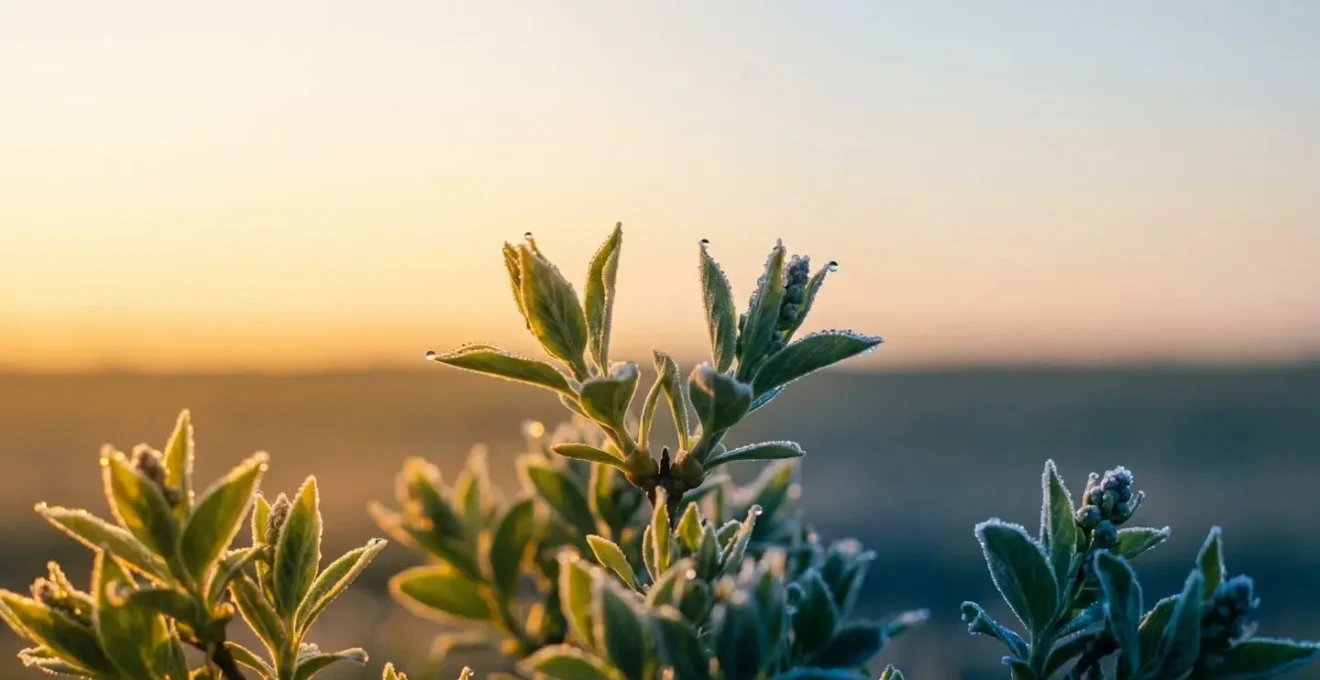
The table below highlights the key differences between the 2012 and 2023 maps, showing a clear trend based on more recent and comprehensive data. Relying on an old mental map is like using a 20-year-old forecast to plan for tomorrow’s weather. To save money and your plants, you must use the most current data while remaining hyper-aware that “warmer” does not mean “safer.”
| Map Feature | 2012 USDA Map | 2023 USDA Map |
|---|---|---|
| Data Period | 1976-2005 | 1991-2020 |
| Weather Stations | 7,983 | 13,412 |
| Zone Range | Zones 1-11 | Zones 1-13 (added 12 & 13) |
| Average Temperature Increase | Baseline | 2.5°F overall increase |
| Geographic Detail | Standard resolution | Higher resolution, especially Alaska |
| Areas with Biggest Shifts | N/A | Arkansas, Kentucky, Missouri, Tennessee |
When Is the Safe ‘Frost-Free’ Date for Your Specific Zone?
This question reveals a common and costly confusion among gardeners: conflating hardiness zones with frost dates. They are two entirely different climate metrics. Your USDA Hardiness Zone indicates the *average lowest winter temperature* a perennial plant can be expected to survive. In contrast, frost dates (the last spring frost and first fall frost) indicate the beginning and end of the growing season for tender annuals and vegetables. Knowing your zone tells you if a lavender plant will survive the winter; knowing your frost date tells you when it’s safe to plant out your tomatoes without them being killed by a late freeze.
Relying on the “average last frost date” is a gamble, as it represents only a 50% probability that you won’t see another frost. For a more data-driven, money-saving approach, you should seek out the 90% probability frost-free date. This is the date after which there is only a 10% chance of a frost occurring. Planting your tender annuals after this more conservative date dramatically increases their chance of survival. This data is typically available from your local university agricultural extension service, providing a much higher degree of certainty than a simple Google search for the average date.
Ultimately, the most accurate indicator is not the calendar, but the ground itself. A simple soil thermometer is an invaluable and inexpensive tool for any serious gardener. Many seeds and transplants have specific soil temperature requirements for germination and root development. Warm-season crops like peppers and tomatoes, for instance, need the soil to be consistently above 50°F (10°C) to thrive. Measuring the soil temperature at planting depth in the morning gives you real-time, hyperlocal data that is far more reliable than any generalized date on a chart. This method directly assesses the conditions your plants will actually experience.
Evergreen or Deciduous: Which Creeper Suits Your Climate Goal?
Choosing a climbing vine for a wall is not just an aesthetic decision; it’s a strategic climate-control choice that can impact your home’s energy efficiency. The right vine in the right place acts as a passive heating and cooling system. The primary decision is between an evergreen vine, which keeps its leaves year-round, and a deciduous one, which drops them in the fall. The optimal choice depends entirely on your specific climate goal for that particular wall.
A deciduous vine is the superior choice for energy management on south- and west-facing walls. In summer, its dense foliage creates a “green wall” that blocks intense solar radiation, shading the wall and keeping the interior cooler. In winter, it drops its leaves, allowing the low-angled winter sun to strike the wall, passively heating the thermal mass of your home. This dynamic, seasonal change is the essence of smart climate design. An evergreen vine in this same location would be a mistake, blocking that beneficial winter sun and potentially trapping unwanted moisture against the wall.
Conversely, an evergreen vine is functionally superior on north- and east-facing walls, or any location where your goal is year-round screening or insulation. The dense, persistent foliage provides an excellent windscreen, creating a layer of still air between the leaves and the wall that reduces winter heat loss. However, they come with a risk of “winter desiccation” or winter burn, where the leaves lose water to dry winter winds while the roots are in frozen ground and unable to replenish it. This requires careful site selection away from the harshest winter winds and proper watering in the fall.
| Characteristic | Evergreen Vines | Deciduous Vines |
|---|---|---|
| Winter Function | Provides insulation and windscreen | Allows winter sun to warm walls |
| Summer Function | Can trap heat against south walls | Provides shade, blocks summer heat |
| Primary Risk | Winter desiccation (winter burn) | Late spring frost damage to new growth |
| Preventive Measures | Anti-desiccant sprays, proper fall watering | Avoid early-breaking varieties in frost-prone areas |
| Best Wall Orientation | North and east walls for year-round screening | South and west walls for energy management |
| Maintenance | Lower (no leaf cleanup) | Higher (seasonal leaf drop) |
The Shade-Lover Error That Scorches Plants on South-Facing Patios
Planting a shade-loving Hosta or Fern in a container on a south-facing patio seems like a contradiction, but it’s a common scenario. You place it under an overhang or behind a larger object, providing the necessary shade from direct sun. Yet, by mid-summer, the leaves are scorched and the plant is failing. The mistake is assuming “shade” is the only environmental factor. On a south-facing patio, you’ve created a microclimate of hot, dry shade, which is one of the most challenging environments for a plant.
The problem is radiant and reflected heat. The sun beats down on the patio surface—be it stone, concrete, or composite decking—which absorbs and radiates intense heat back up, cooking the plant from below. The container itself becomes a miniature oven. This effect is dramatically worsened by the container’s color. On a hot day, BBC broadcast meteorologist Peter Gibbs tested different pots and found that black plastic pots reached 40°C (104°F) while terracotta pots in the same location stayed at a much more reasonable 25°C (77°F). The dark plastic absorbs solar energy, effectively boiling the root system of a plant that evolved for cool, moist forest floors.
To succeed in this hostile microclimate, you must mitigate these heat factors. The solutions involve managing the root zone temperature and increasing local humidity.
- Use light-colored containers (white, tan, or terracotta) that reflect solar energy instead of absorbing it.
- Select double-walled or self-watering pots, which provide an insulating layer of air or water that protects roots from extreme temperature swings.
- Group several plants together. The collective transpiration of their leaves will create a small pocket of higher humidity, buffering them from the dry heat.
- Apply a 2-3 inch layer of mulch on the soil surface of the pot to insulate and retain moisture.
- Finally, choose exceptionally tough plants known to tolerate both shade and dry heat, such as the Cast Iron Plant (Aspidistra), specific Hosta varieties bred for heat tolerance, or Liriope.
Key Takeaways
- Your USDA Zone is a 30-year average, not a real-time guarantee; microclimates on your property are what truly determine plant survival.
- The 2023 USDA map update confirms a warming trend, but this increases the risk of plant death from volatile late frosts, not lessens it.
- To save money and ensure success, use data beyond the zone map: identify your 90% frost-free date and use a soil thermometer for planting cues.
How to Build a Perennial Garden That Requires Less Than 2 Hours of Care Monthly?
The dream of a beautiful garden that largely takes care of itself is achievable, but it requires strategic design from the outset, integrating all the climate-aware principles we’ve discussed. The foundation of a truly low-maintenance garden is selecting the right plants for the right microclimate. This means a heavy reliance on native perennials that are perfectly adapted to your region’s climate, soil, and rainfall. As the National Audubon Society states, this is the most critical factor for success.
Once established, native plants generally require little maintenance.
– National Audubon Society, Why Native Plants Matter
To create a garden that requires less than two hours of care monthly, you must design it for resilience. This involves grouping plants with similar light and water needs together—a concept known as “hydrozoning.” A section of drought-tolerant sun-lovers like Yarrow, Russian Sage, and Sedum ‘Autumn Joy’ can be placed in a hot, dry microclimate and largely ignored after establishment. A shadier, moister spot can host a self-sufficient community of Hostas, Astilbes, and ferns. By matching plant palettes to your identified microclimates, you eliminate the constant, costly struggle of trying to force a plant to survive where it doesn’t belong.
Finally, low-maintenance design embraces natural cycles. Choose plants that don’t require frequent deadheading. Use ornamental grasses that only need to be cut back once a year in late winter. Mulch heavily to suppress weeds and conserve moisture, drastically reducing the need for watering and weeding. A garden built on these principles—climate-correct plant selection, microclimate mapping, and smart design—doesn’t just survive; it thrives with minimal intervention, freeing up your time and saving you money year after year.
Start mapping your garden’s unique microclimates and selecting plants based on this hyperlocal data. This is the most effective way to build a beautiful, resilient, and cost-effective landscape that will reward you for years to come.
Frequently Asked Questions About Hardiness Zones and Frost Dates
What is the difference between hardiness zones and frost dates?
USDA Hardiness Zones are based on average annual minimum winter temperatures and indicate winter survival potential. Frost dates (first fall frost and last spring frost) are separate metrics that indicate when freezing temperatures typically occur in spring and fall. Knowing your zone tells you which perennials will survive winter, while frost dates tell you when to plant annuals and harvest-sensitive crops.
What is the 90% probability frost date and why does it matter?
The average last frost date represents a 50% chance that frost could still occur after that date. The 90% probability date indicates when there is only a 10% chance of frost occurring, making it a much safer planting date for tender plants. This more conservative date is available from agricultural extension services and provides better protection for valuable or frost-sensitive plants.
How can I use soil temperature as a planting indicator?
Many seeds and transplants have specific soil temperature requirements for successful germination and growth. Using a simple soil thermometer, measure soil temperature at planting depth in the morning. For example, warm-season crops like tomatoes and peppers need soil consistently above 50°F (10°C), while cool-season crops can germinate in cooler soil. This method is more reliable than calendar dates alone.