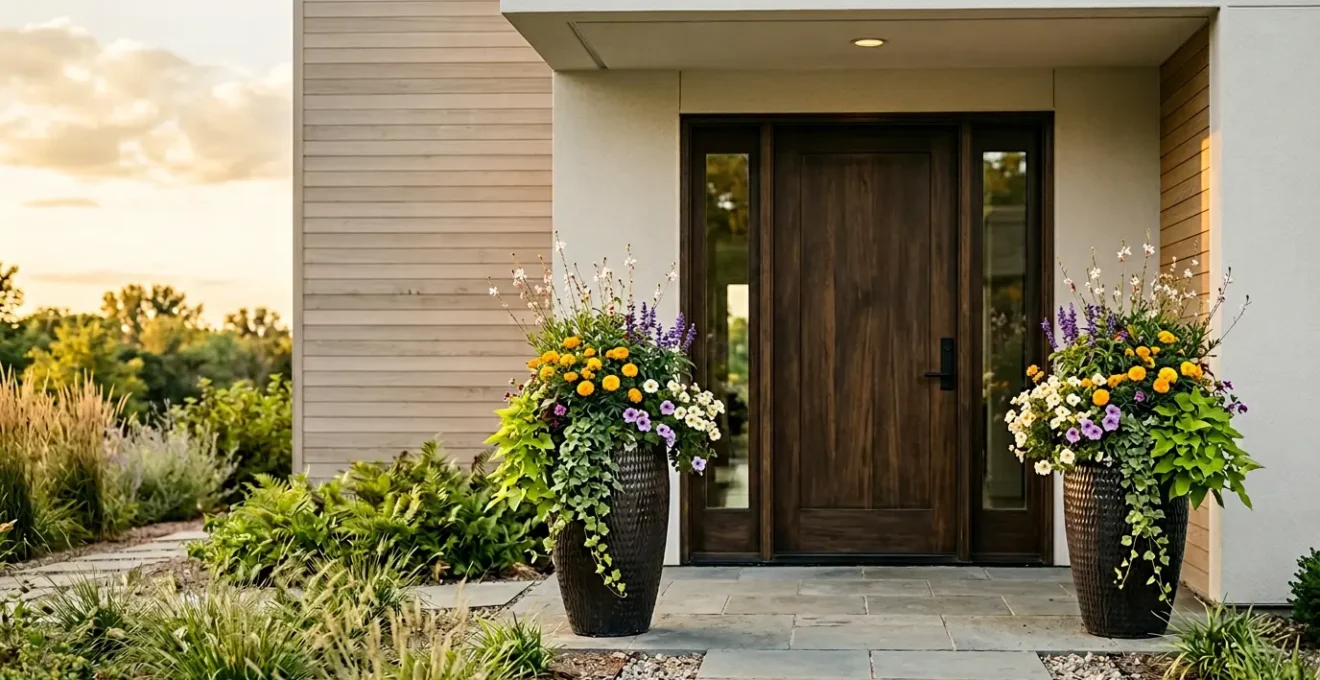
A powerful floral display is your home’s most effective marketing tool, instantly shaping its perceived value and sense of welcome.
- It succeeds by telling a cohesive “botanical narrative” using strategic color, scent, and texture.
- Proper scale and proportion are non-negotiable for creating an expensive, intentional look that boosts curb appeal.
Recommendation: Stop decorating and start styling. Treat your entryway as a complete, multi-sensory experience designed to make a perfect first impression.
That pair of planters flanking your front door—are they an afterthought or an opening statement? For many homeowners, entryway décor is a task to be checked off, often resulting in generic, disconnected elements. You might have a seasonal wreath, a standard doormat, and a couple of pots with whatever was available at the local garden center. This approach is functional, but it misses a crucial opportunity. It overlooks the power of a first impression, which is especially critical for those preparing to sell or who simply take immense pride in their home’s presentation.
The common advice is to use seasonal flowers, ensure your pots are symmetrical, and maybe add a pop of color. While not wrong, these tips are just isolated tactics. They lack a unifying strategy. But what if the secret to exceptional curb appeal wasn’t just about the ‘what’ but the ‘why’? What if your front door display could be crafted into a deliberate, multi-sensory story—a botanical narrative that communicates welcome, care, and value before a visitor even touches the doorknob?
This is the approach of a real estate stylist. It’s about moving beyond simple decoration to intentional design. This guide will deconstruct that system. We will explore the psychology of color and scent, the architectural principles of scale and placement, and the techniques for creating a cohesive design that flows from your curb to your console table. Prepare to transform your entryway into your home’s most powerful asset.
To guide you through this strategic styling process, we’ve broken down the essential components of a high-impact front door display. The following sections will provide a clear roadmap to creating an entryway that truly welcomes and wows.
Contents: A Stylist’s Guide to Entryway Impact
- Why Does Yellow at the Door Make Guests Feel More Welcome?
- One Pot or Two: How to Frame Your Doorway Based on Architecture?
- Jasmine or Lavender: Which Scent Best Greets Visitors?
- The Pot Size Mistake That Makes Your Front Door Look Small
- How to Switch Door Decor from Halloween to Thanksgiving Instantly?
- Why Do Window Boxes Increase the Perceived Value of a Home?
- How to Style an Entry Console with Botanicals for Maximum Welcome?
- How to Use Floral Styling to Change the Identity of a Room Instantly?
Why Does Yellow at the Door Make Guests Feel More Welcome?
Color is the first element of your botanical narrative that a visitor processes, and it triggers an immediate emotional response. While personal preference plays a role, certain colors are universally perceived in specific ways. At the front door, your goal is to communicate warmth and optimism, and no color does this more effectively than yellow. From soft buttercup to vibrant lemon, yellow hues create a welcoming glow, infusing an entryway with energy and zest. It’s the color of sunshine and happiness, setting a positive tone before the door even opens.
This isn’t just an aesthetic choice; it’s rooted in psychology. The strategic use of yellow can make a space feel more expansive and inviting. It’s a high-visibility color that draws the eye, ensuring your efforts don’t go unnoticed. When styling for curb appeal, especially for a home sale, this instant feeling of positivity can be a significant advantage. It makes potential buyers feel optimistic and at ease from the moment they arrive.
Yellow is mentally activating, psychologically stimulating higher cognition, creativity, and feelings of optimism.
– Color Psychology Research, Yellow Color Psychology: Meaning, Symbolism & Branding
Incorporating yellow doesn’t require painting your door. It can be achieved through your floral choices: think golden pansies, vibrant daffodils in the spring, or rich yellow mums in the fall. The key is to use it as a strategic accent to guide the emotional journey of your guests, making them feel genuinely welcome and cheerful upon arrival.
One Pot or Two: How to Frame Your Doorway Based on Architecture?
Once you’ve chosen your color palette, the next layer of your botanical narrative is structure. The number and placement of your planters should not be arbitrary; they must create an “architectural echo,” complementing the style of your home. The choice between one or two pots is less about a rigid rule and more about creating balance and harmony with your home’s existing lines.
For homes with strong symmetrical features—like a Colonial, Georgian, or many modern designs—using a pair of identical planters is a classic choice. Symmetrical arrangements read as formal, intentional, and sophisticated. The key is to ensure they are placed at equal distances from the door frame, creating a single, balanced architectural moment. However, for homes with asymmetrical entryways, such as those with a door off to one side or a prominent garage on the other, forcing symmetry can look awkward. In these cases, a single, large, statement planter can be far more effective. It creates a focal point that balances the visual weight of the architecture without competing with it.
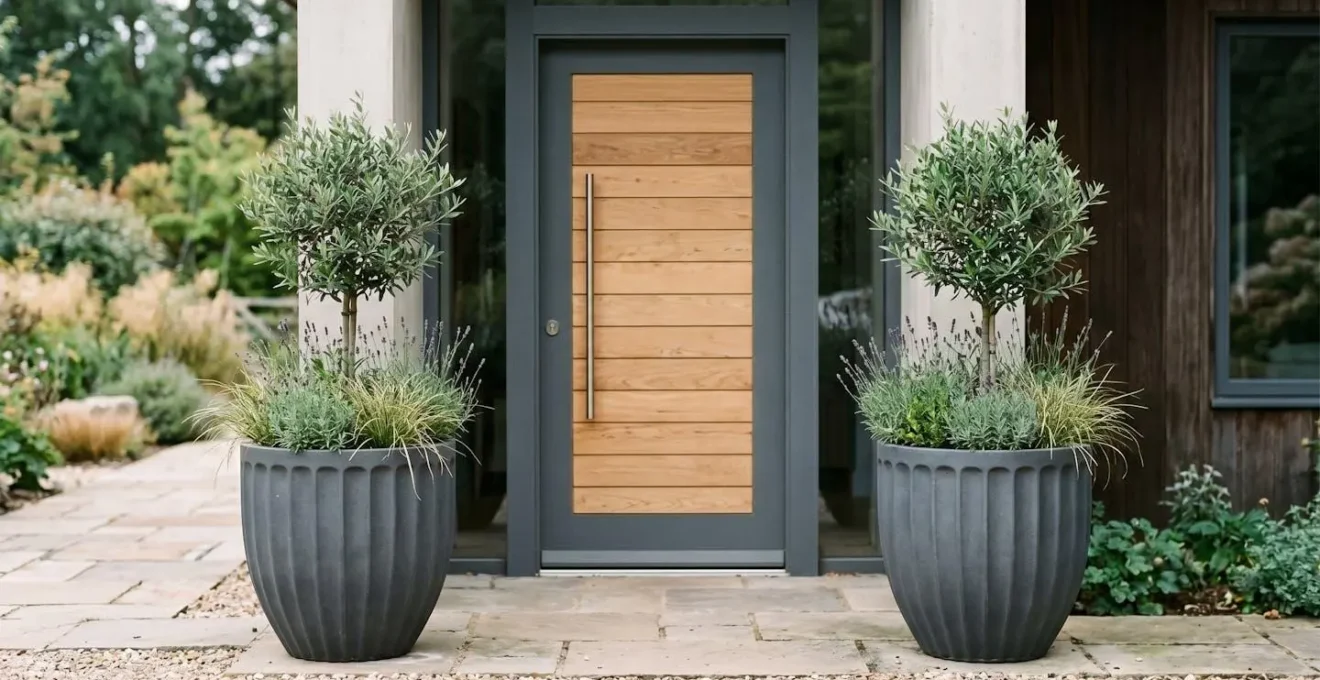
Regardless of number, placement is critical. Always ensure your planters leave ample clearance for the door swing and any hardware. There should be “breathing room” so that mature foliage doesn’t brush against walls or trim. Most importantly, the arrangement must maintain a clear and functional walkway for daily life, from receiving packages to navigating with a stroller. The goal is to enhance the entrance, not obstruct it.
Jasmine or Lavender: Which Scent Best Greets Visitors?
An exceptional entryway engages more than just the eyes; it creates a multi-sensory welcome. Scent is a powerful, often subconscious, tool in your styling arsenal. The fragrance that greets guests can instantly set a mood, evoking feelings of calm, energy, or romance. The choice of scent is just as strategic as the choice of color. Two of the most popular choices for entryways, lavender and jasmine, offer distinctly different experiences.
Lavender is renowned for its calming, herbaceous aroma. Its scent is clean and gentle, not overwhelming. As one study on aromatic plants notes, the fragrance of lavender often elicits a feeling of relaxation and can reduce stress. This makes it an ideal choice for creating a tranquil, serene first impression—perfect for a home positioned as a peaceful retreat. Jasmine, on the other hand, offers a sweet, exotic, and intoxicating fragrance. It’s a more romantic and luxurious scent, often stronger in the evening, making it perfect for homes that entertain after dark. Its powerful aroma creates a memorable and opulent welcome.
| Characteristic | Lavender | Jasmine |
|---|---|---|
| Scent Profile | Calming, herbaceous, clean | Exotic, sweet, romantic |
| Psychological Effect | Reduces stress and anxiety, promotes relaxation | Calming effect on nervous system, romantic association |
| Best Timing | Consistent throughout day | Stronger in evening (night-blooming varieties) |
| Intensity Level | Moderate, gentle | Strong, intoxicating |
| Climate Adaptability | Mediterranean, dry climates | Tropical to warm temperate regions |
| Allergy Consideration | Low allergen, scented foliage | Moderate, fragrant blooms |
Your choice depends on the emotional narrative you want to write. Are you selling a calm, family-friendly oasis (lavender) or a sophisticated space for elegant entertaining (jasmine)? Considering factors like bloom time, intensity, and climate adaptability will ensure your chosen scent performs beautifully and contributes positively to the overall sensory experience.
The Pot Size Mistake That Makes Your Front Door Look Small
One of the most common and costly mistakes in front door styling is incorrect planter scale. A pot that is too small can make your entire entrance look diminutive and insignificant. It signals a lack of confidence and intention in the design. Conversely, a correctly scaled planter provides visual weight, frames the doorway authoritatively, and makes the entrance feel grander and more expensive. The key is achieving the right proportion between the planter and the door itself.
As a guiding principle, design experts recommend a simple but effective formula. To achieve proper proportional scale, planters should be 1/3 the height of your door (including any transom window above it) as a starting point. This rule of thirds ensures the planters have enough vertical presence to anchor the space without overwhelming it. Going slightly larger, up to one-half the door’s height, can create an even more dramatic and luxurious effect, particularly for grand entrances.
This principle is about creating a deliberate relationship between objects. The planter and the door should feel like they were chosen for each other, not as random afterthoughts. This sense of intentionality is what elevates a simple decoration into a high-impact design feature that contributes to curb appeal and perceived value.
Case Study: Proper Planter Sizing for a Standard Door
For a standard 80-inch tall front door, professional designers recommend planters between 24 to 40 inches in height. This range (roughly one-third to one-half the door’s height) ensures the planters provide significant visual impact. This proportional relationship frames the doorway effectively, making it appear considered and elevated, rather than looking like an afterthought. The case demonstrates how properly scaled planters are fundamental to creating an intentional and welcoming aesthetic.
How to Switch Door Decor from Halloween to Thanksgiving Instantly?
Maintaining a compelling botanical narrative means adapting it to the seasons, but this doesn’t have to be a labor-intensive overhaul. The transition from the spooky fun of Halloween to the warm harvest of Thanksgiving is a perfect example. A strategic approach allows you to make this switch in minutes, not hours, by building on a versatile foundation. The secret is to design your planters with a “plug-and-play” mentality.
Start with a strong base of hardy, multi-season plants. Evergreen structure, provided by plants like boxwood, dwarf Alberta spruce, or trailing ivy, creates a permanent green canvas that looks great from October through the winter. For Halloween, you can introduce orange-toned elements like pumpkins and mums, along with a few specific spooky accessories in black or purple. The transition then becomes a simple process of subtraction and addition.
When November 1st arrives, you simply remove the Halloween-specific items (like faux spiders or purple ribbon) while keeping the foundational orange and green. Then, you deepen the color palette to reflect a harvest theme. This means adding elements in bronze, burgundy, and gold. It’s a quick, high-impact update that shifts the mood from eerie to cozy, ensuring your curb appeal remains flawless throughout the autumn season.
Your 5-Minute Autumn Decor Transition Plan
- Maintain an Evergreen Base: Design planters with permanent evergreens (boxwood, dwarf Alberta spruce) and hardy foliage that stays through multiple seasons.
- Remove Halloween-Specific Elements: Eliminate purple and black accessories, skulls, or spooky signage, while keeping orange-toned elements like pumpkins and mums.
- Deepen the Color Palette: Add depth by inserting bronze, burgundy, and gold mums or foliage to transition the existing orange from spooky to harvest warmth.
- Insert Plug-and-Play Accessories: Add pre-made berry picks, mini gourds on skewers, corn husks, and wired ribbon in autumnal colors directly into the existing soil.
- Swap Scent Elements: Replace any dark, earthy scented items with cinnamon sticks or dried eucalyptus bunches to shift the mood from eerie to cozy.
Why Do Window Boxes Increase the Perceived Value of a Home?
A truly exceptional entryway narrative doesn’t stop at the front door. It extends vertically and horizontally across the facade, and window boxes are the most effective tool for achieving this. They are far more than just containers for flowers; they are architectural enhancements that create powerful design continuity. By echoing the colors, textures, and style of your front door planters, window boxes tell a cohesive and intentional story that suggests the entire home is well-maintained and thoughtfully designed.
This sense of cohesion has a direct and measurable impact on a home’s financial worth. When potential buyers see a unified exterior design, it creates a powerful first impression of quality and care. This isn’t just a feeling; research shows that curb appeal accounts for 7% of a home’s final sale price. Well-styled window boxes are a key contributor to this, as they add charm, character, and a layer of polish that makes a house feel like a cherished home. They lift the eye upward, adding dimension and breaking up large, flat expanses of siding or brick.
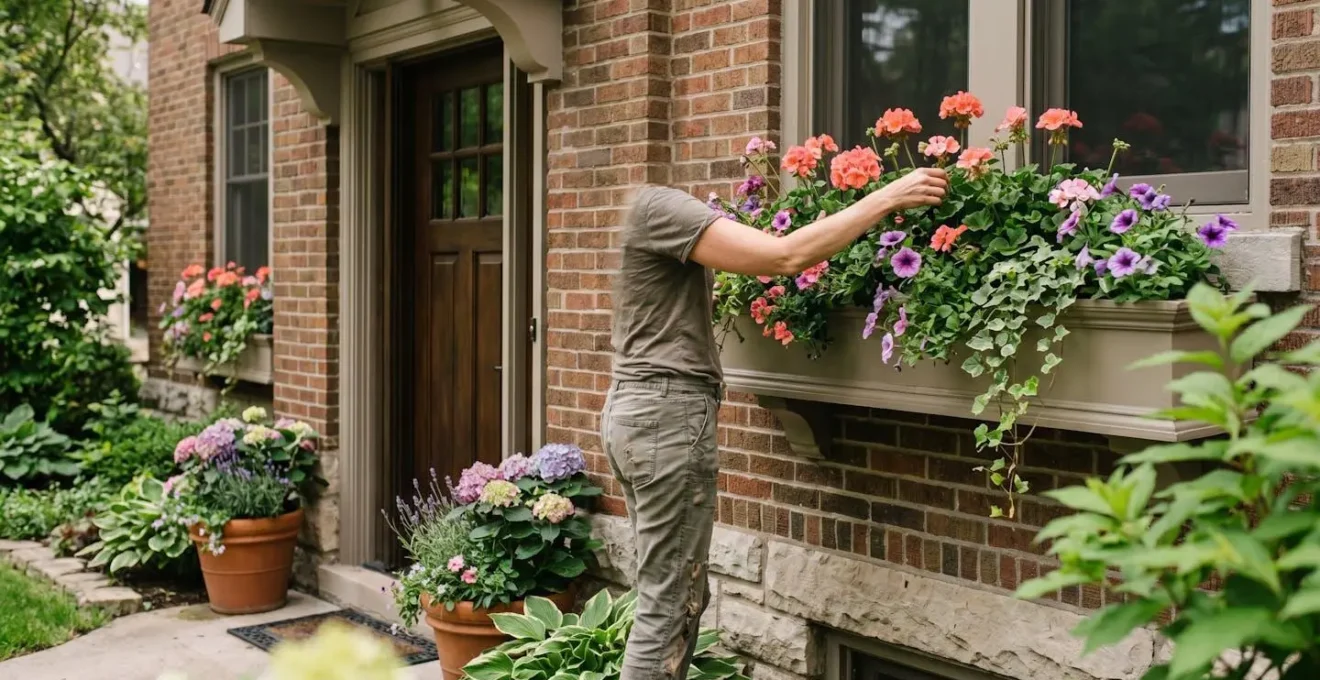
The key to success is consistency. Use a few of the same plant varieties or colors from your front door pots in your window boxes. This repetition creates a visual rhythm that is pleasing to the eye and reinforces your home’s design identity. This “rhyme and repeat” strategy is what transforms individual decorative elements into a singular, high-value statement about the quality of the property.
How to Style an Entry Console with Botanicals for Maximum Welcome?
The botanical narrative you’ve carefully crafted for your home’s exterior should not end at the threshold. To create a truly seamless and impressive experience, you must carry that story inside. The entry console table is the perfect stage for this final act of welcome. Styling it with botanicals that connect to your outdoor display demonstrates an unparalleled level of design intentionality and makes guests feel they are entering a cohesive, thoughtfully curated space.
The most powerful technique is to create a direct echo. A small vase with a single cutting from the exact plants used in your front door planters—be it a hydrangea stem, a sprig of rosemary, or a few lavender stalks—creates an immediate and powerful link between the outside and inside. This simple gesture reinforces the design theme and shows a sophisticated attention to detail. It tells your guests that every element of their experience has been considered.
Beyond the visual, you can continue the multi-sensory welcome. Echo the outdoor scent profile with a subtle indoor element. If you have lavender at the door, a lavender essential oil diffuser or a small candle on the console creates a beautiful continuity of fragrance. Finally, add a functional touch. A beautiful ceramic bowl for keys or a small tray not only serves a practical purpose but also represents the act of “settling in,” creating a tactile moment that completes the welcome. Placing a mirror behind the console can amplify this effect, doubling the visual impact of the botanicals and, when the door is open, reflecting the outdoor plantings to blur the line between inside and out.
Key Takeaways
- The Power of Color Psychology: Strategic color choices, like yellow, can subconsciously make guests feel more welcome and optimistic before they even step inside.
- The Rule of Architectural Echo & Scale: Planters must be in proportion to the door (1/3 to 1/2 its height) and placed to complement the home’s symmetrical or asymmetrical lines.
- The Multi-Sensory Narrative: An unforgettable welcome engages more than sight. Deliberate use of scent (calming lavender vs. romantic jasmine) and continuity from outside to inside creates a complete experience.
How to Use Floral Styling to Change the Identity of a Room Instantly?
The principles we’ve applied to the front door—using botanicals to craft a narrative—are a master key that can unlock and transform the identity of any room. A single floral arrangement, when chosen with intention, can instantly shift a space’s mood from formal to casual, or from energetic to serene. It’s the ultimate tool for agile interior styling, allowing you to change the “personality” of a room for an evening, a season, or a specific event.
The power lies in choosing a distinct framework for your arrangement: architectural or organic. This choice dictates the feeling of the entire space. An architectural approach uses plants with strong, clean lines like orchids, calla lilies, or bare branches. Arranged in sleek, geometric vases, these elements bring a sense of structure and sophistication. They can make a relaxed living room feel instantly ready for a formal dinner party. This is about imposing order and elegance through botanical form.
Case Study: Architectural vs. Organic Frameworks
Interior designers demonstrate how a single floral arrangement can instantly alter a room’s identity. To make a casual living room feel more sophisticated, they use architectural plants like orchids or calla lilies in geometric vases. This structured approach makes the space feel formal and dinner-party ready. Conversely, to make that same formal space feel relaxed and approachable, they swap in organic, wild arrangements featuring garden-picked wildflowers or trailing ivy in rustic containers. The same room can project two completely different identities, achieved simply by changing the floral styling approach.
Conversely, an organic framework uses arrangements that feel loose, wild, and natural. Think of garden-picked wildflowers, trailing ivy, or a mix of seasonal blooms in rustic, textured containers. This approach introduces a feeling of ease and authenticity. Placed in a formal dining room, such an arrangement can break down stiffness and make the space feel more approachable and relaxed for a casual brunch. By mastering these two frameworks, you gain the ability to direct the emotional tone of any room on demand.
Start applying these principles today to transform your entryway from a simple doorway into a powerful statement of value and welcome, setting the stage for the beautiful home within.