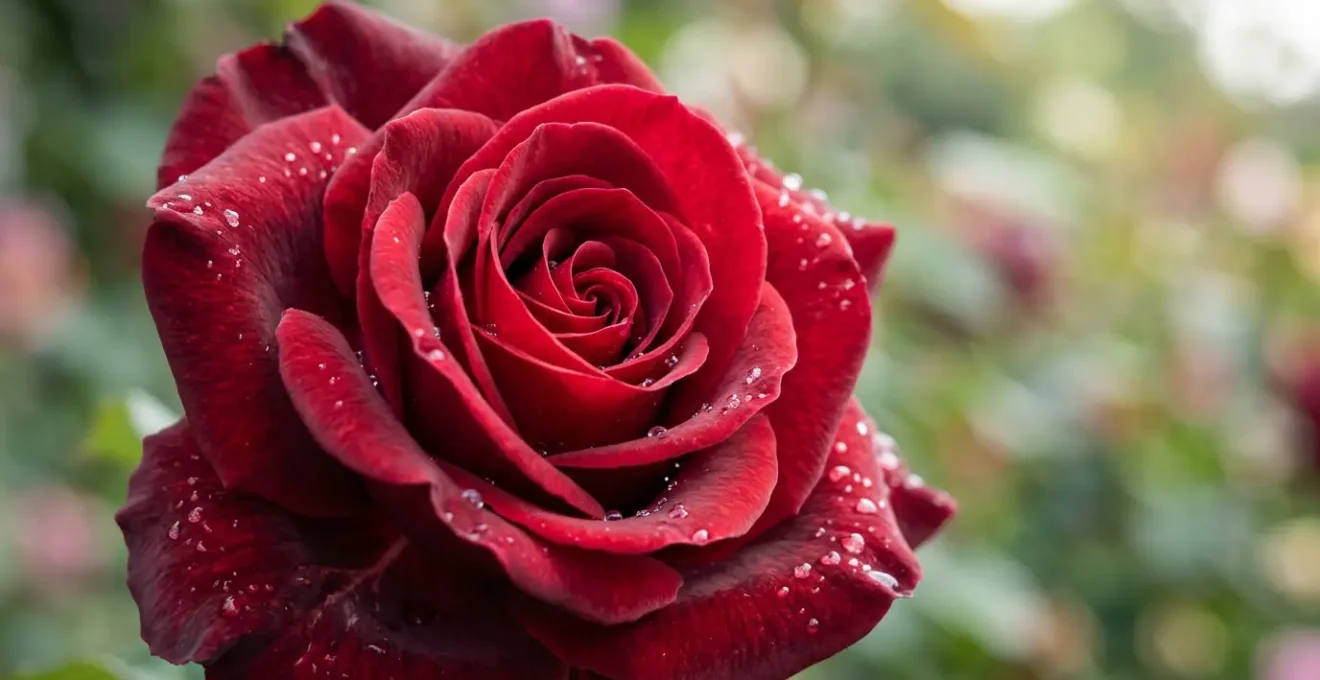
The notion that deep red roses are more passionate isn’t just a cultural myth; it’s rooted in sensory psychology.
- The depth and saturation of a dark red rose carry a greater symbolic weight, suggesting enduring commitment over fleeting infatuation.
- Characteristics like high petal count and rich fragrance are not just aesthetic but are perceived as more generous and complex, mirroring the depth of a mature relationship.
Recommendation: Instead of defaulting to any red rose, select the specific shade, stem length, and variety that precisely matches the nuance of your romantic message.
Choosing a red rose seems simple. It is the universal symbol of love, a timeless gesture understood across cultures. Yet, when faced with a choice between a bright, vibrant crimson and a deep, velvety burgundy, a subtle hesitation arises. One feels like a cheerful declaration, the other a profound, almost sacred vow. This distinction is the heart of romantic connoisseurship, moving beyond the simple fact that red means love to ask a more sophisticated question: what kind of love?
The common wisdom suggests deep red signifies deep passion, while bright red is for new romance. But this explanation rarely delves into the ‘why’. The truth is far more intuitive and visceral. The passion of a rose isn’t just an arbitrary code from Victorian floriography; it’s a complete sensory experience. The depth of its color, the complexity of its unfurling bloom, and the richness of its scent are direct triggers for our deepest psychological perceptions of love, commitment, and desire. Understanding this connection elevates a simple gift into a nuanced, powerful statement.
This exploration will deconstruct the red rose, revealing how each of its attributes contributes to its emotional weight. We will examine why its price is a part of its message, how its form communicates intent, and why its very thorns carry meaning. By the end, you will not just see a flower, but read a language—the true language of passion.
This guide unpacks the subtle yet powerful language of the red rose, providing the insights needed to make your romantic gesture as precise and meaningful as your feelings. Explore the sections below to master this delicate art.
Summary: The Nuances of a Romantic Declaration
- Why Does the Price of Red Roses Triple in February?
- Long Stem vs. Short Stem: Which Is Appropriate for a First Date?
- To Strip or Not: Does Removing Thorns Change the Meaning of the Rose?
- The Red and White Mistake: Why Does This Combo Signal Unity or Grief?
- How to Choose a Red Rose Variety That Actually Smells Like a Rose?
- Why Does High Petal Count Matter for the Opening of the Rose?
- Why Is the Carnation the Symbol of Young, Passionate Love?
- How to express Romantic Love Without Using Clichéd Red Roses?
Why Does the Price of Red Roses Triple in February?
The infamous price surge of red roses around Valentine’s Day is not merely commercial opportunism; it is a reflection of a staggering logistical ballet that imbues the flower with a sense of value and occasion. This economic reality contributes directly to its symbolic weight. A gesture that requires significant investment—of resources, effort, and planning—is inherently perceived as more serious and profound. The high cost in February transforms the rose from a simple flower into a declarative investment in a relationship.
The scale of the operation is immense, with approximately 250 million roses grown annually just for Valentine’s Day. As noted by industry experts, most of these flowers sold in the United States during this peak period are not grown locally. They embark on a complex journey from equatorial highlands in countries like Ecuador, Kenya, and Colombia. Kenya’s flower industry, for instance, is a global powerhouse, with roses traveling from farms near Lake Naivasha to auction houses in the Netherlands before being dispatched to florists worldwide. This journey involves refrigerated cargo, strict customs, and clockwork timing to ensure a perishable product arrives in perfect condition.
This global effort, culminating in a single, perfect rose, is a powerful metaphor for a lover’s own efforts. The price tag is a proxy for this immense, coordinated endeavor. When you give a red rose in February, you are subconsciously communicating that your love is worth this global scramble, this significant expense, and this precise timing. It says, “Despite the difficulty and cost, this gesture was essential.” It is this perceived effort that amplifies the passion of the message, making the deep red rose a symbol of love that overcomes obstacles.
Long Stem vs. Short Stem: Which Is Appropriate for a First Date?
The length of a rose’s stem is a crucial, often overlooked, element of its message. It dictates the scale and formality of the romantic gesture. A long-stemmed rose, typically presented in a dramatic, long box, is the floral equivalent of a grand pronouncement. It is designed for presentation, to be seen and admired from a distance. This makes it a powerful statement of established love, an anniversary gift, or a public declaration. However, for a first date, this grandeur can feel overwhelming and premature.
The first date is a moment of nascent intimacy, exploration, and quiet connection. The appropriate gesture should mirror this sentiment. A short-stemmed rose, or even a single petite bloom, is far more suitable. It is personal, designed to be held in the hand, and appreciated up close. It is a whisper, not a shout. Its message is one of thoughtful interest and gentle admiration rather than an all-consuming declaration of love. It suggests potential and invites closeness without the pressure of a grand romantic narrative.
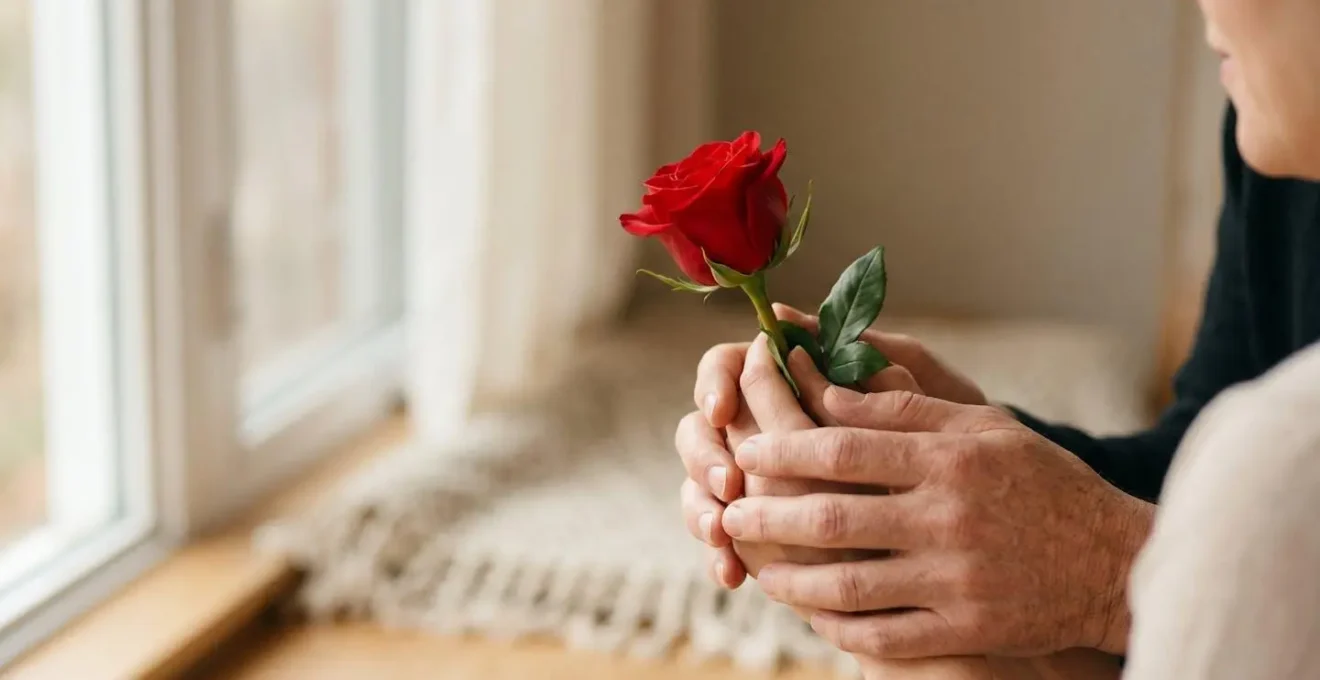
As this image suggests, the beauty of a short-stem rose lies in its intimacy. It is a gesture that feels personal and direct. It says, “I was thinking of you,” rather than “I intend to sweep you off your feet.” For a first date, where the goal is to build comfort and connection, this nuanced and considerate approach demonstrates emotional intelligence. It shows that you understand the context and are willing to let the relationship bloom at its own pace, much like the rose itself.
To Strip or Not: Does Removing Thorns Change the Meaning of the Rose?
The thorns of a rose are not a flaw; they are an integral part of its symbolism. While a florist’s first instinct is often to strip them away for safety and aesthetics, doing so fundamentally alters the flower’s message. A perfect, thornless rose represents an idealized, frictionless love—a beautiful but ultimately unrealistic fantasy. True passion, however, is rarely so simple. It is complex, challenging, and sometimes even painful. The thorns are a physical representation of this reality.
As the floral experts at Gardenia note, the symbolism is potent:
The red rose’s thorns, however, remind us that love is not without its challenges, representing the duality of pleasure and pain.
– Gardenia, Symbolism of Red Roses: A History of Love and Passion
This duality is the essence of a deep and mature love. To offer a rose with its thorns intact (perhaps with just the sharpest tips blunted for safety) is to make a more honest and profound statement. It says, “I love you for all that you are, including the complexities and the challenges. I accept that our love is real, not a fairy tale.”
This gesture acknowledges that love requires vulnerability and courage. It shows a willingness to handle the relationship with care and awareness, to navigate the difficult parts in order to enjoy the beauty of the bloom. Conversely, a completely stripped stem can symbolize a love that is safe, easy, and free of all difficulty—a wonderful sentiment for a new or budding romance. The choice, therefore, depends entirely on the message. For a passion that is deep, resilient, and has weathered challenges, leaving the thorns on is the more powerful and authentic romantic statement.
The Red and White Mistake: Why Does This Combo Signal Unity or Grief?
Color theory in floriography is highly contextual, and no combination is more fraught with potential misinterpretation than red and white roses. While a novice might see it as a beautiful contrast, the sophisticated giver understands it carries a powerful and specific dual meaning rooted deep in Western history and tradition. Depending on the context, a bouquet of red and white roses can signal either profound unity or solemn grief—two messages you do not want to confuse in a romantic setting.
The symbolism of unity is famously derived from English history. The Wars of the Roses (1455-1487) were a series of civil wars fought between the House of Lancaster (with its red rose) and the House of York (with its white rose). The conflict ended when Henry VII of Lancaster married Elizabeth of York, uniting the rival houses and creating the Tudor Rose, which combined both colors. Ever since, the red and white combination has symbolized peace, reconciliation, and unity after a period of conflict. It can be an incredibly powerful message for a couple that has overcome significant challenges together.
However, this combination has a second, more somber meaning. In many cultures, the mix of red and white flowers holds a place in funerary traditions. Floral experts point out that red and white roses are used in funeral arrangements to symbolize respect, remembrance, and eternal love for the departed. The white signifies purity and heaven, while the red represents enduring love and grief. Giving this bouquet in a purely romantic context, especially early in a relationship, can therefore be a jarring and inappropriate mistake. It highlights the critical importance of understanding not just individual flower meanings, but the syntax of their combination.
How to Choose a Red Rose Variety That Actually Smells Like a Rose?
In the modern floral industry, a tragic irony has occurred: in the pursuit of visual perfection, long shelf life, and disease resistance, many commercial rose varieties have had their scent bred out of them. Giving a beautiful red rose that has no fragrance is like receiving a love letter written in invisible ink—the form is there, but the emotional essence is missing. The scent of a rose is one of its most powerful romantic tools, capable of evoking memory and emotion on a primal level. A truly passionate gesture must engage the olfactory sense.
This is not a new problem. As the American Rose Society highlights, a study as far back as 1956 found that a shocking 25% of rose varieties had no scent at all. The issue persists today, particularly with long-stemmed varieties engineered for long-distance transport. To ensure your romantic statement is complete, you must actively seek out fragrant varieties. Instead of simply asking for “a dozen red roses,” ask your florist for specific, scented types known for their rich perfume. The fragrance profile itself can add another layer of meaning.
Different rose families offer distinct scent experiences, each suitable for a different kind of passion:
- Old Rose (Damask): A deep, classic, and heady fragrance. Found in varieties like ‘Gertrude Jekyll’, it is the scent of timeless, profound romance.
- Tea: A lighter, more refined scent with hints of tea leaves. Perfect for an elegant, sophisticated love, as seen in ‘Lady Hillingdon’.
- Fruity: Vibrant and joyful scents ranging from lemon to raspberry. Ideal for a playful, energetic passion. ‘Jubilee Celebration’ is a prime example.
- Myrrh: A complex, sweet fragrance with a hint of anise. This unique scent is for a complex, evolving love story.
- Musk: A wafting, spicy scent that comes from the flower’s stamens. It is sensual and atmospheric, perfect for creating a romantic mood.
Your Action Plan: Selecting a Truly Passionate Flower
- Assess the Relationship Stage: Is this a first date (suggesting intimacy, like a short-stem rose or tulip) or an anniversary (calling for a grand gesture, like a full bouquet of fragrant David Austin roses)? List all points of contact where the message will be delivered.
- Inventory Your Message: What specific emotion do you want to convey? Playful joy (Fruity scent profile), deep commitment (Damask scent), or elegant admiration (Tea scent)? Collect examples of flowers that match this emotional inventory.
- Check for Symbolic Coherence: Cross-reference your chosen flower and color against its known meanings. Does a red and white bouquet signal the “unity after conflict” you intend, or could it be misread as grief? Confront your choice with its established symbolism.
- Evaluate Sensory Richness: Is the flower you’ve chosen visually complex (high petal count)? Does it have a memorable fragrance? A scentless, simple bloom sends a very different message than a multi-layered, perfumed one. Grade its sensory impact.
- Develop an Integration Plan: Will you leave the thorns to signify authentic love? Will you pair it with a specific vase or a handwritten note to complete the story? Plan the final presentation to ensure every element works in harmony.
Why Does High Petal Count Matter for the Opening of the Rose?
The visual journey of a rose from a tight bud to a full bloom is a potent metaphor for a developing relationship. The number of petals—its “petal count”—plays a crucial role in this narrative. A simple rose with few petals, like a wild rose, opens quickly and reveals its heart all at once. It is a symbol of simple, direct, and innocent love. A rose with a high petal count (often 40 or more), such as an English Garden Rose or a David Austin variety, offers a very different experience. Its opening is a slow, deliberate, and complex process.
This gradual unfurling is symbolic of a deep and layered love. Each layer of petals that opens reveals another, more intricate layer within. It suggests a personality or a relationship with depth, complexity, and hidden facets that are revealed only with time and intimacy. This visual generosity feels more luxurious and substantial. The dense, velvety texture created by the mass of petals has a powerful tactile and visual appeal, contributing to the sense of profound passion.
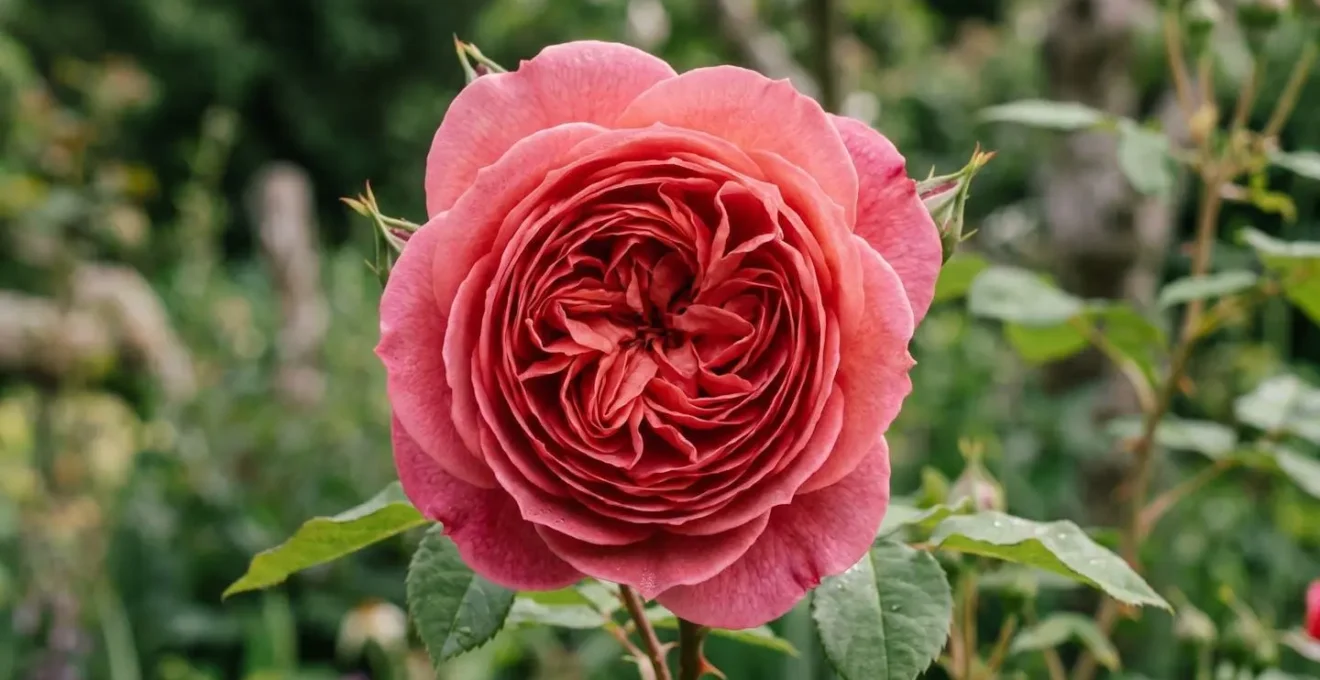
Furthermore, there is a direct link between the number of petals and the intensity of the rose’s fragrance. As the American Rose Society explains, “The number and quality of petals on a bloom affect the amount of fragrance – usually many petalled blooms are more fragrant than single petalled ones.” This creates a perfect synthesis of sensory experience: the visual complexity of the high petal count is rewarded with a richer, more profound scent. This combination makes the high-petal-count rose the ultimate symbol of a generous, complex, and deeply rewarding love.
Why Is the Carnation the Symbol of Young, Passionate Love?
To fully understand the sophisticated passion of a deep red rose, it is useful to contrast it with its traditional counterpoint: the red carnation. The carnation is often seen as the symbol of young, nascent, or infatuated love. This symbolism is not arbitrary; it stems directly from the flower’s physical characteristics and economic accessibility, which stand in stark contrast to those of a complex, deep red rose.
First, consider its form. The carnation, with its ruffled, almost frilly petals, has a certain youthful exuberance. Its structure is simpler than the layered, architectural bloom of a high-petal-count rose. It opens more readily and its beauty is more immediate and less mysterious. This mirrors the nature of a young crush or new love—it is energetic, direct, and full of uncomplicated joy. The colors of carnations are often bright, clear, and vibrant, lacking the deep, velvety saturation that gives a dark rose its symbolic weight and seriousness.
Secondly, the carnation is historically more affordable and readily available than premium roses. This accessibility makes it a popular choice for younger lovers or for more casual gestures of affection. It is a sweet and heartfelt token, but it does not carry the same weight of investment and gravity as a dozen long-stemmed, deep red roses. It is a symbol of affection and admiration, a passionate but perhaps less permanent flame. The carnation beautifully represents the spark, while the deep red rose represents the enduring, slow-burning fire.
Key Takeaways
- The passion of a deep red rose is conveyed through sensory triggers: deep color saturation implies commitment, high petal count suggests complexity, and a rich scent evokes powerful emotions.
- The context of the gesture is paramount. Stem length (grand vs. intimate), the presence of thorns (realism vs. idealism), and color combinations all dramatically alter the message.
- Choosing a truly romantic rose requires moving beyond generic requests and seeking out specific, fragrant varieties that match the intended emotion, elevating the gift from a cliché to a nuanced statement.
How to express Romantic Love Without Using Clichéd Red Roses?
Mastering the language of the red rose is a mark of a romantic connoisseur. However, the ultimate expression of this expertise is knowing when to move beyond it. The red rose, for all its power, can sometimes feel expected. To create a truly personal and unforgettable romantic statement, one can turn to the broader “language of flowers,” or floriography, a practice that gained immense popularity in the Victorian era for conveying coded messages.
As Interflora explains, this tradition provides a rich vocabulary for expressing specific sentiments. During the Victorian era, “the ‘Language of Flowers’ or floriography became a popular way to convey messages of love and sentiment through specific flowers and their colours.” This allows for a deeply personalized message. For instance:
- Red Tulips: A perfect, unconditional declaration of love. Their elegant, simple shape is less dramatic than a rose but no less passionate.
- Ranunculus: With their dense, swirling layers of paper-thin petals, they symbolize charm and attractiveness. They tell the recipient, “I am dazzled by your charms.”
- Orchids: Exotic, delicate, and long-lasting, orchids symbolize a rare and refined beauty, as well as a mature, enduring love.
- Peonies: Available only for a short season, these lush, full blooms symbolize romance, prosperity, and a happy life together, making them a wonderful gesture for a committed relationship.
Choosing an alternative to the red rose demonstrates a higher level of thought and creativity. It requires you to know not only the symbolism of the flower but also the personality of your beloved. It transforms the gesture from a fulfillment of tradition into a bespoke message, crafted specifically for one person. It says, “I could have given you a red rose, but I chose this instead, because it reminded me specifically of you.” This is perhaps the most passionate and sophisticated message of all.