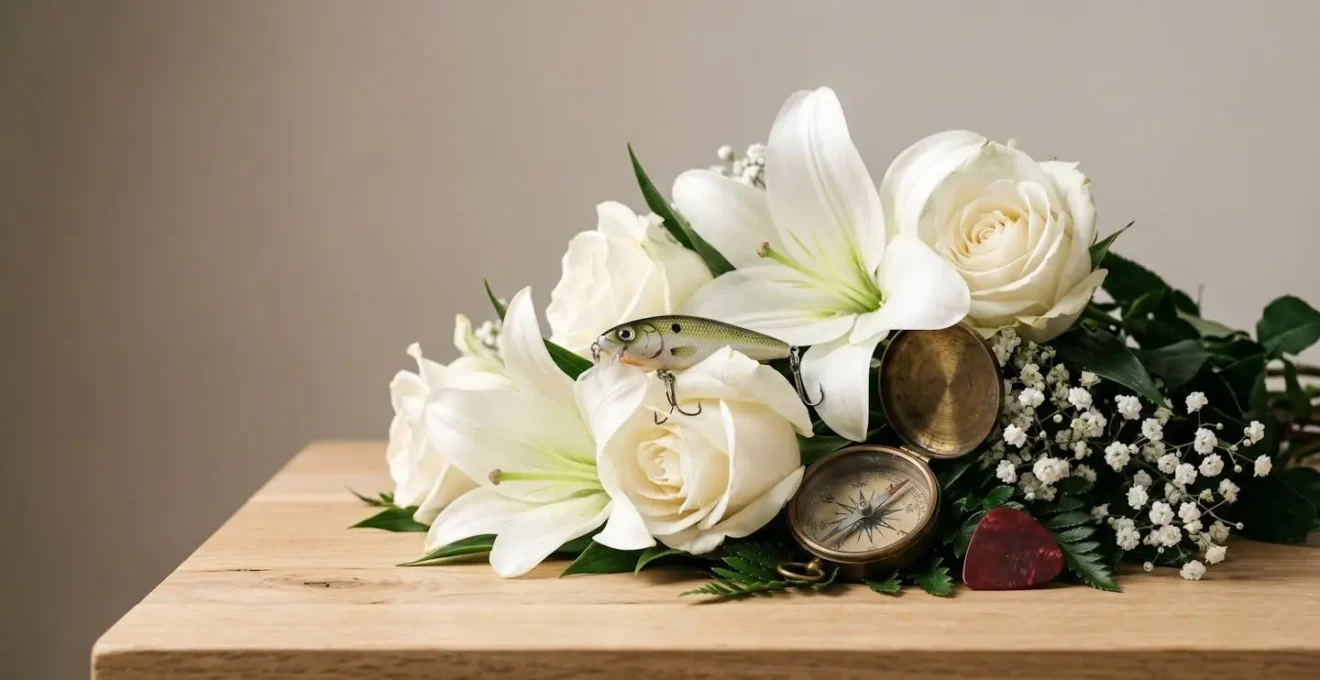
The challenge with funeral flowers is that they often feel impersonal, failing to capture the unique spirit of the person they are meant to honor. The solution isn’t to simply add hobby-related objects to a standard bouquet. Instead, the most meaningful tributes use the principles of floral design—color, texture, form, and scent—to tell a life story, transforming the arrangement itself into a beautiful and symbolic reflection of your loved one’s passions.
As a memorial planner, I understand that in the midst of grief, making decisions can feel overwhelming. You want every detail of the service to be a true reflection of the person you’ve lost, a celebration of their unique life. Yet, when it comes to funeral flowers, the choices can seem limited to traditional, almost generic, arrangements. Many well-meaning guides suggest simply adding a golf ball for a golfer or a fishing lure for an angler, but this can feel like an afterthought rather than a deeply integrated tribute.
These standard solutions often miss the heart of the matter. They decorate the space but don’t tell the story. But what if the flowers themselves could speak? What if the arrangement wasn’t just a backdrop for an object, but a carefully composed narrative of their passions? The key is to move beyond literal representation and embrace symbolic design. It’s about using the language of flowers—their form, texture, and scent—to evoke the very essence of a beloved hobby.
This guide is designed to help you and your family navigate this process with confidence and creativity. We will explore how to translate a life story into a living, breathing floral tribute. From choosing symbolic blooms for a veteran to designing an arrangement that captures the scent of a cherished pastime, you will discover how to create a biographical arrangement that honors not just the memory, but the vibrant spirit of your loved one.
To guide you through these personal and creative choices, this article breaks down the essential questions and considerations for crafting a truly meaningful floral memorial. Explore the sections below to find inspiration and practical advice.
Summary: Crafting a Personal Floral Narrative
- Poppy or Rosemary: Which Flower Best Honors a Veteran?
- How to Choose Biodegradable Tributes for a Green Burial?
- Why Do Casket Sprays Cost So Much More Than Regular Bouquets?
- How to Dry Funeral Flowers to Create a Keepsake Shadow Box?
- What to Write on the Ribbon When You Are at a Loss for Words?
- Wreath or Standing Spray: Which Arrangement Is Appropriate for the Family?
- Why Is the Scent of Lilies So Strongly Linked to Funeral Homes?
- How to Navigate the Social Rules of Floral Gifting in Professional Settings?
Poppy or Rosemary: Which Flower Best Honors a Veteran?
When honoring a veteran, the choice of flower carries profound historical and emotional weight. The poppy is the most recognized symbol of military remembrance, a tradition rooted in the landscapes of World War I. In fact, since 1921, the Royal Canadian Legion officially adopted the poppy as its Flower of Remembrance. Its vibrant red petals symbolize the sacrifice made on the battlefield. However, personalization goes beyond a single symbol.
Rosemary is another powerful choice, traditionally associated with remembrance on a more personal level. Its fragrant, evergreen nature speaks to lasting memory and the enduring spirit of an individual. The question, then, isn’t which flower is “best,” but how they can be combined to tell a complete story. A skilled florist can weave these two elements into a biographical arrangement that honors both the service and the person.
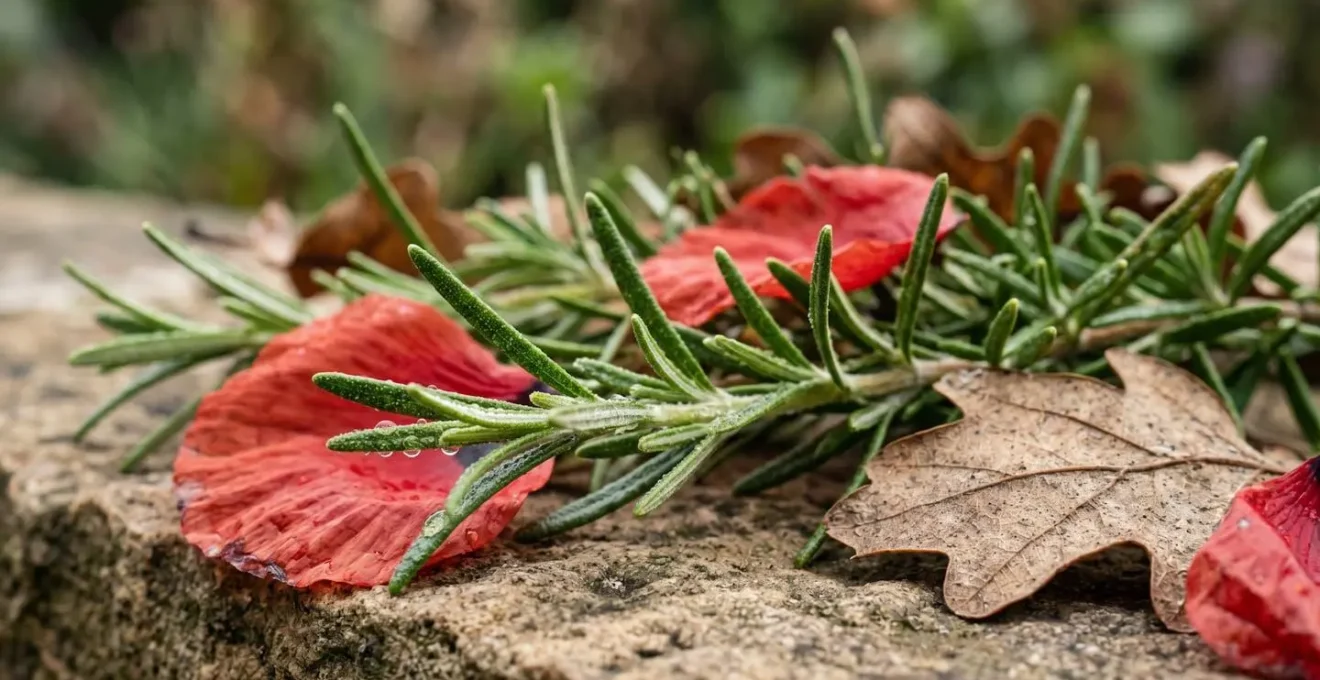
As this image shows, the deep red of poppy petals can be intertwined with the fine, needle-like texture of rosemary and the strength of oak leaves. This combination creates a tribute that is rich in symbolism: the poppy for their service and sacrifice, the rosemary for your personal, undying memory of them, and the oak for their strength and courage. It’s a form of floral storytelling that speaks on multiple levels, honoring the uniform and the individual who wore it.
How to Choose Biodegradable Tributes for a Green Burial?
For a loved one who was passionate about conservation, sustainability, or simply loved the natural world, a green burial is a deeply fitting choice. This philosophy extends to the floral tributes, which should return to the earth as gently as the person they honor. Choosing biodegradable tributes means moving away from traditional floristry materials that can harm the environment, such as floral foam, plastic ribbons, and wire frames.
The impact of conventional practices is significant; for instance, a report from the Funeral Consumers Alliance notes that U.S. cemeteries annually bury 1.6 million tons of reinforced concrete in vaults, a practice entirely eliminated by green burials. A truly green floral tribute aligns with this ethos by using only organic, compostable materials. The focus shifts to local and seasonal flowers, reducing the carbon footprint associated with transporting blooms from afar. Instead of a plastic-based casket saddle, a base can be woven from willow, bamboo, or other natural branches.
Think of the arrangement as a hand-tied posy or a natural sheaf, bound with jute twine, raffia, or cotton ribbon. The beauty lies in its simplicity and connection to the earth. You can incorporate elements from the person’s own garden or favorite walking trail, such as ferns, grasses, or wildflowers. This approach is the ultimate expression of personalization, reflecting not just a hobby, but a core value system. It’s a tribute that honors their life by protecting the very world they cherished.
Why Do Casket Sprays Cost So Much More Than Regular Bouquets?
It’s a common and understandable question for families planning a service: why does a casket spray, the large arrangement adorning the casket, carry such a significant cost compared to other floral bouquets? As professional florists note, casket sprays typically range from $150 to over $600. The price reflects a confluence of factors: sheer volume of materials, specialized labor, and the structural engineering required to create a large, stable, and beautiful tribute.
A casket spray is not simply a large bouquet; it is a piece of floral architecture. It requires a specialized base, often called a “saddle,” which is designed to sit securely on the casket lid. This base is filled with a substantial amount of floral foam to provide water and stability for dozens, sometimes hundreds, of individual stems. The process of arranging the flowers is meticulous, demanding hours of a skilled florist’s time to ensure the shape, flow, and color distribution create a balanced and elegant design that is beautiful from all angles. This is where structural symbolism comes into play, as the shape itself can be customized to reflect a life’s passion.
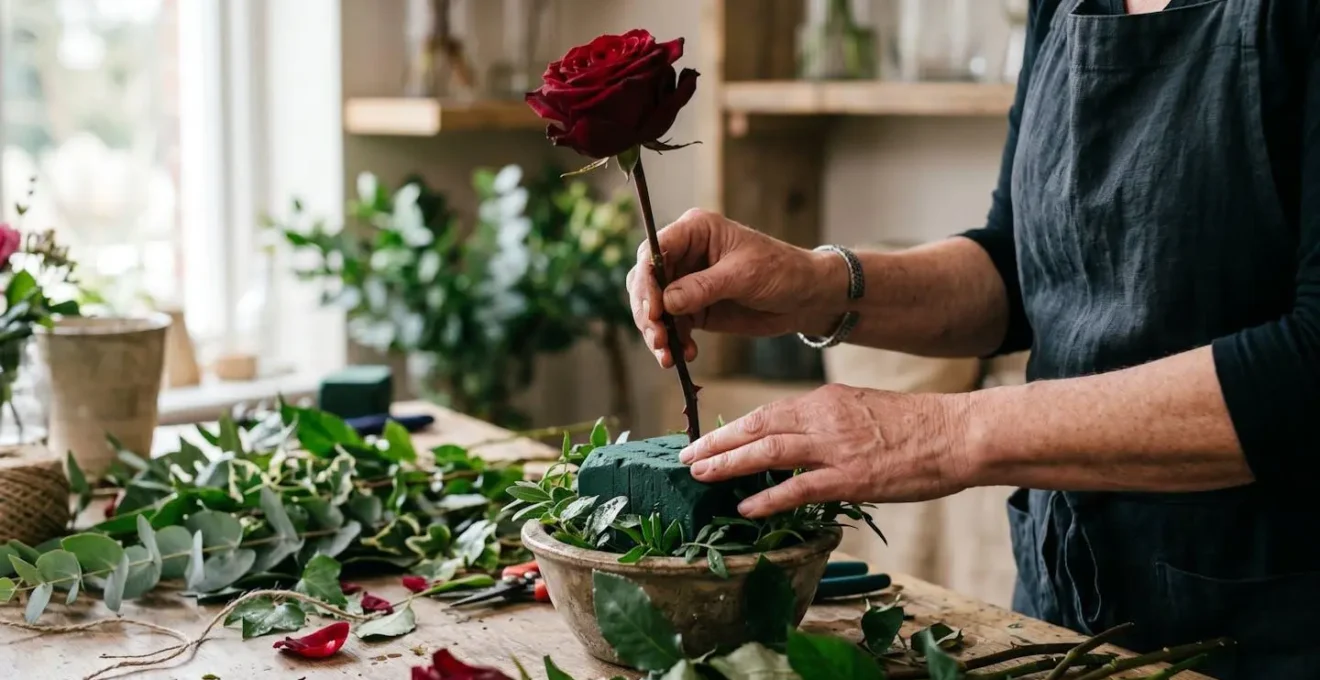
Furthermore, the cost is tied to the expertise needed to create these intricate pieces, especially when they are personalized. The table below illustrates the difference between a DIY approach and a professional one, highlighting the investment in both materials and skilled labor.
| Aspect | DIY Casket Spray | Professional Florist Spray |
|---|---|---|
| Average Cost | $60-$120 | $250-$600 |
| Number of Flowers Required | 40-60 stems | 60-100+ stems |
| Labor Time | 2-4 hours | 3-6 hours (specialized techniques) |
| Personalization Options | Full creative control | Expert guidance with custom shapes |
| Materials Needed | Floral foam, saddle base, greenery | Professional-grade foam, structural mechanics for hobby-themed designs |
As this comparison of casket spray construction shows, the investment in a professionally made spray is an investment in artistry, stability, and the peace of mind that this central tribute will be flawless.
How to Dry Funeral Flowers to Create a Keepsake Shadow Box?
After the service, the flowers that so beautifully honored your loved one don’t have to be discarded. Transforming them into a permanent keepsake, like a shadow box, allows the story they tell to endure. This act of preservation can be a gentle, healing part of the grieving process, creating a tangible connection to the day of remembrance. There are several methods for drying flowers, each with its own benefits for creating a lasting display.
One of the most accessible methods is pressing. This technique is ideal for creating a flat, two-dimensional display inside a shadow box. It works wonderfully for flowers with naturally flatter blooms like pansies, violets, and daisies, as well as individual petals from roses or lilies. You can arrange the pressed flowers alongside a photo, a favorite poem, or a small memento from their hobby. For a more three-dimensional look that preserves the flower’s original shape, air-drying or using silica gel is more effective. Simply hang the flowers upside down in a dark, dry, well-ventilated area for several weeks. For more delicate blooms, burying them in silica gel crystals will draw out the moisture while perfectly preserving their form and color.
Case Study: Resin Preservation for Lasting Memorials
Professional preservationists often use resin casting to create stunning, durable keepsakes. The process, as detailed by floral experts, involves meticulously drying flowers with silica gel to retain their shape and color before encasing them in a clear resin medium. Florists arrange the dried blooms in a silicone mold and pour thin layers of resin, allowing each layer to cure for up to 24 hours to prevent heat damage. This technique produces beautiful memorial pieces like paperweights, jewelry, or decorative blocks that preserve every intricate detail for a lifetime.
Once your flowers are dried, you can arrange them in a shadow box. Start with a fabric-covered backboard (linen or velvet works well) and use acid-free adhesive to secure the flowers, a ribbon from the arrangement, and other meaningful items. This creates a deeply personal piece of art that continues the floral storytelling long after the service has ended.
What to Write on the Ribbon When You Are at a Loss for Words?
The small ribbon or card that accompanies a floral arrangement can feel like the most difficult part to write. How can a few words possibly capture a lifetime of love, respect, and loss? When you’re at a loss for words, the most powerful messages are often the most personal ones. Instead of relying on traditional phrases like “In Loving Memory” or “Deepest Sympathy,” consider making this small space a final, intimate message.
The key is to capture the essence of their personality or your relationship with them. This is where personalization shines, even in just a few words. Think about a nickname only you used, a short inside joke that brings a gentle smile, or a single word that perfectly encapsulates their spirit. For a traveler, “Adventurer” is more evocative than “Beloved Friend.” For a musician, “The Maestro” honors their passion directly.
As the experts at Grossi Florist suggest, another beautiful approach is to let them speak for themselves:
Borrowing Their Voice: Using a short quote from their favorite author, a line from a beloved song, or a personal catchphrase related to their hobby to make the message uniquely theirs.
– Grossi Florist
This transforms the ribbon from a simple label into a piece of their legacy. Consider these creative ideas to find the right words:
- Use an intimate nickname or a term of endearment from their hobby circle (e.g., “Our Favorite Skipper,” “The Queen of the Garden”).
- Choose one powerful word that defines their spirit: “Storyteller,” “Innovator,” “Mentor.”
- Incorporate a short line from a favorite song or poem that you both shared.
- For a tribute from a group, a phrase like “Forever in Our Foursome” for a golfer can be a touching nod to shared experiences.
These small, personal touches ensure that every part of the tribute, down to the last word, is a true reflection of the love you hold for them.
Wreath or Standing Spray: Which Arrangement Is Appropriate for the Family?
When selecting a larger tribute for the service, families often face the choice between a traditional wreath and a standing spray. Both are significant gestures, typically sent by close family or a group of friends or colleagues. Understanding their traditional symbolism can help guide the decision. As floral traditions hold, the circular shape of a floral wreath represents the circle of eternal life—a beautiful, unending symbol of love and memory. They are often placed on an easel or, in some cases, travel with the deceased in the hearse.
A standing spray, on the other hand, is a one-sided arrangement designed to be viewed from the front. It creates a grand, cascading display of flowers and is a powerful statement of sympathy and respect at the funeral home or service location. Traditionally, the family (spouse, children, or parents) provides the casket spray, while other close relatives or groups might send a standing spray or wreath.
However, modern funeral floristry is beautifully blurring these lines, prioritizing personalization over rigid tradition. The most meaningful question today is not “wreath or spray?” but “how can the arrangement best tell their story?” This has given rise to highly customized designs that render the old debate irrelevant.
Case Study: Custom-Shaped Hobby Arrangements
Increasingly, florists are creating fully custom-shaped arrangements that showcase a specific talent or hobby. As detailed in reports on imaginative funeral personalization, families have commissioned stunning floral guitars for musicians, anchors for sailors, open books for teachers, and even painter’s palettes for artists. This approach uses structural symbolism, where the very form of the spray becomes the tribute. These bespoke designs move far beyond a generic shape, celebrating the whole person and the passions that defined their life.
Ultimately, the most “appropriate” choice is the one that feels most authentic to your loved one and your family. Whether it’s a timeless wreath symbolizing eternal love or a custom floral sculpture of their favorite fishing boat, the right arrangement is the one that speaks from the heart.
Key Takeaways
- Personalization is about storytelling, using flowers, texture, and scent to reflect a life’s passions, not just adding objects.
- The form of an arrangement can be symbolic, from a traditional wreath representing eternal life to a custom shape like a guitar for a musician.
- Consider the deceased’s values, such as sustainability, by choosing biodegradable materials for a green burial.
Why Is the Scent of Lilies So Strongly Linked to Funeral Homes?
The strong, sweet fragrance of lilies, particularly Stargazer and Casablanca lilies, is one of the most recognized scents associated with funeral services. This connection is rooted in centuries of symbolism and a bit of practical history. Symbolically, lilies hold a significant place in many cultures and religions. As Flower Patch Florist notes in a discussion on floral history, “Lilies are often seen at funerals because they are considered to symbolize innocence, while white also stands for courage.” This dual meaning of restored innocence for the departed soul and courage for the grieving family makes them a poignant choice.
Historically, the powerful fragrance of lilies and other flowers served a more practical purpose in the era before modern embalming, helping to perfume the air during wakes held in private homes. While this function is no longer necessary, the strong psychological association remains. For some, this scent is comforting and traditional. For others, it can feel overwhelmingly funereal.
This is where personalization through sensory evocation becomes a powerful tool. If the scent of lilies doesn’t feel right for your loved one, you have every freedom to choose flowers and foliage that evoke a more personal memory. Did they love the smell of the forest floor on their morning hikes? An arrangement with pine, moss, and earthy-scented foliage can transport you to that happy place. Were they an avid baker? Incorporating sprigs of rosemary, lavender, or even mint can create a tribute that smells of their kitchen and their love.
Action Plan: Choosing Alternative Fragrant Tributes
- Identify a Scent Memory: What scent do you most associate with them? Their garden, the salty air of the beach, the rich aroma of their workshop?
- Consult with Your Florist: Discuss this memory. A skilled florist can suggest flowers, herbs, and foliage to recreate that specific “scent profile.”
- Consider Subtle Scents: If strong fragrances are a concern, opt for flowers with gentle scents like freesias, sweet peas, or stock, which add a light, pleasant aroma without being overpowering.
- Incorporate Fresh Herbs: For a chef, gardener, or nature lover, using fresh culinary or wild herbs (rosemary, sage, lavender) offers a unique and deeply personal aromatic experience.
- Test the Combination: If possible, ask to smell the proposed combination of blooms and greenery to ensure it evokes the right feeling for your family.
By choosing a scent that tells a personal story, you create a tribute that comforts and consoles by recalling the beautiful, everyday moments of their life.
How to Navigate the Social Rules of Floral Gifting in Professional Settings?
When a colleague or business associate passes away, expressing sympathy requires navigating a delicate balance between professional respect and personal sentiment. The social rules for floral gifting in this context depend heavily on the relationship. A gesture from the company as a whole will differ from a tribute sent by a small, close-knit team who considered the deceased a friend.
For an official corporate tribute, elegance and classic forms are generally the most appropriate choice. A beautiful standing spray, a classic wreath, or an elegant basket arrangement in a subdued palette of whites, greens, or soft colors conveys respect and sympathy on behalf of the entire organization. The message on the card is typically formal, such as “With deepest sympathy from all of us at [Company Name].”
However, for close colleagues, a more personal tribute is often welcome and deeply appreciated by the family. This is an opportunity for floral storytelling on a smaller scale. If a group of coworkers shared a specific bond with the deceased over a hobby—perhaps a weekly golf game or a book club—the tribute can reflect that. It doesn’t need to be an overt floral sculpture; it could be a subtle nod, such as using colors of a favorite sports team or including a flower from their home country if they were an expatriate. This thoughtful detail shows the family that their loved one was seen and valued as a whole person, not just as an employee.
Case Study: Balancing Corporate and Personal Tributes
Funeral etiquette experts highlight a clear distinction between corporate and personal gifting. While a company might send a formal standing spray, close colleagues have more freedom to personalize. In modern services that incorporate memory tables, colleagues can participate by bringing a single stem of a favorite flower or one that represents a shared memory. This bridges the gap between formal corporate respect and heartfelt personal remembrance, allowing for individual expressions of grief within a professional context.
When sending a group gift from colleagues, it’s wise to consider the overall cost. While the gesture is what matters most, it is useful to know that floral arrangements typically account for 8-12% of total funeral expenses, which can help in deciding on an appropriate budget for a group contribution. The most important rule is to send a tribute that is sincere and respectful of your relationship.
By thoughtfully considering these elements, you can create a floral tribute that is more than just a decoration; it becomes a final, beautiful chapter in the story of a life well-lived. It is a testament to their passions, their spirit, and the love that surrounds them. To begin this personal and healing process, start by discussing these ideas with your family and a compassionate florist who can help bring your vision to life.