In summary:
- Treat milestone flowers as a narrative tool to tell the recipient’s life story, not just as decoration.
- Assign specific floral themes to each decade: youthful blooms for transitions, golden tones for the 50th, and symbols of longevity like orchids for elders.
- Master the art of “Symbolic Harmony” by skillfully weaving the recipient’s personal birth flower into the broader decade-themed arrangement.
- Design with guest experience in mind, using low-profile centerpieces and creating “experiential favors” like mini-bouquets for guests to take home.
For a party planner, creating a milestone birthday celebration is about more than just balloons and a cake; it’s about telling a story. When theming an event for a 30th, 50th, or 80th birthday, every detail contributes to the narrative of a life well-lived. While many planners default to using the recipient’s birth month flower, this approach often misses a richer, more profound opportunity. The common advice focuses on simple color symbolism or generic arrangements, leaving the true potential of floral design untapped.
But what if the flowers could do more than just decorate a room? What if they could become the chapters in a living biography, celebrating each decade with purpose and meaning? The true key to a memorable floral theme lies not just in what flowers you choose, but in the story they collectively tell. This is the art of floral storytelling. It’s about understanding why yellow roses are perfect for a 50th, how orchids honor an 80-year legacy, and when daffodils perfectly capture the fresh start of a 30th birthday.
This guide moves beyond basic recommendations to provide a strategic framework for milestone celebrations. We will explore how to select blooms that reflect specific life stages, from the blush of youth to the golden years of wisdom. You will learn techniques to harmonize different symbolic flowers into a cohesive design, create stunning centerpieces that foster connection, and even turn your arrangements into meaningful take-home gifts. By the end, you’ll be equipped to design floral themes that are not only beautiful but are deeply personal and emotionally resonant.
Contents: A Thematic Floral Guide to Milestones
- Why Are Yellow Roses Tradition for 50th Birthday Celebrations?
- Sweet 16 or 21st: Which Flowers Mark the Transition to Adulthood?
- How to Use Orchids to Symbolize Strength and Longevity for Elders?
- How to Incorporate the Recipient’s Birth Flower into a Milestone Bouquet?
- Mini Bouquets: How to Let Guests Take the Centerpieces Home?
- When to Gift Daffodils to Mark a Fresh Start?
- Moth Orchid or Cane Orchid: Which Is Easier for Novice Owners?
- How to Create Visually Stunning Centerpieces That Don’t Block Conversation?
Why Are Yellow Roses Tradition for 50th Birthday Celebrations?
The 50th birthday is a truly “golden milestone,” and the floral tradition that accompanies it is steeped in rich symbolism that goes beyond simple color matching. While it feels intuitive to use golden-hued flowers, the specific choice of yellow roses is a beautiful adaptation of another major life celebration: the 50th wedding anniversary. For anniversaries, yellow roses are the traditional gift, representing the inner light, joy, and beauty of a prosperous relationship that has endured for half a century.
This tradition has been thoughtfully borrowed and applied to 50th birthdays, lending the celebration a layer of historical meaning. The yellow rose, in this context, celebrates 50 years of life, friendship, and happiness. Unlike the romantic connotations of red roses, the yellow variety stands for strong, lasting friendship. Floristry tradition holds that yellow roses represent a strong, long-lasting friendship spanning 50 years, making them a perfect platonic and celebratory choice for a birthday.
As a planner, leaning into this story elevates the theme from merely “golden” to profoundly meaningful. It’s an opportunity to explain that the flowers honor not just a birthday, but five decades of cherished relationships and personal growth. The practice provides a celebratory, less rigid context than its anniversary counterpart while maintaining the all-important golden theme, connecting the honoree’s life journey to a powerful symbol of enduring beauty and joy.
Sweet 16 or 21st: Which Flowers Mark the Transition to Adulthood?
Marking the journey from youth to adulthood requires a nuanced floral approach, as the story being told shifts dramatically between a Sweet 16 and a 21st birthday. These are not just parties; they are rites of passage, and the flowers should reflect the specific chapter being celebrated. Your role as a planner is to capture the distinct spirit of each milestone, using blooms to symbolize the transition from youthful promise to newfound maturity.
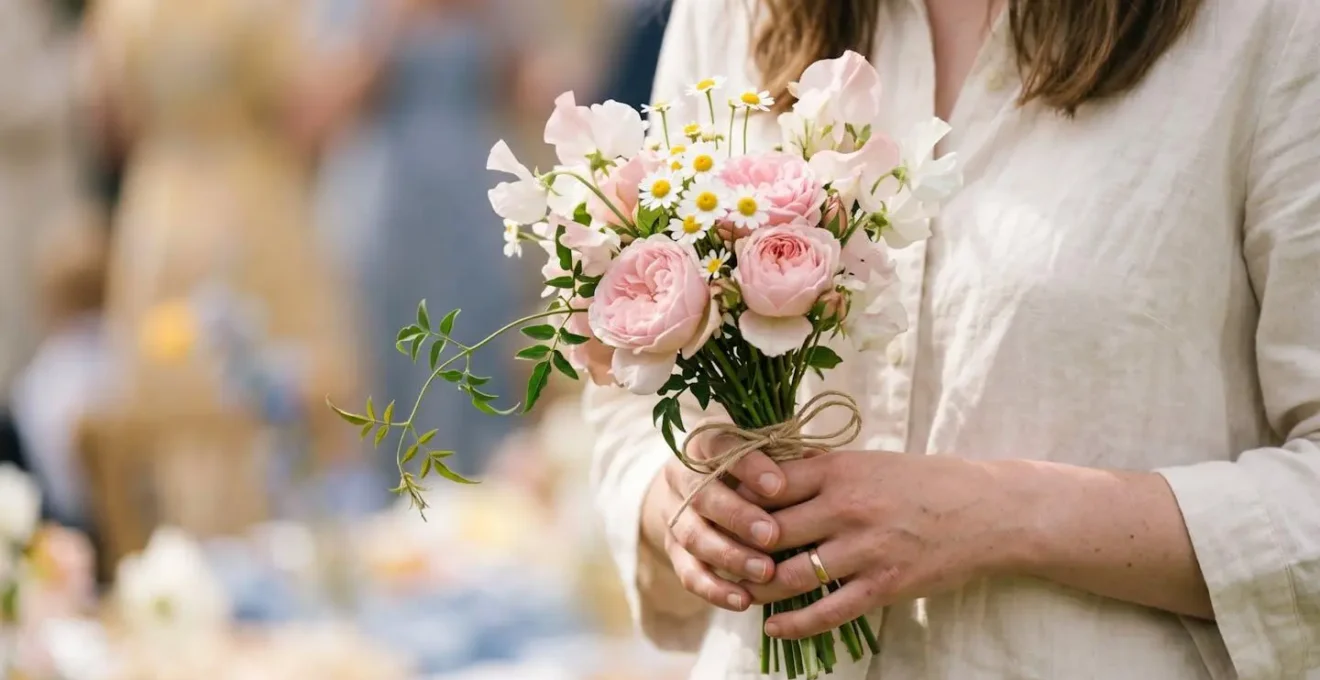
For a Sweet 16, the theme is one of innocence, grace, and delicate joy. The floral choices should be light, playful, and full of youthful energy. Think of:
- Daisies for their association with purity and cheerfulness.
- Sweet peas, which symbolize delicate pleasure and blissful happiness.
- Pink roses to represent grace, admiration, and sweetness.
Arrangements should feel unstuffy and vibrant. Playful flower crowns, casual hand-tied bouquets with flowing ribbons, or wildflower mixes in mason jars all capture that carefree, youthful spirit. The goal is to celebrate the beauty of the present moment.
Conversely, a 21st birthday marks a definitive entry into adulthood. The floral narrative shifts to one of sophistication, wisdom, and future prosperity. The arrangements should be more refined and elegant. Consider sophisticated blooms like:
- Orchids for their sense of luxury, elegance, and refined beauty.
- Iris, a flower that traditionally symbolizes wisdom and new beginnings.
- Alstroemeria (Peruvian Lily) to represent prosperity and good fortune.
The presentation becomes more polished, using formats like a single, dramatic long-stemmed flower, an elegant corsage, or minimalist arrangements in sleek, modern vases. Here, the flowers toast to the future and the sophisticated individual the honoree has become.
How to Use Orchids to Symbolize Strength and Longevity for Elders?
When celebrating the milestone birthday of an elder—an 80th, 90th, or even 100th—the floral story shifts from one of fleeting moments to one of enduring legacy. The ideal flower must symbolize strength, resilience, and a life beautifully lived. This is where the orchid truly shines. Far more than just an elegant bloom, the orchid is a powerful emblem of longevity and refined beauty that grows more striking with time, making it a perfect tribute to an elder.
The symbolism is rooted in both its appearance and its nature. As the experts at Natural Orchids Boutique note, the flower carries a wealth of meaning.
Orchids are known for symbolizing love, beauty, refinement, luxury, strength, and thoughtfulness. They are often associated with refined beauty that grows more striking with time.
– Natural Orchids Boutique, The Meaning and Symbolism of Orchid
This captures the essence of honoring someone who has gathered wisdom and grace over many decades. Unlike cut flowers that fade quickly, a potted orchid is a living gift that continues to grow and flourish. Research on the plant’s hardiness shows that orchids can bloom for weeks or even months with proper care, a beautiful, living metaphor for the recipient’s own enduring presence and strength.
As a planner, you can present this gift not just as a plant, but as a symbol. A Phalaenopsis (Moth) orchid, known for its easy care, makes a thoughtful gift that offers lasting beauty without demanding strenuous effort. It becomes a daily reminder of the celebration and the high esteem in a which the honoree is held. By choosing an orchid, you are gifting more than a flower; you are honoring a legacy with a symbol of timeless strength and lasting beauty.
How to Incorporate the Recipient’s Birth Flower into a Milestone Bouquet?
While decade-specific flowers create a strong thematic foundation, the most memorable arrangements are deeply personal. The key to achieving this is by artfully weaving the recipient’s own birth flower into the milestone bouquet. This act of “symbolic harmony” blends the story of their life’s chapter with the story of who they are as an individual. However, this can be a design challenge, especially when a humble birth flower like a carnation (January) or gladiolus (August) must coexist with a dramatic milestone bloom like a yellow rose or an orchid.
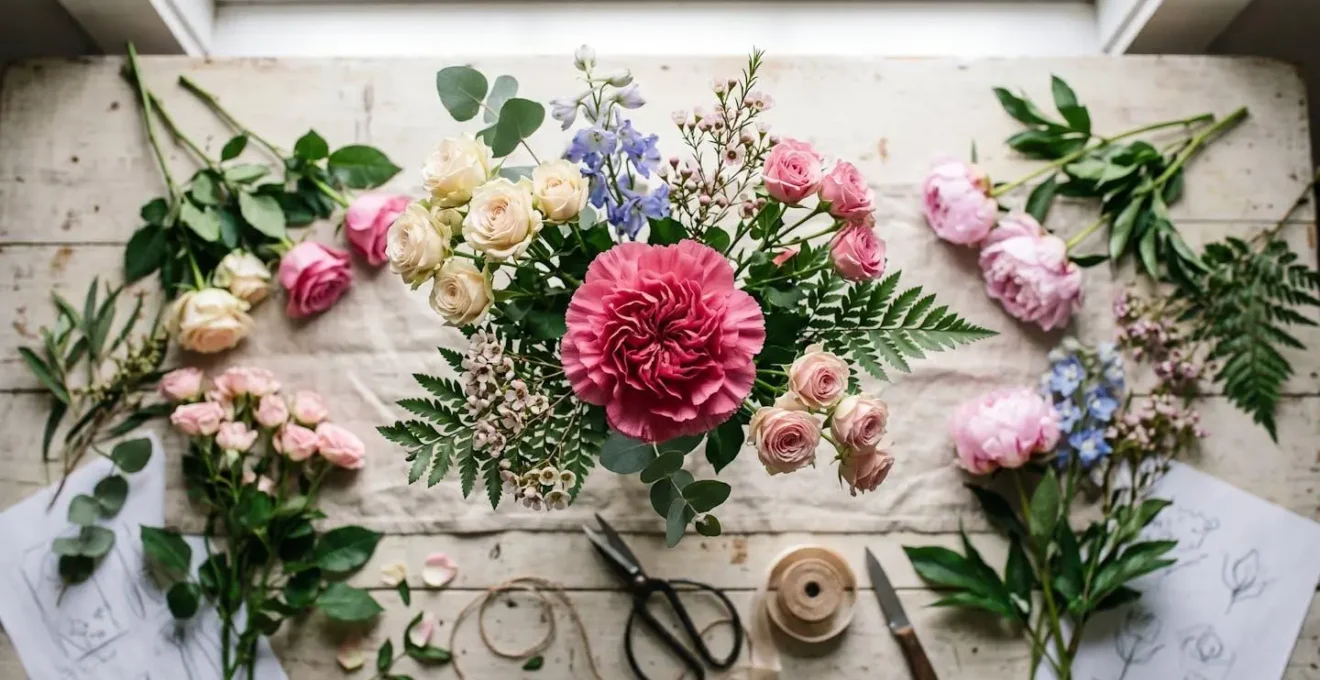
The secret is to think like a theater director, assigning roles to each flower. You don’t just mix them; you stage them.
- Star Placement: If the birth flower is visually strong (like a rose or peony), make it the focal point. Use the largest blooms, place them at the arrangement’s visual center, or choose them in a bolder color to draw the eye. The milestone flowers then become the beautiful, supportive ensemble.
- Supporting Actor Technique: If the birth flower is more modest (like a daisy or aster), use it as a textural accent. Weave it subtly throughout the arrangement, allowing it to peek out between the more dominant milestone flowers. It adds meaning and personality without competing for the spotlight.
- Color Bridge Method: When the colors of the birth and milestone flowers clash, introduce a third “transitional” flower in an intermediate hue. For example, use soft cream-colored blooms to bridge the gap between a bold red carnation and a bright yellow rose, creating a harmonious visual flow.
A truly masterful touch for an elder’s celebration is the Generational Bouquet. This concept involves combining the birth flowers of the honoree, their children, and their grandchildren into a single, magnificent arrangement. It transforms the bouquet from a personal tribute into a breathtaking symbol of family legacy.
Mini Bouquets: How to Let Guests Take the Centerpieces Home?
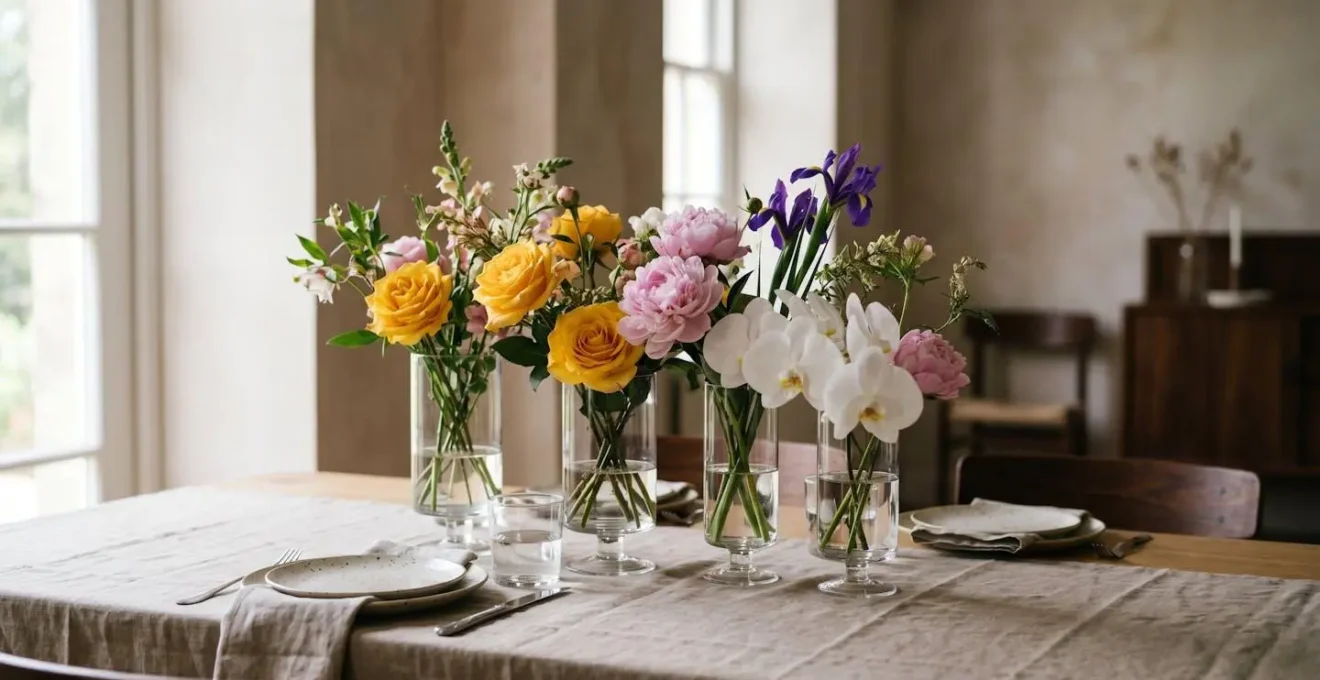
The story told by your floral arrangements doesn’t have to end when the party does. One of the most gracious and memorable ways to conclude a milestone celebration is by allowing guests to take a piece of the beauty—and the story—home with them. This is where the concept of the “deconstructed centerpiece” comes into play. Instead of one large, indivisible arrangement, you design the centerpiece as a collection of individual mini-bouquets or bud vases that, together, create a stunning whole.
This approach transforms a decorative element into an experiential favor. At the end of the evening, the host can invite guests to select a small arrangement to take with them. It’s a gesture that is both sustainable—ensuring the beautiful flowers don’t go to waste—and deeply meaningful. It extends the warmth and joy of the celebration into the homes of the guests, serving as a fragrant reminder of the special day. For a party planner, this strategy adds a layer of interactive elegance that guests will talk about long after the event.
Executing this requires thoughtful preparation to ensure both beauty and practicality. The key is to design the individual units to be self-contained and easily portable, ensuring a seamless experience for guests as they depart.
Your Action Plan: The Deconstructed Centerpiece Strategy
- Design Individual Units: Create the main centerpiece from numerous small, wrapped mini-bouquets or bud vases arranged closely together. Ensure each is a complete, charming arrangement on its own.
- Add Meaning Tags: Attach a small card to each mini-bouquet explaining the symbolism of the flowers (e.g., “Yellow rose for 50 years of friendship”). This ensures guests take home both beauty and story.
- Consider Decade Vases: For a narrative touch, arrange clusters of small vases representing different decades of the honoree’s life, each with symbolic blooms. Guests can choose the decade most meaningful to them.
- Prepare for Portability: Use small water tubes or leak-proof vessels for each mini-arrangement. Have small bags or wrap stems with damp paper towels and foil so guests can transport their floral favors cleanly and safely.
- Plan the “Giveaway”: Decide on the moment and method for offering the centerpieces. A simple announcement by the host towards the end of the evening works beautifully to conclude the event on a high note.
When to Gift Daffodils to Mark a Fresh Start?
Not all milestones are about looking back; some are about celebrating a powerful step forward. The daffodil, with its bright, cheerful trumpet, is the quintessential flower of new beginnings. As the first bloom to herald the end of winter, it is a potent symbol of renewal, rebirth, and the promise of a fresh start. As a planner, knowing when to deploy this symbol allows you to craft a message of optimism and forward-looking joy, which is particularly resonant for certain life chapters.
While often associated with spring, the daffodil’s symbolism makes it a perfect choice for any milestone that represents a significant life shift. According to traditional flower symbolism, daffodils symbolize renewal, simple pleasures, and singular love. This makes them ideal for moments of personal and professional transformation.
- The 30th Birthday: This milestone often marks the true beginning of a defining new decade. Gifting daffodils for a 30th birthday is a beautiful way to symbolize the fresh chapter ahead, full of optimism and new ambitions. It’s a floral toast to new adventures.
- Retirement Milestones (65th-70th): A career’s conclusion is not an end but the beginning of a new kind of freedom. Daffodils perfectly celebrate this fresh start, honoring the pursuit of new hobbies, passions, and joys outside of work.
- Post-Challenge Resilience: For any milestone that follows a period of difficulty or hardship, a bouquet of daffodils is a powerful message of strength. It frames the celebration not just as another year, but as a victory and a testament to the recipient’s ability to begin anew.
For an added touch, consider sending a large, vibrant bunch of daffodils a week *after* the main party. Accompanied by a note like, “For your new beginning,” this gesture thoughtfully shifts the focus from the past celebration to the bright future ahead.
Moth Orchid or Cane Orchid: Which Is Easier for Novice Owners?
Having established the orchid as a premier symbol of strength and longevity for an elder’s milestone, the practical question for a planner or gift-giver becomes: which orchid to choose? Giving a plant that requires complex care can inadvertently become a burden rather than a joy. The choice between a Moth Orchid (Phalaenopsis) and a Cane Orchid (Dendrobium) is crucial, as their care requirements differ significantly, making one far more suitable for a novice or a busy recipient.
The clear winner for ease of care is the Moth Orchid (Phalaenopsis). This variety is famously forgiving and thrives in typical indoor conditions, making it the ideal gift for someone new to plant care or an elderly parent for whom simplicity is key. Its long-lasting blooms provide months of beauty with minimal fuss. The Cane Orchid (Dendrobium), while beautiful, is a better fit for a retiree who is actively seeking a new hobby, as its care is more involved and requires attention to specific seasonal cycles. Choosing the right plant is an act of thoughtfulness in itself, matching the gift to the recipient’s lifestyle.
This comparative table breaks down the key differences to help you make the perfect, stress-free choice for your milestone gift.
| Characteristic | Moth Orchid (Phalaenopsis) | Cane Orchid (Dendrobium) |
|---|---|---|
| Care Difficulty | Easy – ideal for novices | Moderate – requires more attention |
| Watering Needs | Moderate watering, avoid overwatering | More specific seasonal watering cycles |
| Bloom Duration | Several weeks to months | Cyclical blooming, shorter periods |
| Best Milestone Gift For | Elderly parents, busy 40th birthdays, anyone new to plant care | Retirees (65th-70th) seeking new hobbies |
| Symbolism | Lasting beauty, thoughtful gesture | Active engagement, new passion pursuit |
| Light Requirements | Bright indirect light, forgiving | Bright indirect light, more particular |
| Gift Message | ‘A gift of enduring beauty’ | ‘A gift of hobby and nurture’ |
Key takeaways
- Floral design for milestones is a form of storytelling; each flower should contribute to the narrative of the honoree’s life.
- Centerpiece design must balance beauty with function. Low-profile or transparent arrangements are key to ensuring guests can connect and converse.
- The most impactful floral themes are both thematic (celebrating the decade) and personal (incorporating elements like birth flowers or family legacy).
How to Create Visually Stunning Centerpieces That Don’t Block Conversation?
As a party planner, you know that the most beautiful centerpiece fails if it kills conversation. An arrangement that is too tall or bulky can erect a literal wall between guests, stifling the very connection the celebration is meant to foster. The challenge is to create a design that delivers visual drama and thematic resonance while maintaining clear sightlines across the table. Fortunately, several elegant techniques achieve exactly this, ensuring your floral story enhances the guest experience rather than hindering it.
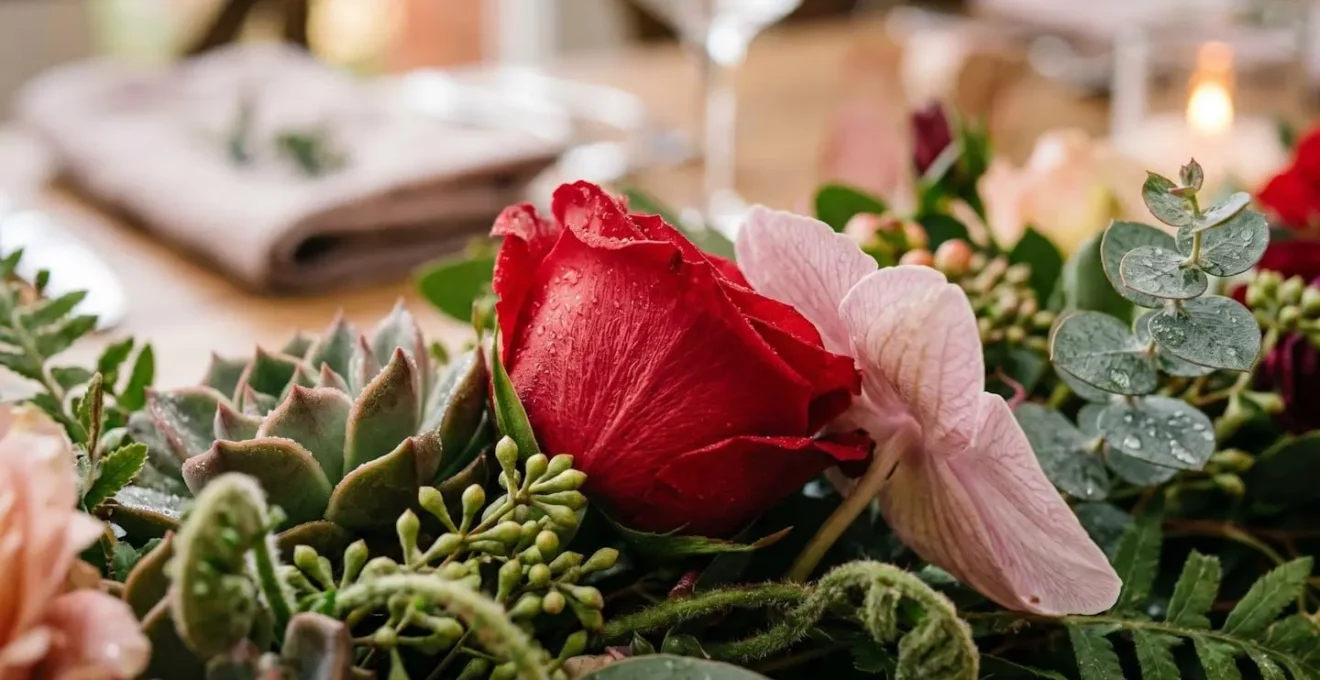
The primary rule is the 12-inch height limit: any arrangement that guests must look over should be kept under a foot tall. Anything taller should be exceptionally slender.
- The Floral Runner Method: This is a sophisticated and highly effective solution. Create a low, lush runner of greenery and flowers that flows down the center of a long table. You can intersperse blooms symbolic of different life decades to create a visual timeline of the honoree’s life, all while keeping the arrangement well below eye level.
- The Trio of Meaning Concept: Instead of one large piece, use a cluster of three small-to-medium vases of varying heights, with the tallest staying under 12 inches. Each vase can represent a life phase: one for youth, one for the present milestone, and one for the wisdom of the future, creating a compact, meaningful tablescape.
- The Submerged Blooms Technique: For a touch of modern drama that remains transparent, place single, spectacular blooms like orchids or Gerbera daisies inside tall, clear cylindrical vases filled with water and topped with a floating candle. This provides vertical interest and elegance while guests can see right through them.
These techniques ensure that your stunning floral designs serve as a beautiful backdrop for connection, encouraging conversation and shared celebration—the true heart of any milestone event.
Now, equipped with the art of floral storytelling, you can begin designing celebrations that are not just seen, but felt. Start today by outlining a floral narrative for your next milestone event, transforming a simple party into an unforgettable life story told in blooms.