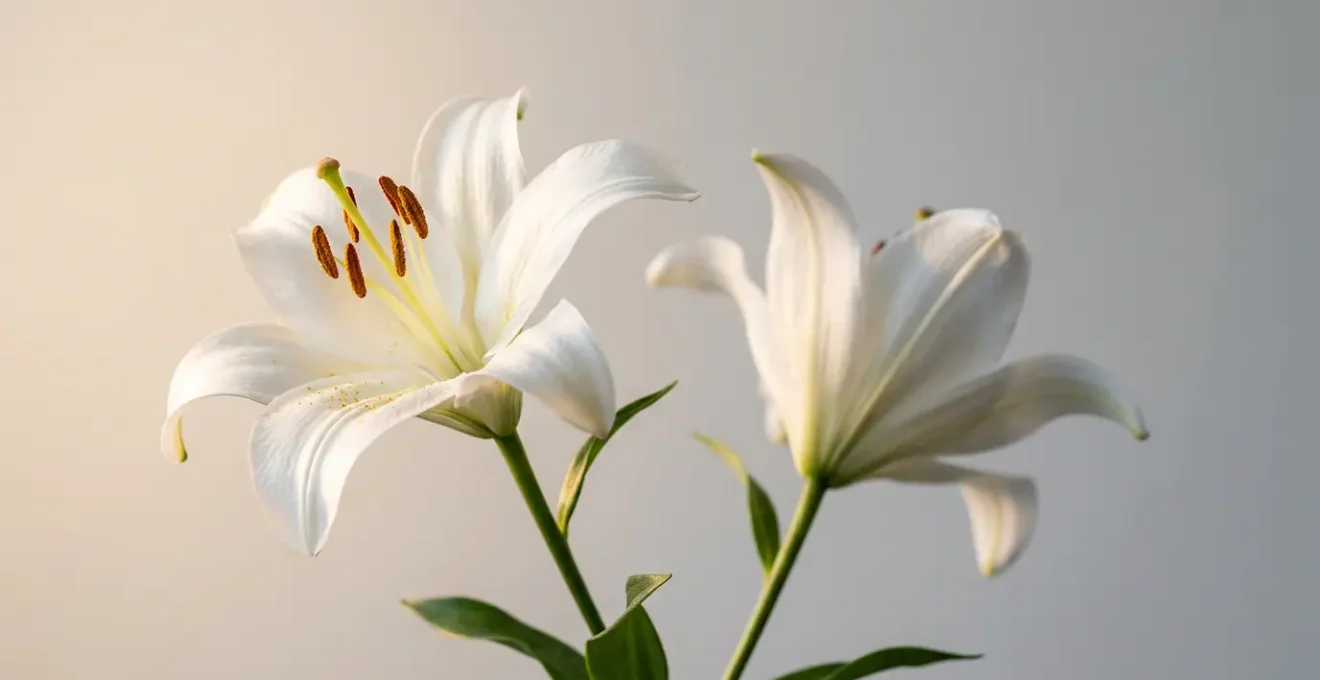
While we associate the white lily with purity for weddings and peace for funerals, this duality is no coincidence. The flower embodies a profound sensory paradox: its pristine appearance, cemented by centuries of religious art, stands in stark contrast to its powerful scent, which contains a chemical also found in decomposition. This makes the white lily the unique cultural symbol that perfectly bridges life’s beginning and its end.
The white lily occupies a unique and fascinating space in our cultural consciousness. It is a flower of profound contradictions, seen gracing the joyful aisles of a wedding and, just as often, standing in silent tribute at a funeral. This duality can be perplexing. How can a single bloom so effectively represent both the pinnacle of life and love, and the solemnity of loss and remembrance? The common answers—purity, innocence, peace—are correct, but they only scratch the surface of a much deeper story.
The true power of the white lily lies not just in its color, but in a complex interplay of history, art, and even biochemistry. Its symbolism wasn’t simply discovered; it was actively constructed and reinforced over centuries. But what if the answer lies not just in what we see, but in a fascinating conflict between its visual perfection and the subconscious signals sent by its powerful fragrance? To understand the lily is to explore the very mechanisms we use to process life’s most significant transitions.
This article delves into the heart of the lily’s paradox. We will examine how religious art cemented its connection to purity, uncover the surprising science behind its funereal scent, and explore the practical and cultural implications of its dual role. By navigating this duality, we can appreciate the white lily not as a flower of contradiction, but as a complete symbol of the cycle of life itself.
To fully grasp this flower’s complex identity, this guide explores its historical roots, its powerful sensory impact, and its practical roles in our most cherished ceremonies. The following sections will deconstruct each facet of the white lily’s story.
Summary: Why Are White Lilies Used for Both Weddings and Funerals?
- How Did Religious Art Cement the White Lily as a Symbol of Virginity?
- Why Is the Scent of Lilies So Strongly Linked to Funeral Homes?
- How to Remove Lily Pollen Stains from a White Wedding Dress?
- The Cat Owner’s Nightmare: Why You Must Never Gift Lilies to Feline Households?
- Stargazer or Casablanca: Which White Lily Has the Strongest Presence?
- The Lily and the Virgin: How Art History Defined Floral Purity
- How to Dry Funeral Flowers to Create a Keepsake Shadow Box?
- How to Choose Sympathy Flowers That Respect Cultural and Religious Mourning?
How Did Religious Art Cement the White Lily as a Symbol of Virginity?
The white lily’s association with purity and virginity is not an inherent quality of the flower itself, but a powerful cultural construct, largely built and distributed through religious art. Before it became a staple of weddings, it was a central icon in Christian iconography, specifically in depictions of the Virgin Mary. Artists needed a visual shorthand to communicate the concept of her immaculate conception and unwavering purity, and the flawless, white petals of the Madonna Lily (Lilium candidum) became the perfect vehicle.
This symbolic connection was most famously solidified in scenes of the Annunciation. As the Lilium Species Foundation notes, this became a recurring motif:
Medieval artists placed the Madonna Lily in scenes of the Annunciation: the Archangel Gabriel offers a lily to the Virgin Mary, signifying her purity and the miraculous nature of Christ’s conception.
– Lilium Species Foundation, LILIUM CANDIDUM: THE MADONNA LILY THROUGH HISTORY, BOTANY, MEDICINE, AND SYMBOLISM
This wasn’t an isolated trend; it became an established artistic convention. Historical analysis shows that by the 14th century, the lily became common in Annunciation paintings and illuminations across Europe. Every time a believer saw this image in a church, a manuscript, or a fresco, the connection was reinforced: white lily equals divine purity. This repeated visual messaging ingrained the symbol so deeply into the Western psyche that it naturally transitioned from a purely religious context to the secular celebration of a bride’s purity and new beginnings at a wedding.
Why Is the Scent of Lilies So Strongly Linked to Funeral Homes?
If art explains the lily’s role in weddings, biochemistry and sensory memory explain its connection to funerals. The scent of lilies, particularly the Stargazer and Casablanca varieties, is famously potent and heady. For many, this fragrance is inseparable from the atmosphere of a funeral home or a memorial service. This association is not merely coincidental; it is rooted in both practical history and a surprising chemical link.
Historically, strong-smelling flowers were used in funerals to mask the odors of decomposition before modern embalming practices became widespread. The lily’s powerful perfume made it a functional choice, and over time, this practical use created a powerful olfactory association. Our sense of smell is directly linked to the parts of the brain that process memory and emotion, making scent-based memories incredibly vivid and lasting. Smelling lilies in a context of grief cemented that connection for generations.
However, the link is even deeper. The lily’s fragrance contains a complex array of chemical compounds, including one named indole. In small, highly diluted concentrations, indole has a floral aroma. Yet, its chemical nature is paradoxical. Perfume chemistry research reveals that pure indole is present in feces and also in white flowers. This is because the compound is a direct byproduct of organic decay. As fragrance chemist Mat Yudov explains:
Indole forms during the process of tryptophan decomposition by putrefactive bacteria (during the decaying of organic matter or in the intestines).
– Mat Yudov, Fragrantica – Indole perfume ingredient analysis
This means the very flower that looks like the epitome of purity produces a chemical that is biochemically linked to decay. Our brains may not consciously register this, but on a primal level, the lily’s scent carries a subliminal signature of mortality. This sensory paradox—visual purity combined with a scent tied to decomposition—makes the white lily the ultimate funereal flower, symbolizing the soul’s return to innocence even as it acknowledges the reality of physical death.
How to Remove Lily Pollen Stains from a White Wedding Dress?
The very thing that gives lilies their vibrant, dramatic beauty—their pollen—is also the source of a bride’s worst nightmare. The rich, golden-orange dust from a lily’s anthers is notoriously difficult to remove, especially from a pristine white wedding dress. The pollen is not a dry powder but an oily, pigment-rich substance designed to stick. Wiping or rubbing it will only smear the pigment deeper into the fabric’s fibers, creating a permanent-looking stain.
Panicking is the worst response. The key is to act carefully and avoid applying pressure or moisture initially. The goal is to lift the loose pollen off the surface before it has a chance to set. If you are faced with this situation, whether on a wedding dress or any other delicate fabric, a methodical approach is essential for success. Following a clear plan can prevent a minor accident from becoming a major disaster.
Your Action Plan: Removing Lily Pollen Stains
- Do Not Touch: First and foremost, resist the instinct to brush or wipe the pollen with your hand or a cloth. This will embed the oily pigment into the fabric weave.
- Lift with Tape: Take a piece of clear sticky tape (like Scotch tape). Gently press the sticky side onto the pollen-covered area and lift it straight up. The pollen should adhere to the tape. Use a fresh piece of tape for each press to avoid re-depositing pollen. Repeat until all visible surface pollen is gone.
- Shake It Out: If possible, take the garment outside and give it a vigorous shake to dislodge any remaining loose particles.
- Expose to Sunlight: For any faint remaining stain, especially on white fabrics, direct sunlight can be surprisingly effective. The UV rays can help to break down the last traces of the pigment. Leave the garment in a sunny spot for a few hours.
- Spot Treat as a Last Resort: If a stain persists, lightly dab the area with a cotton swab dipped in rubbing alcohol or a gentle stain remover. Always test on an inconspicuous area first. Do not rub. Blot gently with a clean white cloth to lift the stain.
The intricate texture of lily pollen makes it uniquely challenging. Its microscopic grains are designed to latch onto surfaces, a trait that is wonderful for pollination but disastrous for fine textiles.
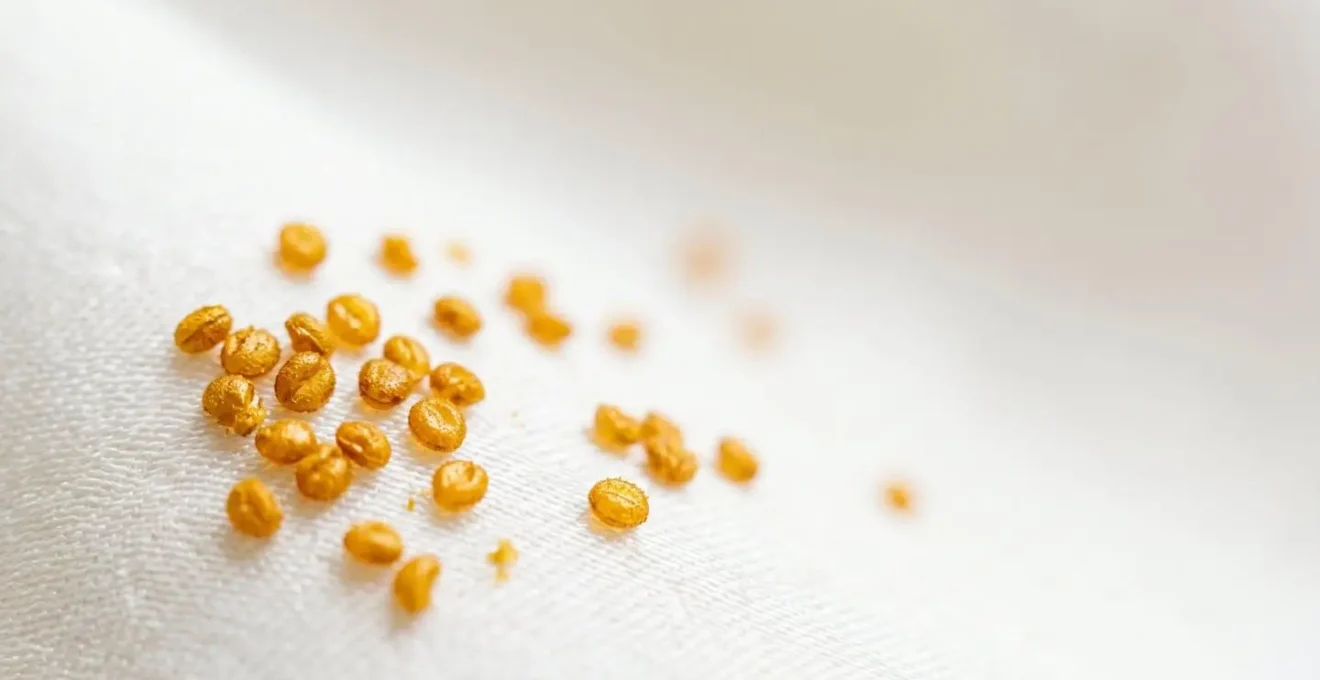
As this close-up view reveals, the oily nature of the pigment is what causes it to smear so easily. By using a lifting method like tape instead of a rubbing motion, you work with the pollen’s properties, not against them, ensuring the fabric of a cherished garment like a wedding dress remains immaculate.
The Cat Owner’s Nightmare: Why You Must Never Gift Lilies to Feline Households?
While the white lily’s symbolism is rich and its beauty undeniable, there is a dark side to this popular flower that is critically important for public awareness: lilies are lethally toxic to cats. This is not a mild allergy or a minor upset stomach; ingestion of any part of a true lily plant (from the genera Lilium, which includes Easter, Stargazer, and Asiatic lilies, and Hemerocallis, or daylilies) can lead to rapid, irreversible kidney failure and death.
The danger cannot be overstated. Many well-meaning individuals gift lily bouquets without realizing they are introducing a deadly hazard into a cat owner’s home. The toxicity is severe, and the window for effective treatment is terrifyingly short. As the UC Davis School of Veterinary Medicine warns, time is of the essence:
All parts of the plant—petals, leaves, stem, pollen, and even the water in the vase—can cause irreversible kidney failure in cats.
– UC Davis Veterinary Medicine, Animal Health Topics – Lily Toxicity in Cats
The toxic agent has not been identified, but its effects are devastating. A cat need only bite a leaf, lick pollen off its fur after brushing against a flower, or drink water from the vase to receive a fatal dose. Symptoms may start with vomiting, lethargy, and loss of appetite, but they quickly progress to acute kidney shutdown. According to veterinary experts, fatal kidney failure can develop in less than 72 hours, and a delay in treatment of more than 18 hours often means the damage is permanent. The only safe approach is complete avoidance. If you are sending flowers to a home and you are unsure if they have cats, it is always safer to choose a different, non-toxic flower like roses, sunflowers, or orchids.
Stargazer or Casablanca: Which White Lily Has the Strongest Presence?
Within the world of white lilies, two titans dominate the floral industry for events, each with a distinct personality: the dramatic Stargazer (often a pink-and-white hybrid, but with pure white variants) and the classic Casablanca. While both are types of Oriental Lilies known for their powerful fragrance and large blooms, they create very different effects. When choosing for a wedding or a major event, understanding their unique characteristics is key to achieving the desired “presence.”
The Casablanca lily is often considered the quintessential wedding flower. Its massive, pure white, outward-facing blooms exude an air of sophisticated elegance and romance. It is bold yet refined, with a fragrance that is rich and perfumed without being overly sharp. Its large flower size means fewer stems are needed to create a high-impact arrangement. In the world of horticulture, the Casablanca’s perfection is formally recognized; horticultural records show that ‘Casa Blanca’ received the Award of Garden Merit from the Royal Horticultural Society, a testament to its reliable beauty and strong garden performance.
The Stargazer, on the other hand, is known for its more dramatic, upward-facing blooms, which appear to gaze at the stars. While most famous for its vibrant pink and white coloring, pure white varieties exist and offer a similar bold statement. Its fragrance is often described as spicier and more intense than the Casablanca. The choice between them often comes down to the desired aesthetic: Casablanca for timeless romance, and Stargazer for bold, modern drama. A side-by-side comparison reveals the subtle but important differences in their visual and sensory impact.
This table breaks down the key differences between the iconic Casablanca and the more traditional Easter Lily, which is often used as a baseline for white lily characteristics.
| Characteristic | Casablanca (Oriental Hybrid) | Easter Lily (Longiflorum) |
|---|---|---|
| Bloom Size | 8-10 inches across | 4-6 inches across |
| Flowers per Stem | 6-8 blooms | 3-6 blooms |
| Fragrance Profile | Heavily scented, rich complex perfume | Subtle, clean, traditionally floral |
| Bloom Period | Mid-late summer (July-August) | Early spring (naturally summer, forced for Easter) |
| Height | 3-4 feet (90-120 cm) | 2-3 feet (60-90 cm) |
| Primary Use | Weddings, bridal bouquets, romantic events | Easter services, resurrection symbolism, funerals |
| Visual Impact | High impact with fewer stems needed | Traditional, solemn trumpet shape |
The Lily and the Virgin: How Art History Defined Floral Purity
While the previous section on religious art established the lily’s link to the Virgin Mary, it’s crucial to understand that this was not merely a reflection of a pre-existing belief. Instead, art history acted as a powerful engine that actively *defined* and *popularized* this association, transforming a flower into a universally recognized symbol. The consistent depiction of the Madonna Lily in the hands of the Archangel Gabriel or near the Virgin Mary was a deliberate iconographic choice that, through repetition, became doctrine in the visual language of faith.
This process of symbolic definition wasn’t confined to a single religion. Though its link to the Virgin Mary is its most famous, the white lily’s role as a symbol of purity transcends Christian boundaries, suggesting a more universal resonance. This broader context adds depth to its symbolic power.
The lily’s influence extended far beyond Western religious contexts. In Jewish tradition, the white lily symbolized purity, beauty, and divine blessing.
– Lilium Species Foundation, Cultural and Botanical Study of Madonna Lily
The enduring power of this ancient symbol, shaped and reinforced by centuries of art, continues to this day, sometimes in remarkable ways. A modern event perfectly illustrates how this historical association remains a living part of our culture.
Case Study: 2014 Vatican Botanical Diplomacy
In 2014, in a remarkable act of “botanical diplomacy,” scientists from Israel presented Pope Francis with seeds of the Madonna Lily, collected from one of its last wild populations. The intent was for these historically significant flowers to be cultivated and bloom in the Vatican gardens for the Feast of the Annunciation. This gesture, as documented by the Lilium Species Foundation’s analysis, powerfully echoed the iconography established nearly two millennia ago. It highlighted the lily as a living emblem of purity and divine favor, proving that the meaning defined by art history is not a relic of the past but a vibrant, ongoing cultural conversation.
Key Takeaways
- The white lily’s symbolism is a cultural construct, not an inherent trait, built on a sensory paradox between its visual purity and its scent’s link to decay.
- Religious art, particularly in Annunciation scenes, was the primary vehicle for cementing the lily’s association with virginity and purity in Western culture.
- The flower’s powerful scent contains indole, a chemical also produced during decomposition, creating a subconscious link to mortality and making it a fitting funereal flower.
- All parts of true lilies are lethally toxic to cats, causing irreversible kidney failure, a critical fact that must be shared to prevent accidental poisonings.
How to Dry Funeral Flowers to Create a Keepsake Shadow Box?
After a funeral service, the beautiful floral arrangements that offered so much comfort often wilt and fade. However, preserving some of these flowers, particularly symbolic ones like white lilies, can create a lasting and meaningful keepsake. Drying the blooms allows you to transform a transient symbol of mourning into a permanent tribute, often displayed in a shadow box. While several methods exist, using silica gel is the most effective technique for preserving the lily’s shape and color.
Silica gel is a desiccant that looks like clear sand or crystals. It works by drawing moisture out of the petals quickly, which helps prevent them from shriveling and turning brown as they would with air-drying. This method is especially good for delicate, multi-petaled flowers like lilies. To begin, you’ll need a container large enough to hold the lily bloom without squashing it, and enough silica gel to completely cover the flower.
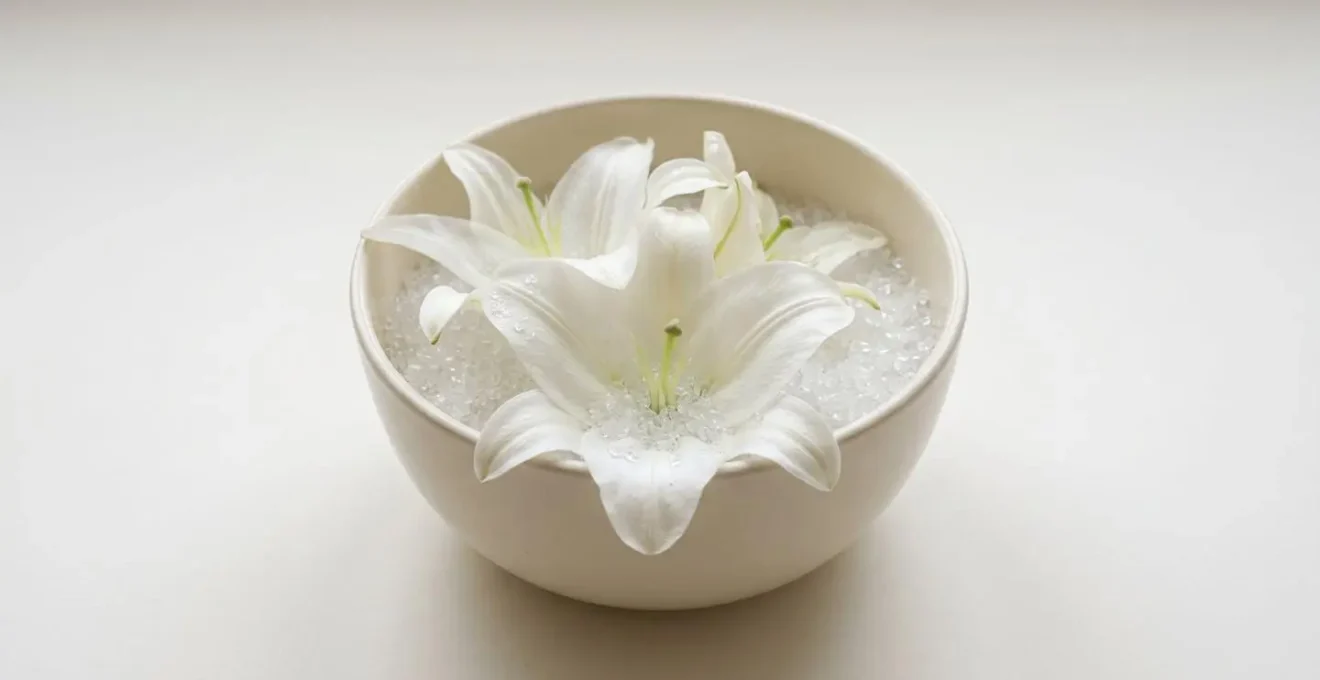
The process is straightforward. First, pour a layer of silica gel into the bottom of the container. Gently place the lily bloom on top of this layer, facing up. Then, carefully pour more silica gel around and over the flower until it is completely buried. Be gentle to ensure the petals maintain their natural shape. Seal the container and leave it in a warm, dry place for about a week. Once the flower is crisp and dry, you can gently remove it and use it in your shadow box display, alongside a photograph or other mementos, creating a tangible connection to a cherished memory.
How to Choose Sympathy Flowers That Respect Cultural and Religious Mourning?
Understanding the dual symbolism of the white lily is only the first step; applying that knowledge with sensitivity is what truly matters. When sending sympathy flowers, the gesture is meant to convey comfort and respect. However, floral customs surrounding mourning vary dramatically across different cultures and religions. A flower that is a perfect symbol of peace in one tradition may be inappropriate or even unwelcome in another. Therefore, choosing sympathy flowers requires not just aesthetic judgment, but also cultural awareness.
In many Western, Christian-influenced cultures, the white lily is the gold standard for sympathy, symbolizing the restored innocence of the soul of the departed. White roses, carnations, and chrysanthemums are also common and appropriate. However, in other traditions, different flowers and colors take precedence. For many Buddhist funerals, white is the color of mourning, but chrysanthemums are often preferred over lilies. In Hindu traditions, flowers are part of the celebration of life, and bright garlands of marigolds are more common.
Conversely, in some faiths, sending flowers is not a traditional part of mourning at all. In Judaism, flowers are rarely sent to a home during the shiva period, as the focus is on grieving, not on maintaining physical objects like plants. In Islamic tradition, charitable donations are often preferred over floral gifts. Navigating these customs is key to ensuring your gesture is a source of comfort, not a cultural misstep. A brief guide can help clarify these important distinctions.
The following guide provides a general overview of sympathy flower etiquette across several major cultural and religious traditions, highlighting the specific role—or absence—of the white lily.
| Religion/Culture | Preferred Flowers & Colors | Flowers to Avoid | Notes on White Lily’s Role |
|---|---|---|---|
| Christian (Western) | White lilies, white roses, chrysanthemums (white), carnations | Overly vibrant colors (red, orange) at traditional services | White lilies are the standard—symbolize resurrection and restored innocence of the soul |
| Buddhist (Asian) | White chrysanthemums, lotus flowers, white and yellow blooms | Red flowers (associated with celebrations, not mourning) | White lilies acceptable but less traditional than chrysanthemums |
| Hindu | Marigolds (orange/yellow), jasmine, white flowers, flower garlands | Typically none—flowers are celebratory in Hindu funeral rites | White lilies can be used but marigolds are more culturally appropriate |
| Jewish | Simple, unadorned flowers; white roses, lilies acceptable | Elaborate arrangements during shiva period (flowers rarely sent to homes) | White lilies appropriate for graveside but not during shiva |
| Islamic | Generally flowers are not customary at funerals | All flowers (not part of traditional Islamic mourning practices) | White lilies not traditionally used—charity preferred over flowers |
| Mexican (Día de los Muertos) | Marigolds (cempasúchil), vibrant colors celebrating life | None—celebration of deceased encourages color | White lilies can be included but bright marigolds are essential |
By understanding the deep history, complex science, and diverse cultural interpretations of the white lily, we move beyond a simple question of “why” and arrive at a richer appreciation of how a single flower can so powerfully contain the full spectrum of human experience. Choosing to use it, gift it, or preserve it becomes a more intentional and meaningful act.