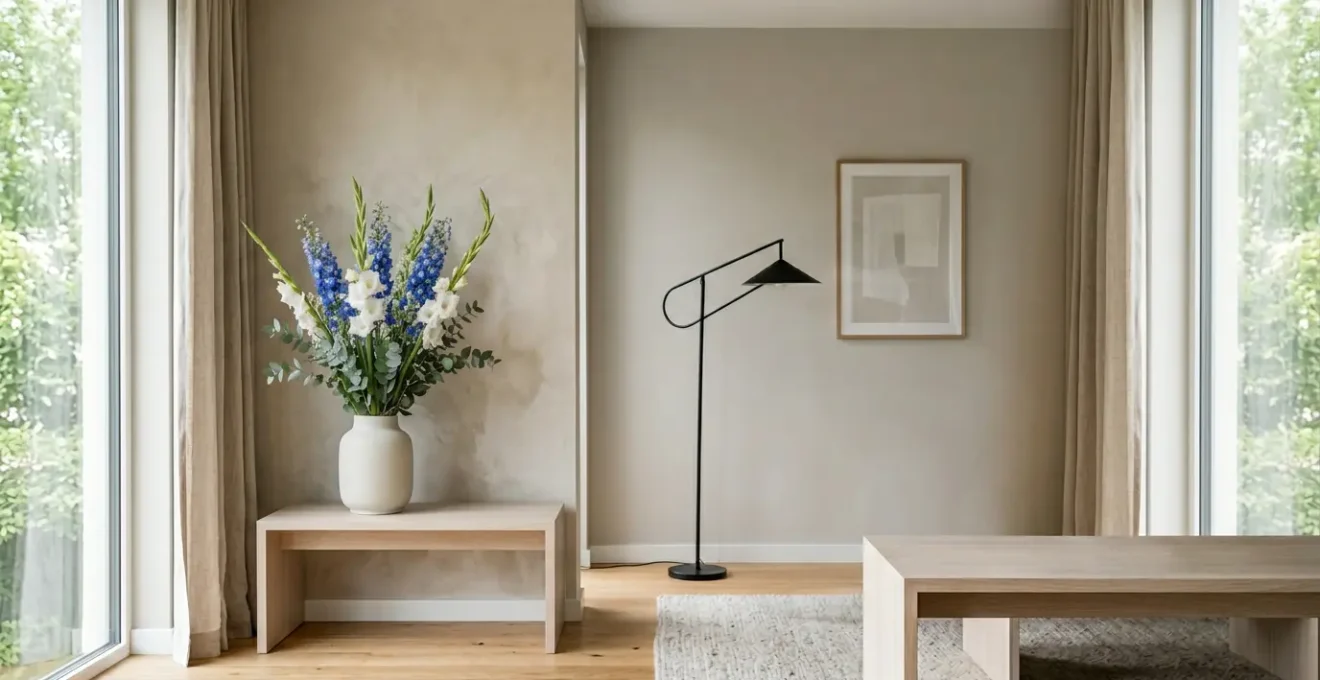
Floral styling is your most powerful, non-permanent tool for architectural change, allowing you to sculpt a room’s feel and function in minutes.
- Strategic use of tall, vertical arrangements can physically alter the perceived height of a room.
- Monochromatic flowers create calming focal points in visually busy spaces, while specific lighting techniques reveal their sculptural, three-dimensional texture.
- Minimalist, single-species bouquets on modern tables emphasize the design of the furniture and the space around it.
Recommendation: Stop seeing flowers as simple decor and start using them as strategic tools to reshape your home’s architecture, light, and energy.
Does your living space feel static, maybe even a little tired? You crave a transformation, but a full redecoration—with its commitment to new paint, furniture, and expense—feels like a step too far. The common advice is to simply “add a pop of color” with a generic bouquet, a temporary fix that rarely changes the fundamental feel of the room. This approach treats flowers as a mere accessory, an afterthought plopped onto a surface.
But what if the true power of botanicals has been overlooked? What if, instead of just decorating, you could use flowers to direct, sculpt, and even alter the perceived architecture of your space? This is the secret that professional home stagers and interior designers have known for years. They don’t just add flowers; they deploy them with strategic intent. They understand that a towering branch can lift a ceiling, a simple monochromatic arrangement can bring serenity to a chaotic pattern, and the right light can turn a simple petal into a work of art.
This is where floral styling transcends decoration and becomes a form of spatial design. It’s about understanding the principles of line, form, texture, and scale to manipulate a room’s identity instantly. This guide will move beyond the basics and reveal these transformative techniques. We will explore how to use botanicals to solve common design challenges, from low ceilings and cluttered surfaces to creating a welcoming entrance and styling for high-traffic zones. Get ready to see flowers not as accents, but as your most versatile tool for immediate and impactful change.
To help you master these techniques, this article breaks down the core principles of professional floral styling. Explore the sections below to learn how to transform each area of your home with confidence and creativity.
Summary: A Professional Guide to Remodeling with Flowers
- Why Do Tall Arrangements Make Small Ceilings Feel Higher?
- How to Style an Entry Console with Botanicals for Maximum Welcome?
- Monochrome or Contrast: What Suits a Patterned Living Room Best?
- The Lighting Mistake That Hides the Texture of Your Arrangements
- When to Refresh Floral Decor Before a Major Weekend Gathering?
- Why Is Less More When Styling Modern Coffee Tables?
- How to Design a Centerpiece for a Long Rectangular Table?
- How to Style Fresh Flowers in Living Areas That Are High-Traffic?
Why Do Tall Arrangements Make Small Ceilings Feel Higher?
The ability of a tall floral arrangement to make a low ceiling feel higher isn’t an illusion; it’s a powerful principle of perceptual psychology applied to interior design. Your eyes are naturally drawn along lines, and when you introduce a strong vertical element—like elegant delphiniums, gladioli, or dramatic cherry branches—you compel the eye to travel upward. This vertical movement creates a psychological trick, distracting from the room’s horizontal limitations and focusing attention on its height, however modest.
This effect is quantifiable. Rather than just a feeling, interior design studies have shown that employing vertical design elements can create a perceived height boost of up to 30%. This is because the brain misinterprets the journey of the eye as actual physical space. As the Expand Furniture Design Team explains, this is a deliberate distortion of perception. They note, “Vertical lines make rooms feel taller because they bring your eyes up and down instead of allowing them to drift towards the walls and across the width. When your eyes are focused on the vertical space it distorts your perception of the area making it feel taller.”
To maximize this effect, choose tall, slender vases and “architectural botanicals”—stems with a strong, clean line. Think less about a bushy, rounded bouquet and more about the elegant, sculptural form of a few perfect branches. Placing these arrangements on a low-slung console or the floor can further exaggerate the vertical journey, making it the most impactful, non-structural renovation you can perform in an afternoon.
How to Style an Entry Console with Botanicals for Maximum Welcome?
The entryway console is your home’s first impression. It sets the tone for everything that follows. Styling it effectively is not about clutter, but about creating a curated, welcoming moment that guides a guest into your home. Botanicals are your lead actor in this scene, providing life, sculpture, and a hint of the personality within. The key is to create a composition with varying heights that feels balanced and intentional, not random.
Professionals often use a “triangular” or “3-point” composition to achieve this balance. This involves establishing an anchor piece, a counter-balancing element, and a low-level connector. This creates a visual path for the eye to follow, making the composition feel dynamic and sophisticated. Designers are increasingly using oversized, leafy stems or dried botanicals in tall, statement vases as the primary anchor, creating an immediate and dramatic impact.
Case Study: The Modern Botanical Welcome
A recent trend analysis highlights a shift toward using natural textures and strategic height to create a warm, sophisticated welcome. A leading design firm styled an entryway by pairing a very tall vase with a few dramatic olive branches on one end of a marble console. This served as the high anchor point. On the opposite side, a medium-height table lamp provided ambient light and a functional counter-balance. In the center, a low, handcrafted wooden bowl acted as a catch-all for keys, grounding the composition and completing the visual triangle. This approach successfully blended aesthetics with function, using botanicals as the primary architectural element.
Action Plan: The 3-Point Composition for Console Styling
- Set Your Anchor: Place your tallest item, such as a large vase with sculptural branches or a tall, slender lamp, on one end of the console table (typically about one-third of the way in).
- Add a Counter-Balance: On the opposite side, position a medium-height element. A lush, leafy plant or a smaller floral arrangement works perfectly here. It should be substantial but not compete with your anchor’s height.
- Ground with a Low Object: Complete the composition by adding a low-profile decorative object, like a stack of art books, a beautiful candle, or a small bowl, in the center or near one of the other elements to create a layered effect.
- Check for Function: Ensure the arrangement serves a purpose beyond beauty. Is there a place for keys? Can a basket for mail be discreetly tucked in? The most successful styling integrates daily life seamlessly.
Monochrome or Contrast: What Suits a Patterned Living Room Best?
A living room with bold, patterned wallpaper or upholstery presents a unique design challenge. The space is already visually “loud.” Adding a multi-colored, high-contrast floral arrangement can often result in a chaotic clash, where the flowers and the pattern compete for attention, and both lose. In these scenarios, the most sophisticated and impactful strategy is often to choose a monochromatic floral arrangement. By using a single color, you create a moment of calm and a clear focal point amidst the complexity.
As the design team at Shields Flowers & Events points out, this technique is about harmony. They state, “Monochromatic floral arrangements are celebrated for their elegance and harmony. By focusing on one color, these designs allow the texture, shape, and form of each flower to stand out, creating a unified yet dynamic composition.” This is the key: when color is neutralized, the eye is free to appreciate the subtle differences in petal shapes, the curve of a stem, and the overall sculptural quality of the arrangement.
Think of it as creating a “visual pause.” A mass of all-white hydrangeas, creamy roses, or deep green foliage in a simple vase doesn’t fight the pattern; it complements it by offering a serene anchor point. It tells the eye where to rest. This approach demonstrates confidence and restraint, elevating the entire room’s design from busy to beautifully curated.
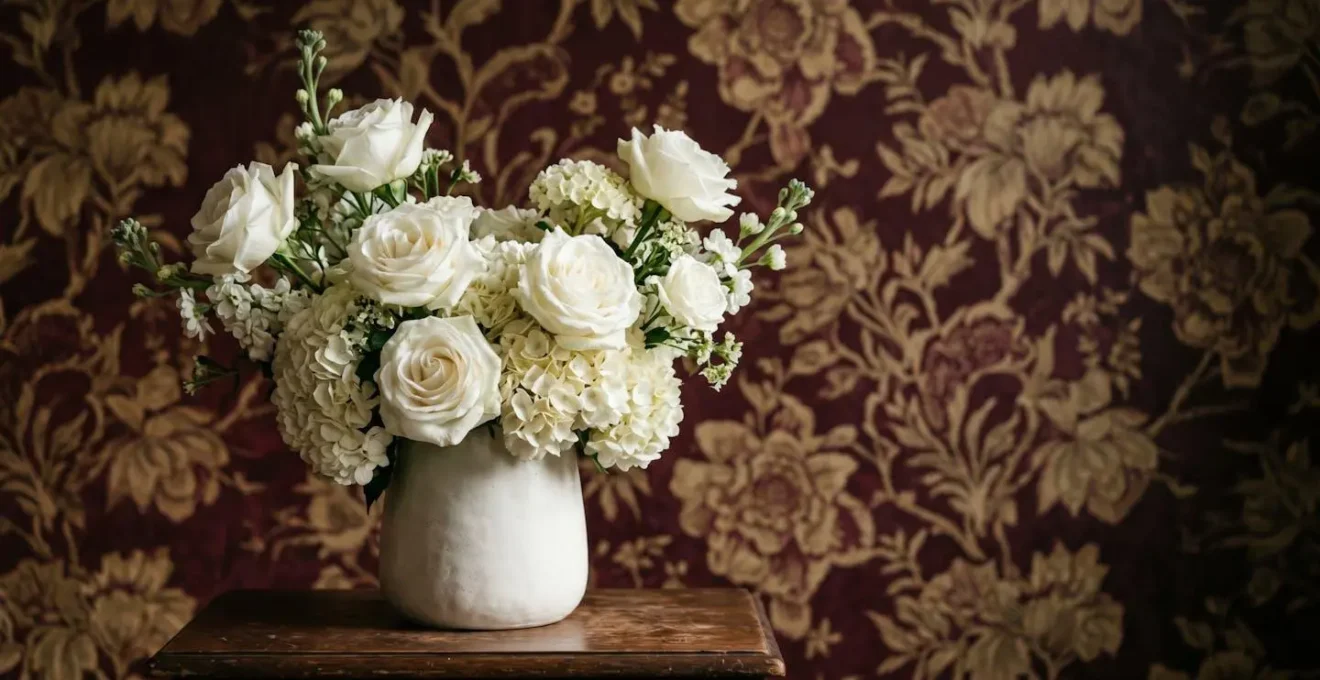
Contrast can work, but it must be deliberate. If you opt for contrast, choose one single, dominant color from the existing pattern and use only that for your floral arrangement. For example, in a blue-and-white toile wallpaper, a vase filled exclusively with deep blue delphiniums will create a powerful, intentional link to the decor without adding new, competing visual information.
The Lighting Mistake That Hides the Texture of Your Arrangements
You’ve chosen the most beautiful flowers, with velvety petals and intricate leaves, yet once placed in the room, they look flat and lifeless. The most common culprit? Flat, frontal lighting. When an arrangement is lit directly from the front (for example, by a ceiling light directly overhead or a lamp placed straight on), it washes out all the subtle shadows that define texture. This is the single biggest mistake that hides the sculptural beauty of your botanicals.
The professional’s secret is to use side-lighting, also known as raking light. By placing a light source to the side of your floral arrangement, you create micro-shadows across the surface of the petals and leaves. This instantly reveals their three-dimensional form, texture, and depth. Suddenly, a smooth rose petal shows its delicate veins, and a fuzzy celosia appears almost electric with texture. Your arrangement is transformed from a simple splash of color into a captivating sculpture.

This principle is borrowed from the world of photography, where light is everything. As the educators at Visual Wilderness explain, this technique adds complexity and depth. They advise, “Side light reveals texture and can make flowers look sculptural and three-dimensional. Side light offers more depth and complexity than front light.” You can achieve this easily at home. Instead of placing your vase directly under a downlight, move it to a side table next to a window where natural light streams in from one side. In the evening, position it so that a table lamp or a directional spotlight illuminates it from a 45- to 90-degree angle.
This simple shift in positioning changes everything. It animates the flowers, highlighting their natural form and making them a far more dynamic and engaging element in your room. It proves that how you light your flowers is just as important as the flowers you choose. This is confirmed by a deep understanding of light in flower photography, which is directly applicable to interior styling.
When to Refresh Floral Decor Before a Major Weekend Gathering?
Hosting a weekend gathering or a special event at home requires a level of planning that extends to your floral decor. The goal is to have your arrangements look their absolute best when guests are present, not the day before or the day after. Timing is everything, and professional stagers don’t rely on a single shopping trip. Instead, they use a “Two-Wave” strategy to ensure peak freshness and beauty throughout the event.
The first wave focuses on structure and longevity. About three to four days before the event, you should install the “bones” of your arrangements. This includes long-lasting structural foliage like eucalyptus, magnolia leaves, or salal, along with hardy flowers that have an extended vase life. Think carnations, chrysanthemums, alstroemeria, or orchids. These elements will create the foundational shape and aesthetic of your decor and will still look great by the time the weekend rolls around.
The second wave is all about the high-impact, show-stopping blooms. This happens on the day of the event, or just a few hours before guests arrive. This is when you add the delicate, dramatic flowers that have a shorter peak. This includes flowers like fragrant sweet peas, delicate ranunculus, fluffy peonies, or fully open garden roses. They are added to the existing structural arrangements, instantly elevating them and ensuring they are at their most breathtaking during the gathering itself. For flowers that open over time, like lilies or tulips, purchase them when they are still in tight bud 2-3 days prior. This allows them to reach their peak bloom right on schedule for your gathering. A small “floral first-aid kit” with floral food, sharp scissors, and a misting bottle is a pro-level touch for quick refreshes.
Why Is Less More When Styling Modern Coffee Tables?
In the world of modern and minimalist design, the principle of “form follows function” is paramount. A coffee table is not just a display surface; it’s a functional piece of furniture. Over-styling it with large, fussy bouquets or a collection of small objects contradicts its very purpose, creating visual clutter that undermines the clean, spacious aesthetic. This is why, when it comes to modern coffee tables, strategic restraint is far more powerful than abundance. Less is truly more.
A minimal arrangement doesn’t just decorate the table; it draws attention to the table itself—its material, its shape, and the negative space around it. As the design editors at Livingetc so aptly put it, “If you’re a modern minimalist, you may tend toward orchids, tulips, or calla lilies in sculptural vases. A minimal arrangement doesn’t just decorate the table; it draws attention to the table’s material, shape, and the space around it.” The flower becomes a tool to highlight the design of the furniture, not to obscure it.
This approach often involves “monobotanical” styling—using a single type of flower en masse for a strong, graphic impact. This creates a bold statement that is clean and cohesive, rather than busy and distracting.
Case Study: Monobotanical Impact in a Contemporary Space
A contemporary design firm was tasked with styling a living room for a minimalist client. Instead of a mixed bouquet, they placed a single, stark arrangement of a dozen black tulips in a simple, unadorned cylindrical glass vase on a large oak coffee table. This one bold gesture became the room’s undisputed focal point. The dark, sculptural flowers provided a dramatic contrast to the warm wood of the table, while the simplicity of the arrangement ensured that the table’s surface remained functional and its beautiful grain was still visible. The monobotanical choice respected the room’s modernist principles, proving that a single, well-chosen element can have more impact than a dozen mismatched ones.
How to Design a Centerpiece for a Long Rectangular Table?
A long rectangular dining table presents a classic design dilemma: a single, large centerpiece can feel lonely and undersized, while one that’s too tall can block sightlines and kill conversation. The professional solution is to abandon the idea of a single centerpiece altogether. Instead, you should create a sense of rhythmic repetition or “visual topography” down the length of the table. This approach treats the tablescape as a miniature landscape, with peaks and valleys that create interest without obstructing views.
The cardinal rule for any table centerpiece is to maintain conversation flow. To achieve this, professional event designers recommend that a centerpiece’s maximum height is 12-14 inches (30-35 cm). This ensures that guests sitting opposite each other can easily see one another. The rhythmic repetition technique respects this rule by using a series of smaller, low arrangements instead of one large one.
To execute this, use an odd number of small vessels—three, five, or even seven for a very long table. Space them evenly down the center. You can use identical vases for a formal, cohesive look, or mix and match different but complementary vessels for a more eclectic, organic feel. Vary the contents slightly in each one while maintaining a consistent color palette and style. For instance, one vase might hold a few stems of ranunculus, the next a single dahlia, and the third some textural foliage. This creates a visual journey for the eye, turning your table into a dynamic and engaging tablescape.
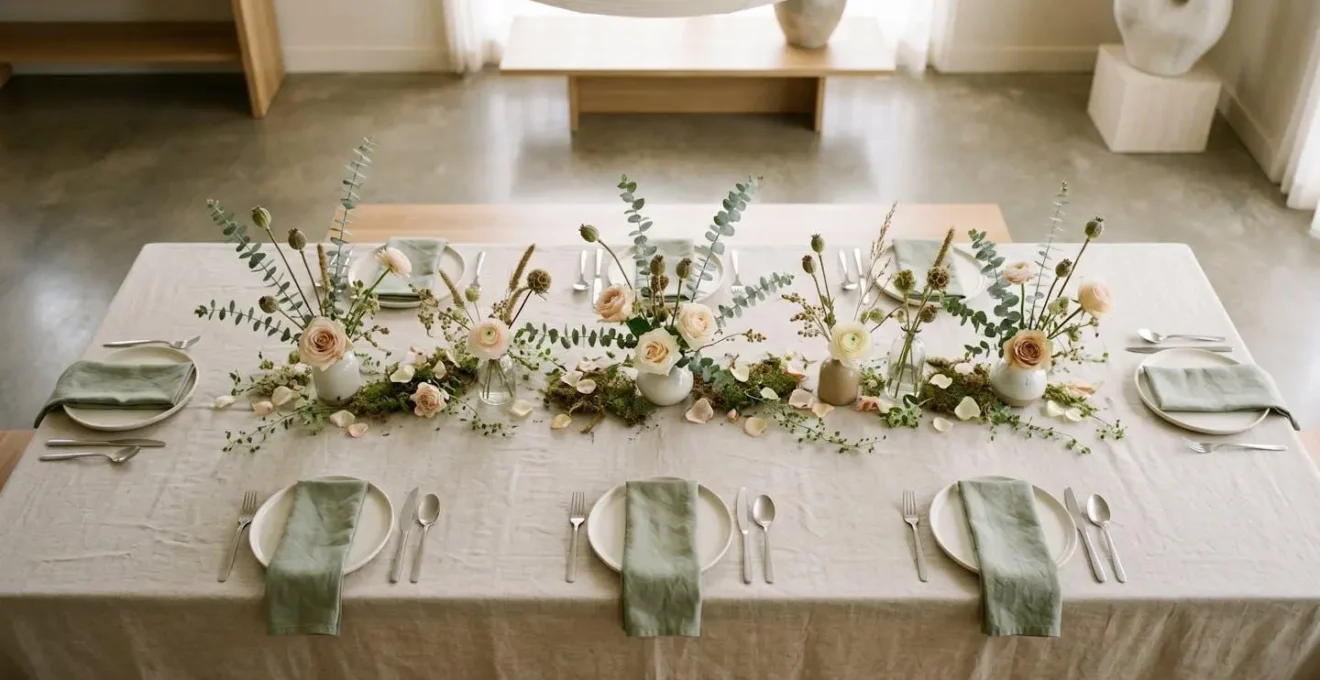
This method is far more impactful than a single bouquet. It makes the entire length of the table feel decorated and considered, creating a more immersive and luxurious dining experience for every single guest, no matter where they are seated.
Key Takeaways
- Flowers as Architecture: Use the vertical lines of tall stems to psychologically lift ceilings and the horizontal flow of low arrangements to guide the eye across a space.
- Light is a Tool: Don’t rely on overhead lighting. Use side-lighting from windows or lamps to reveal the sculptural texture and three-dimensional form of your flowers.
- Context is Everything: The best floral choice depends on the environment. Use calming monochrome arrangements in busy, patterned rooms and minimalist, monobotanical styles on functional modern surfaces.
How to Style Fresh Flowers in Living Areas That Are High-Traffic?
Bringing the life and beauty of fresh flowers into busy, high-traffic areas like family rooms or main hallways seems like an invitation for disaster. The fear of a knocked-over vase, spilled water, and broken stems is real. However, avoiding botanicals altogether in the most-lived-in parts of your home means missing out on their mood-boosting benefits. The solution isn’t to banish flowers, but to style them with a “Safe Zone” strategy, choosing both the right placement and the right type of arrangement to withstand the rigors of daily life.
First, identify the natural safe zones in your room. These are places that are out of the direct path of traffic. The center of a large coffee table (well away from the edges where feet and bags swing by) is often safer than the ends. High mantels, deep windowsills, and the inside of a non-functional fireplace are perfect, protected spots. Think vertically: elevated solutions like sturdy hanging planters or wall-mounted vessels keep botanicals completely off the ground plane and out of harm’s way.
Second, choose your arrangements for stability. This is not the place for a delicate, top-heavy bouquet in a narrow vase. Instead, opt for sturdy, architectural forms with a low center of gravity. Here are some practical strategies for high-traffic styling:
- Choose Sturdy Forms: Select arrangements with a low center of gravity. Think compact bouquets of hardy flowers like carnations or zinnias in a wide, heavy ceramic or stone vase. Potted orchids are another excellent, stable option.
- Elevate Your Greens: Use hanging planters for trailing plants like string of pearls or pothos. This adds green life without occupying any floor or table space.
- Create Contained Displays: In zones where bumps are inevitable, use self-protected displays. A glass cloche over a single perfect bloom or a small, enclosed terrarium offers beauty that is fully contained and spill-proof.
- Utilize Anchor Zones: Position larger, more substantial arrangements in protected “anchor zones” like the corner of a room behind a chair or on a high bookshelf that isn’t frequently accessed.
By combining smart placement with stable, robust arrangements, you can successfully integrate the beauty of fresh flowers into even the most bustling areas of your home, ensuring they bring joy, not stress.
By moving beyond simple decoration and embracing these principles, you unlock the true potential of floral styling. It becomes a dynamic and accessible way to act as your own interior designer, continuously reshaping your environment to suit your mood and needs. Start with one principle, in one room, and watch how it instantly transforms the space.