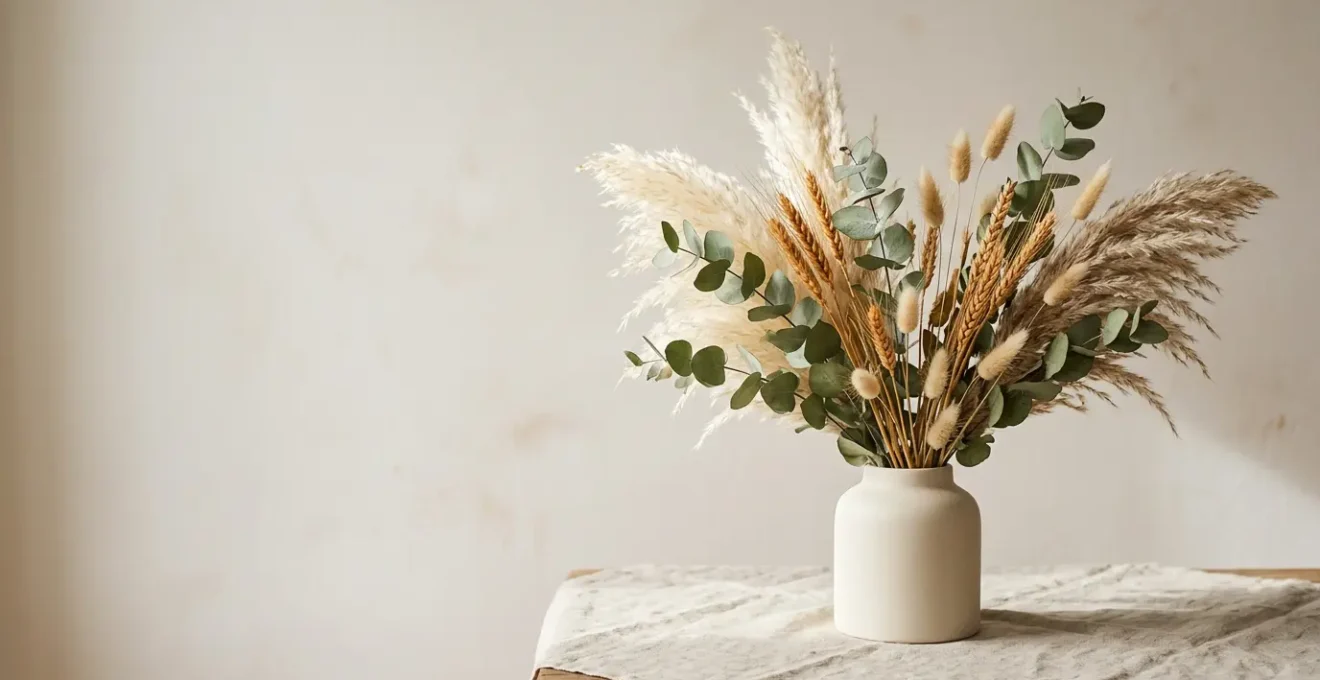
In summary:
- Choose unbleached, natural florals to avoid environmental harm and achieve a timeless, chic aesthetic.
- Control shedding on items like pampas grass by shaking them outdoors first, rather than relying on hairspray which ruins their texture.
- Never place dried arrangements in humid areas like bathrooms, as moisture will cause irreversible mold and decay.
- Use advanced techniques like the “vase-in-vase” method to stylishly combine fresh and dried stems without water damage.
- Treat dried florals as structural art, using their organic shapes to soften hard lines in modern interiors.
The image of dried flowers often conjures dusty relics from a bygone era—brittle, faded, and forgotten in a corner. The common advice to just “dust them” or “keep them from sunlight” barely scratches the surface of a much deeper issue. For modern decorators, the challenge isn’t just fighting decay; it’s about preventing preserved botanicals from ever looking dated in the first place. This desire for lasting beauty has led to a resurgence in trends like using pampas grass, bleached ruscus, and dramatic dried palms.
But what if the secret to a truly modern, “dust-free” look has nothing to do with a feather duster? What if the key lies in a complete mindset shift? Instead of viewing them as fragile artifacts to be protected, the contemporary approach treats dried florals as a durable, sculptural medium. It’s about understanding the material science of preservation, from the cellular impact of humidity to the ethics of chemical treatments. This is where true style emerges: not from fighting dust, but from mastering the medium.
This guide moves beyond the platitudes. We will explore the environmental cost of popular treatments, master the techniques for preserving texture, and learn the rules of placement. By the end, you will know how to use dried botanicals not as static decoration, but as dynamic, long-lasting sculptures that enhance and enliven a modern space.
This article provides a comprehensive roadmap for transforming your approach to preserved florals. From material selection to advanced composition, each section builds upon the last to give you a complete styling system.
Summary: How to Style Dried Flowers Without Them Looking Dusty or Old?
- The Environmental Cost of Bleached Ruscus and Ferns
- Hairspray or Sealant: How to Stop Pampas Grass from Shedding?
- Can You Dye Faded Dried Flowers to Match New Decor?
- Why You Should Never Put Dried Flowers in the Bathroom?
- The Water Problem: How to Mix Dried and Fresh in One Vase?
- How to Mix Dried Palms with Fresh Roses for a Boho Look?
- Wheat or Wildflowers: Which Better Defines the Harvest Aesthetic?
- How to Soften Hard Modern Lines with Organic Floral Shapes?
The Environmental Cost of Bleached Ruscus and Ferns
The stark white of bleached ruscus and ferns has become a hallmark of modern minimalist decor. But this pristine aesthetic comes at a significant ecological price. The bleaching process involves harsh chemicals like chlorine and peroxide, which are often discharged into waterways, harming aquatic ecosystems. This chemical intervention strips the plant of its natural integrity, making it more brittle and ironically, more prone to breaking down into dust over time. A truly modern and sustainable approach requires a shift in perspective, embracing natural beauty over artificial perfection.
This environmental curation is central to a chic, long-lasting aesthetic. As floral artist Becky Feasby of Prairie Girl Flowers notes in the Bryonia Flowers Sustainability Series:
The practice of dyeing and bleaching flowers is destructive. It is environmentally harmful at best and completely negligent at worst.
– Becky Feasby, Prairie Girl Flowers
Opting for flowers that are naturally pale or dry to a white hue is not a compromise; it’s a sophisticated choice. These botanicals retain their material integrity and offer a richer, more authentic texture that chemically treated stems lack. Consider these stunning, naturally white alternatives for your next arrangement:
- Lunaria (Honesty plant): Produces beautiful, translucent silvery-white seed pods.
- Cotton bolls: Offer an authentic, soft white texture without any chemical intervention.
- White Statice (Limonium): Dries to a soft, papery white while retaining its form.
- Strawflowers and Helichrysum: Certain pale cream and white varieties hold their light color beautifully when dried.
- White Globe Amaranth: Provides a perfect spherical shape in a natural, bright white.
Hairspray or Sealant: How to Stop Pampas Grass from Shedding?
The ethereal, cloud-like plumes of pampas grass are a designer favorite, but their tendency to shed can create a constant, dusty mess. The most common advice is a liberal coating of hairspray. While this does “glue” the filaments in place, it comes at a major aesthetic cost: the spray stiffens the delicate plumes, destroying their signature softness and creating a sticky, artificial-looking finish. This method fundamentally misunderstands the material. Pampas grass only sheds significantly when it’s moved or disturbed.
A far superior method focuses on pre-treatment rather than a constant sealant. As documented by Love Of Pampas, the most effective technique involves taking each stem outdoors and shaking it vigorously to release any loose fluff. After this initial “shed,” you arrange the stems in a vase and let them sit undisturbed for several days. The plumes will naturally fluff out and, once settled, will barely shed at all. This preserves the natural fluffy texture that makes pampas so desirable.
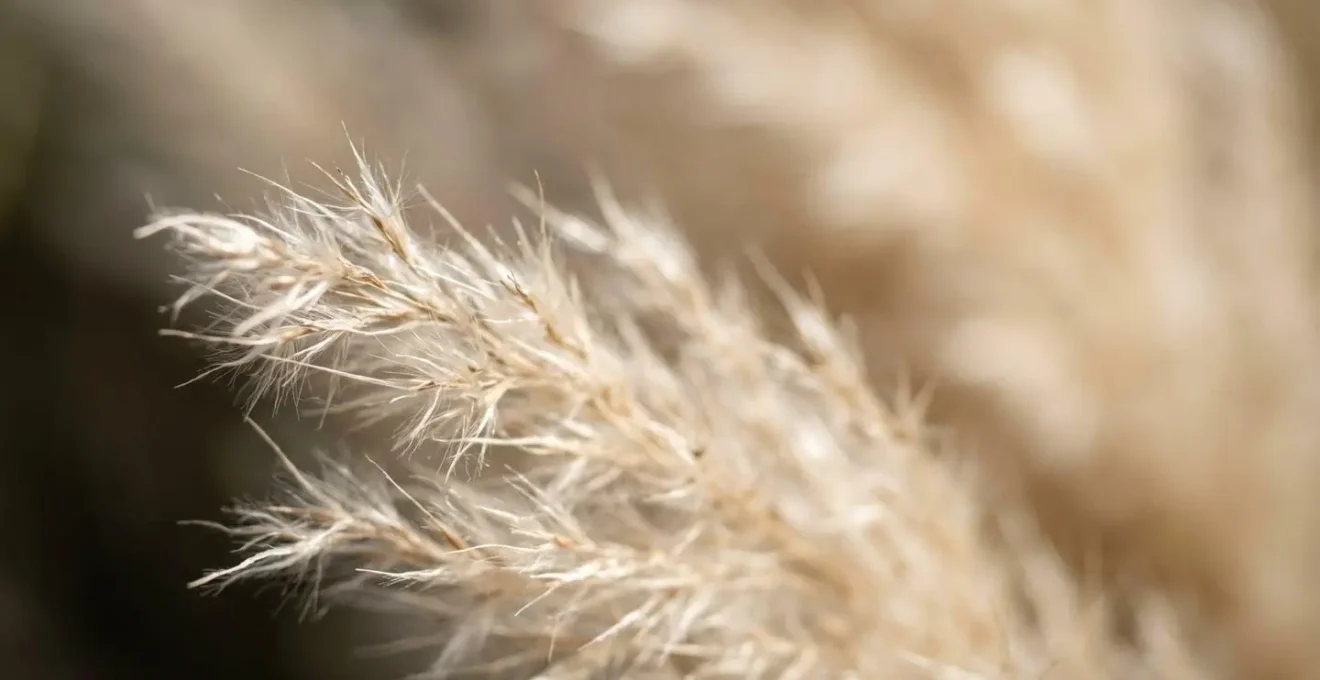
As the close-up image reveals, the beauty of pampas is in its intricate, feathery structure. Hairspray mats these fibers together, while the shake-out method allows them to remain separate and catch the light. For those who need absolute shed-proofing for high-traffic areas, a matte acrylic sealant is a better option than hairspray, but the trade-off in texture remains a key consideration.
The following table provides a clear comparison of methods, based on an analysis from Mixed Kreations. It highlights how the no-treatment approach excels in preserving the very aesthetic you’re trying to achieve, making it the top choice for most home settings.
| Method | Application | Shedding Control | Texture Impact | Longevity |
|---|---|---|---|---|
| No Treatment | Shake outdoors, place in vase undisturbed | Minimal if not moved | Natural fluffy texture preserved | 1-2 years |
| Hairspray (High-Hold) | Spray 6-8 inches away, light even coat | Excellent shedding prevention | Stiffens plumes, reduces fluffiness | 6 months before reapplication needed |
| White Glue Solution | Equal parts glue/water applied to base | Strong binding of plumes | Can create stiff, unnatural appearance | Long-lasting but irreversible |
| Clear Acrylic Sealant | Spray mist application | Very effective | As confirmed by an analysis of preservation methods, this provides strong shedding control with a matte finish. | Up to 1 year |
Can You Dye Faded Dried Flowers to Match New Decor?
Yes, you can absolutely breathe new life into faded dried flowers or customize them to perfectly match a new color scheme. This process allows you to extend the life of your botanical investments and adapt them as your interior style evolves. However, success depends entirely on choosing the right dye and method for the specific type of flower. Using the wrong product, like food coloring, will result in disappointment as it lacks the proper binding agents and will produce weak, uneven color. The goal is to enhance the flower’s beauty, not create a painted, unnatural look.
According to a guide on dyeing techniques for dried flowers, there are three primary professional methods, each offering a different finish:
- Watercolor Dip-Dyeing: Best for delicate petals. Use a specialty floral dip dye to achieve a soft, translucent effect. Gently submerge flower heads without shaking.
- Fabric Dye Baths: Ideal for sturdier items needing vibrant, uniform color. Submerge dried flowers in a hot bath of fabric dye (like Rit) and salt. The water temperature controls the color intensity.
- Floral Spray Paint: Provides a modern, opaque finish and works well even on darker flowers. Use a gentle, floral-specific spray held 15-18 inches away in a well-ventilated area.
The process is more of an art than a science, and results can be beautifully subtle. As one DIYer noted after their first attempt, the outcome can be surprisingly delicate. This perspective from a Pretty Together tutorial highlights the importance of experimentation:
The colors were lighter than I anticipated, but beautiful nonetheless. I think next time I may go heavier with the dye as opposed to leaving them submerged longer.
– Pretty Together DIY Tutorial
This insight is valuable: for a deeper hue, a more concentrated dye solution is often more effective than a longer soaking time, which can compromise the structural integrity of fragile dried botanicals. Start with a small, less-visible stem to test your color before committing to the entire bouquet.
Why You Should Never Put Dried Flowers in the Bathroom?
The bathroom seems like a lovely spot for a delicate botanical arrangement, but it is unequivocally the worst environment for dried flowers. The primary enemy of any preserved floral is moisture. Bathrooms are zones of high and fluctuating humidity due to steam from showers and baths. This moisture in the air gets absorbed by the dried plant tissues, causing them to soften, droop, and lose their shape. More critically, it creates the perfect breeding ground for mold and mildew.
The science is clear: research shows that humidity levels above 60% cause dried flowers to turn soft, change color, and rapidly develop mold. Since a bathroom can easily reach 80-90% humidity during a shower, placing a dried arrangement there is a recipe for disaster. The delicate structures will begin to decay, emitting a musty odor and quickly turning your beautiful decor into a moldy mess. This process is irreversible; once mold sets in, the arrangement cannot be saved.
Case Study: Bathroom Display Mold Development
The floral studio Milla Rose documented the rapid decline of dried arrangements placed in bathroom settings. They observed that in bathrooms with poor ventilation and low light, visible mold and mildew began to appear on both dried and preserved flowers within a matter of weeks. This is a stark contrast to the typical 1-year+ lifespan expected in a dry, well-ventilated environment. The constant exposure to steam essentially rehydrates the plant material just enough for fungal spores to colonize, completely destroying the botanical sculpture.
If you absolutely must have a botanical touch in a humid space, consider alternatives with better material integrity for such an environment. Glycerin-preserved eucalyptus maintains its flexibility and is more resistant to moisture, while the naturally waxy surface of sealed palm leaves can also withstand higher humidity. For truly delicate items, displaying them under a glass cloche is the only safe way to protect them from the destructive effects of steam.
The Water Problem: How to Mix Dried and Fresh in One Vase?
Combining the lush, vibrant life of fresh flowers with the textural, lasting quality of dried botanicals is a hallmark of contemporary floral design. The challenge, however, is fundamental: fresh stems need water, and water is the enemy of dried stems, causing them to rot and grow mold. Placing them together in a single vase of water is not an option. The solution lies in clever, discreet techniques that isolate the two types of stems while creating the illusion of a single, cohesive arrangement.
These methods are the secret to creating professional-looking mixed arrangements. They allow you to build a structural skeleton with tall, sturdy dried elements like palms or grasses, and then nestle delicate, hydrated fresh flowers at the base, all within the same vessel. The key is to create separate wet and dry zones that are invisible to the observer. The “vase-in-vase” method is particularly effective for achieving a clean, modern look, as it hides all the mechanics within an opaque outer container.
Achieving this look requires a specific set of tools and a clear plan. The following guide, based on techniques from First Day of Home’s floral drying guide, outlines the most effective approaches for professionals and hobbyists alike.
Action Plan: Four Techniques for Safely Mixing Fresh and Dried Stems
- The Vase-in-Vase Method: Place a small, narrow vase inside a larger, opaque one. Fill the inner vase with water for your fresh flowers, and then arrange your dried stems in the dry space around it.
- The Kenzan (Pin Frog) Technique: Secure a Japanese floral kenzan at the bottom of a shallow bowl. Fill with just enough water to hydrate fresh stems secured on the pins, and insert dry stems into the gaps between pins, above the waterline.
- The Water-Sealed Stems Method: For short-term arrangements, apply floral clay or melted wax to the cut ends of very sturdy dried stems (like thick branches) to create a waterproof barrier before placing them in shallow water.
- The Test Tube Integration: Use small, clear glass test tubes with stoppers. Fill them with water for individual fresh stems and discreetly nestle these tubes within a larger, completely dry arrangement, hiding them among the foliage.
How to Mix Dried Palms with Fresh Roses for a Boho Look?
The quintessential boho-chic floral aesthetic is built on a foundation of compelling textural contrast. The magic of mixing sharp, graphic dried palm leaves with the soft, romantic ruffles of fresh roses lies in this intentional opposition. It’s not about finding things that match; it’s about finding two elements that balance each other through their differences. The rigid, fanned lines of the palm create a bold structural skeleton and architectural height, while the dense, soft heads of the roses provide lushness, color, and a focal point at the base.
As documented in a case study on textural contrast, successful design hinges on this principle of balance. When styling, always start by placing the tall, rigid palm fans first to establish the arrangement’s shape and scale. Then, nestle the heavier, softer roses at the mid-level and base. This grounds the arrangement and creates a pleasing visual tension between the airy, sharp palms and the grounded, plush roses. This approach prevents the two elements from competing and instead allows them to enhance one another’s unique qualities.
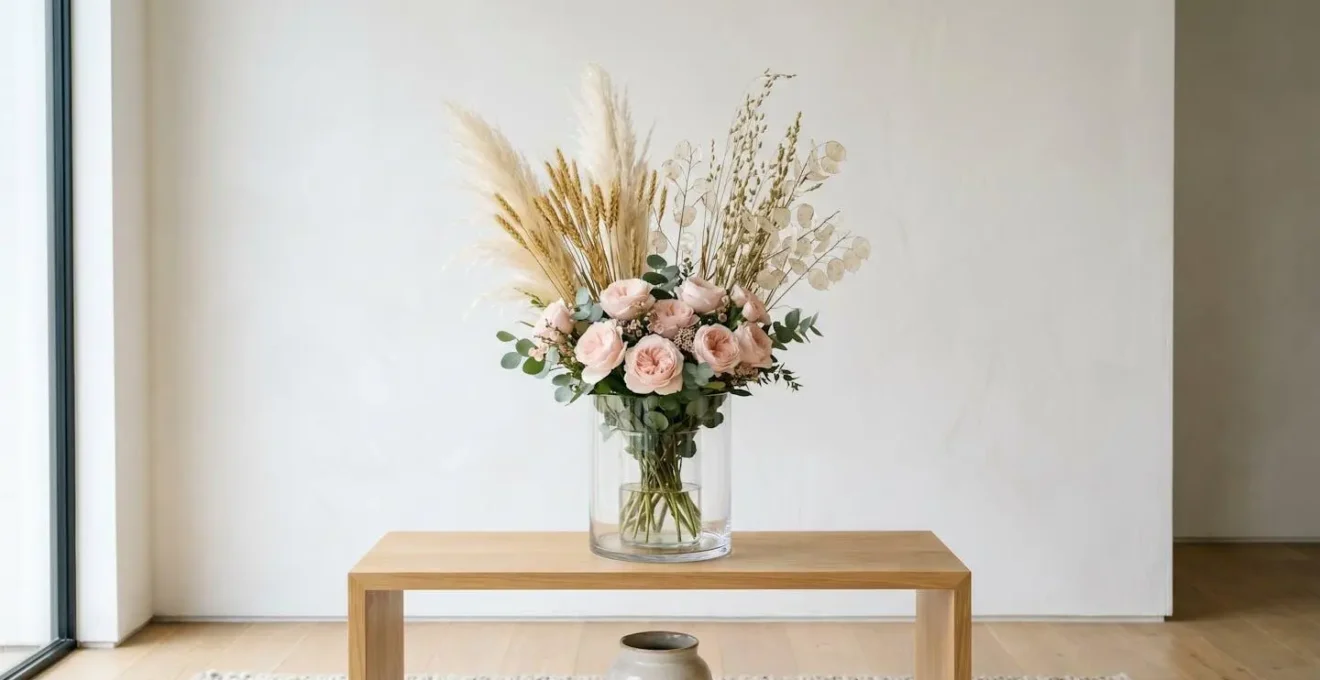
Color is the final layer that defines the specific mood of your boho arrangement. The same combination of palms and roses can feel earthy and warm, or soft and romantic, depending on the chosen palette. The key is to select a rose color and a palm treatment that work in harmony to tell a specific style story.
| Palette Name | Rose Color | Palm Treatment | Aesthetic Vibe | Best Setting |
|---|---|---|---|---|
| Desert Sunset | Terracotta/burnt orange roses | Natural untreated palms (tan/brown) | Warm, earthy, Southwestern | Living room, entryway |
| Modern Romantic | Dusty pink/mauve roses | Bleached white palms | Soft, ethereal, contemporary | Bedroom, bridal spaces |
| Moody Luxe | Deep burgundy/wine roses | Natural dark palms | Rich, dramatic, maximalist | Dining room, study |
| Coastal Calm | Cream/champagne roses | Light natural or white palms | Airy, breezy, minimal | Sunroom or low-humidity spaces |
Wheat or Wildflowers: Which Better Defines the Harvest Aesthetic?
When curating a “harvest” aesthetic, the choice between structured wheat and free-form wildflowers is a choice between two different narratives. Neither is more “correct,” but each tells a distinct story. Wheat, with its uniform stalks and golden heads, symbolizes cultivation, abundance, and order. It speaks to the organized bounty of the farm and the structure of a shared meal. This makes it an ideal choice for formal harvest decor, such as traditional tablescapes, symmetrical mantlepiece arrangements, or anything that calls for a sense of order and gratitude for nourishment.
Wildflowers, on the other hand, represent natural, untamed bounty. Dried poppies, daisies, and yarrow evoke a sense of spontaneity, resilience, and pastoral romance. Their varied shapes and heights create a feeling of a meadow gathered by hand, perfect for a more rustic, relaxed, and free-form aesthetic. They are less about the organized farm and more about the beauty of the wild landscape. This makes them better suited for arrangements in living rooms or bedrooms, where the goal is to create a sense of calm and natural ease.
Ultimately, the choice depends on the story you want to tell. A modern, sophisticated approach can even combine the two, creating a “cultivated meadow” look. This hybrid style leverages the best of both worlds:
- Wheat Symbolism: Represents cultivation and abundance. Use it for structured, formal decor in kitchens or dining rooms to connect with themes of food and nourishment.
- Wildflower Symbolism: Represents spontaneity and natural bounty. Ideal for rustic, free-form arrangements in living spaces to evoke pastoral romance and calm.
- Hybrid Approach: Use the strong vertical lines of wheat to create a foundational structure, then integrate the delicate, chaotic forms of dried wildflowers to add texture and a touch of wildness.
This allows you to create a more complex narrative, blending the ideas of structured cultivation and natural spontaneity into a single, cohesive botanical sculpture.
Key takeaways
- The most modern approach to dried florals involves choosing sustainable, unbleached materials to preserve natural texture and color.
- Proper placement is critical: high-humidity areas like bathrooms will cause mold and irreversible damage to any dried arrangement.
- Mastering techniques to combine fresh and dried stems, or to control shedding without hairspray, elevates your styling from amateur to professional.
How to Soften Hard Modern Lines with Organic Floral Shapes?
Modern and minimalist interiors are defined by clean lines, hard surfaces, and geometric precision. While this creates a sense of calm and order, it can sometimes feel sterile or cold. This is where dried botanicals transcend simple decoration and become essential design tools. A single, dramatic dried element—like a large palm fan, a spray of pampas grass, or a contorted willow branch—can serve as a powerful botanical sculpture. Its purpose is to introduce organic curves and natural asymmetry, creating a deliberate and beautiful contrast with the rigid architecture of the space.
The key is to think like a sculptor, not just a decorator. Instead of a busy, cluttered bouquet, select one or two stems with a strong, architectural presence. The visual tension between the soft, unpredictable lines of the plant and the straight, predictable lines of the room is what creates interest and visual harmony. An arching palm fan breaks the monotony of a rectangular wall; the soft explosion of a pampas plume softens the sharp corner of a console table. It’s a dialogue between the built environment and the natural world.
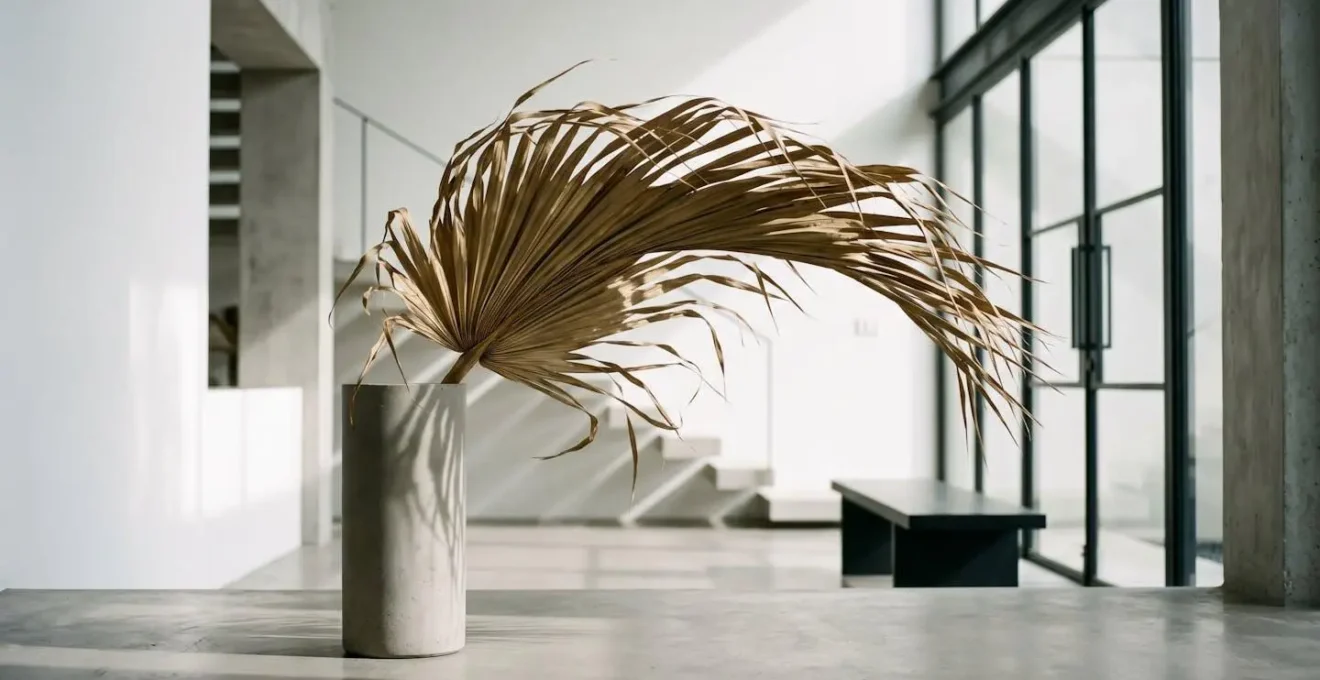
As seen in the image, the effect is most powerful when executed with restraint. A simple, matte vase in a neutral tone like concrete or ceramic allows the shape of the botanical itself to be the star. The arrangement should feel intentional and curated, a single piece of living art. This practice of using intentional asymmetry draws the eye, creates a dynamic focal point, and infuses the space with a warmth and softness that hard-edged furniture alone cannot achieve.
This is the ultimate expression of modern dried floral styling: using the inherent beauty of preserved nature to complete and elevate an architectural vision. It proves that a single, well-chosen stem can have more impact than an entire bouquet.
To put these principles into practice, begin by assessing your space and selecting a single, high-impact botanical element to serve as your focal point. Experiment with placement to see how its organic shape can best complement and contrast with the architectural lines of your home.