
The secret to a genuine farmhouse aesthetic is not in buying rustic items, but in adopting a philosophy of curated imperfection and resourcefulness.
- Authenticity comes from using vessels with history, not mass-produced décor.
- Arrangements should reflect nature’s asymmetry and seasonality, not rigid, static formulas.
Recommendation: Begin by removing one “farmhouse” cliché from your space and replacing it with a single, unique vintage find or a bouquet of foraged local wildflowers.
The term “farmhouse style” often conjures images of shiplap walls, oversized clocks, and an endless parade of Mason jars. While charming at first, this commercialized version can quickly devolve into a sea of clichés, feeling more like a stage set than a soulful home. The market is saturated with faux-distressed items and generic signs that shout “Blessed,” creating an aesthetic that is anything but authentic. It’s a common frustration for homeowners who crave the warmth and history of a true country home, only to find themselves surrounded by mass-produced kitsch.
But what if the key to a genuine farmhouse look isn’t about what you buy, but how you see? The true spirit of this style lies not in a checklist of decorative objects but in a heritage philosophy rooted in practicality, resourcefulness, and a deep connection to the surrounding landscape. It’s about telling a story with what you have, celebrating the beauty of imperfection, and letting the seasons guide your decor. This is where floral and plant styling becomes not just an accessory, but the very soul of the design.
This guide moves beyond the platitudes to explore the foundational principles of authentic farmhouse floral design. We will uncover why imperfect, asymmetrical bouquets feel more honest, how to transform forgotten objects into character-rich vessels, and how to master the art of “curated” rather than “cluttered.” By embracing this mindset, you can cultivate a home that feels gathered over time, rich with personal history, and genuinely connected to the timeless appeal of country living.
To guide you through this journey from cliché to curated, this article is structured to build your understanding step-by-step. Below is a summary of the core concepts we will explore to help you master this authentic approach.
Summary: Cultivating a Genuine Farmhouse Aesthetic With Florals
- Why Do Asymmetrical Bouquets Look Better in Farmhouse Interiors?
- How to Repurpose Vintage Pitchers as Authentic Floral Vases?
- Wheat or Wildflowers: Which Better Defines the Harvest Aesthetic?
- The Tropical Flower Error That Breaks the Farmhouse Illusion
- Where to Find Legal and Safe Wild Materials for Your Home?
- Beyond the Jar: What Vessels Upgrade the Rustic Look?
- Why Is the Spiral Technique Essential for Loose Bouquet Volume?
- How to Elevate Rustic Chic from ‘Messy’ to ‘Curated’?
Why Do Asymmetrical Bouquets Look Better in Farmhouse Interiors?
The essence of farmhouse charm is its connection to nature, and nature is rarely perfectly symmetrical. An authentic country aesthetic embraces the organic, untamed beauty of the outdoors, which is why asymmetrical bouquets feel so right in these spaces. Unlike tight, formal, rounded arrangements, an asymmetrical design creates a sense of movement and life. It mimics the way wildflowers grow in a meadow or how a branch reaches for the sun, with varying heights, textures, and natural gaps. This approach celebrates negative space, where empty areas intentionally allow the more prominent blooms to breathe and stand out.
This “perfectly imperfect” structure is key to avoiding a look that feels contrived. An asymmetrical bouquet guides the eye on a journey through the arrangement, creating a dynamic and artistic focal point. It feels less like a static decoration and more like a piece of the garden brought indoors. This casual, relaxed form is a sophisticated design choice that reflects a modern understanding of natural beauty, a trend that, according to floral design industry forecasts, is set to define aesthetics well beyond 2025. It’s the visual language of effortless grace, which is the soul of true farmhouse style.
How to Repurpose Vintage Pitchers as Authentic Floral Vases?
Moving beyond the ubiquitous Mason jar is the first step toward a more authentic look. A vintage pitcher—whether it’s chipped enamelware, elegant ironstone, or a heavy stoneware crock—is more than a container; it’s a vessel as character. Each crack, patina, and sign of wear tells a story of a life lived, instantly infusing your home with a sense of history that no new item can replicate. To repurpose these pieces effectively, the key is to work with their unique shapes and limitations.
Many vintage pitchers have wide mouths, which can cause flower stems to splay out awkwardly. The secret of professional florists is to create an internal structure. A small, crumpled ball of chicken wire or a simple grid of clear floral tape across the opening provides an invisible armature to hold stems exactly where you want them. This allows you to build a loose, natural-looking arrangement with height and dimension.
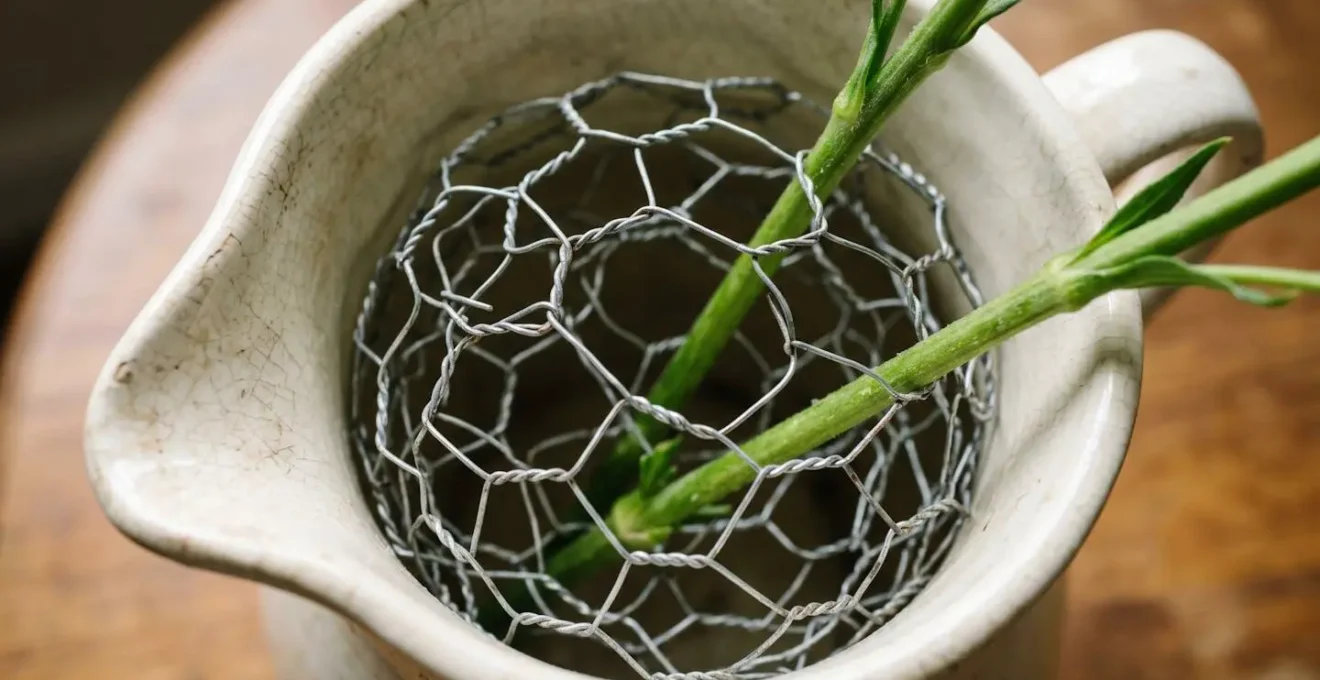
As the image shows, this simple mechanic gives you complete control. Embrace the principle of imperfection: a heavily chipped pitcher pairs beautifully with hardy wildflowers, while a delicate ironstone vessel might call for softer garden roses. Always strip any foliage that would sit below the waterline to keep the water clean and extend the life of your blooms. The goal is to create a partnership between the vessel and the flowers, where each enhances the beauty and story of the other.
Wheat or Wildflowers: Which Better Defines the Harvest Aesthetic?
The “harvest aesthetic” is a cornerstone of farmhouse decor, but it’s often misinterpreted as being solely about dried, autumnal elements. When choosing between sheaves of wheat and bunches of wildflowers, the most authentic answer is not to choose, but to combine. A true farmhouse reflects the full cycle of nature—from the wild growth of spring to the preserved bounty of autumn. Relying on just one element tells only half the story and can lead to a look that is either too chaotic (wildflowers only) or too static and lifeless (wheat only).
The magic lies in the textural contrast. The soft, vibrant, and somewhat chaotic forms of wildflowers like lavender, sunflowers, or Queen Anne’s Lace bring life and color. They represent the living, breathing aspect of the landscape. In contrast, the rigid, structural lines of wheat, dried grasses, or seed pods provide a strong, earthy foundation. They speak of preservation, resourcefulness, and the culmination of a season’s work. Together, they create a rich, tactile display that embodies living seasonality.
For a truly successful harvest arrangement, pair these elements with textural greenery like ferns or moss. The combination of soft blooms, structural grains, and verdant foliage captures the complete narrative of nature. This layered approach creates depth and interest, ensuring your decor feels connected to the land and its rhythms all year round, rather than being a fleeting nod to a single season.
The Tropical Flower Error That Breaks the Farmhouse Illusion
One of the most common mistakes that shatters the authentic farmhouse illusion is a lack of geographic authenticity. A farmhouse in New England, the Midwest, or the English countryside would be filled with flowers and foliage from its immediate surroundings. Introducing glossy, exotic tropical flowers like bright orchids, Birds of Paradise, or waxy anthuriums creates a jarring disconnect. These beautiful plants belong to a different climate and story, and their presence, no matter how lovely, instantly signals “decoration” rather than “gathered from the garden.”
Achieving an authentic look means working within a temperate, cottage-garden palette. This doesn’t mean your arrangements have to be boring. Many traditional garden flowers offer the same drama and structural interest as their tropical counterparts, but with a softer, more natural texture that harmonizes with rustic interiors. The key is to find the right substitutes:
- Instead of bright, waxy orchids, use the nodding, bell-shaped Fritillaria, which has a similar dramatic shape but a more rustic, matte finish.
- Instead of the sharp lines of Birds of Paradise, choose tall spires of delphinium, foxglove, or snapdragons for verticality with a classic garden appeal.
- Instead of large, glossy tropical leaves, incorporate sculptural greenery from Magnolia branches, Oak foliage, or large Hosta leaves.
- Instead of waxy anthuriums, select bold focal flowers with soft, natural textures like garden roses, peonies, or dahlias.
By choosing plants that feel native to a traditional farm landscape, you maintain the integrity of the aesthetic. It’s a subtle but powerful choice that reinforces the story of a home deeply connected to its environment.
Where to Find Legal and Safe Wild Materials for Your Home?
Foraging for wildflowers, branches, and grasses is the ultimate expression of authentic farmhouse living, connecting your home directly to the local landscape. However, this practice comes with significant responsibility. It’s not simply about picking what looks pretty; it’s about doing so legally, safely, and ethically to ensure the ecosystem remains healthy for years to come. Before heading out, you must understand the rules of respectful harvesting.
The most important principle is to never take more than you need and to leave the environment as you found it, or better. Many public lands have strict rules, and foraging on private land requires explicit permission. Furthermore, you must be able to distinguish between abundant, sometimes invasive, species and protected native plants that are illegal to harvest. Safety is also paramount, both for yourself (avoiding dangerous roadsides) and for your home (inspecting for pests before bringing materials inside).
Your Ethical Foraging Checklist: 5 Rules to Follow
- Adhere to the Rule of Thirds: Harvest a maximum of one-third of a plant or patch, leaving at least two-thirds behind for wildlife and regrowth.
- Check Land Regulations: Never collect from National Parks or Monuments without a permit. Always verify the specific rules for any state or local park land.
- Secure Private Land Permission: Always obtain explicit, preferably written, permission from the landowner before foraging on any private property.
- Practice Roadside Safety: Avoid collecting near high-traffic roads due to pollution and never park illegally or create a traffic hazard.
- Identify Protected Species: Learn to identify local endangered or protected native plants and never harvest them. Focus on invasive species if you are knowledgeable.

After gathering, it’s a wise practice to leave branches in a garage or on a covered porch for a day or two. This allows any insects to depart before you bring the materials indoors. By following this ethical code, detailed in resources like the guidelines from the U.S. Forest Service, foraging becomes a beautiful, sustainable act that deepens your connection to nature.
Beyond the Jar: What Vessels Upgrade the Rustic Look?
To truly elevate the farmhouse aesthetic, think of every container as an opportunity for storytelling. While vintage pitchers are a great start, the principle of resourcefulness extends to a wide array of forgotten objects. The goal is to find pieces whose texture, material, and history contribute to the overall narrative of your home. A dented galvanized bucket or a wooden toolbox with remnants of old paint has more character and authenticity than any brand-new “rustic-style” vase.
Look for items that were once functional and have earned their patina through use. The story is in the surface—the authentic rust, the worn wood, the dulled silver. This approach celebrates the beauty found in utility and age. Here are some unique vessel ideas that go far beyond the traditional:
- Vintage Milk Cans: Ideal for holding large, dramatic branches. If the can isn’t watertight, simply place a cylindrical glass vase inside to hold the water.
- Old Fishing Creels: These woven wicker baskets can be hung on a wall or placed on a table. Line them with a plastic sheet and use floral foam to create a structured arrangement.
- Silver Champagne Buckets: A touch of tarnished elegance can beautifully contrast with rustic elements. They are perfect for creating a sophisticated, yet informal, bouquet.
- Clay Terracotta Pots: For a “fresh from the potting shed” look, use aged terracotta pots. Line them with plastic to prevent water from seeping through.
- Dented Copper or Galvanized Buckets: The more wear and tear, the better. These bring an undeniable industrial-farm feel.
- Vintage Wooden Toolboxes: These provide a wonderfully unexpected and linear container for a row of small pots or a low, sprawling arrangement.
By thinking creatively about containers, you move away from decorating and into the realm of curating. Each piece adds a layer of history and personality, contributing to a home that feels uniquely yours and gathered over a lifetime.
Why Is the Spiral Technique Essential for Loose Bouquet Volume?
Have you ever tried to create a loose, airy bouquet, only to have it look either tightly packed or completely floppy? The secret to achieving that effortlessly full, dome-shaped arrangement lies in a classic floral design principle: structural honesty. The spiral technique is the invisible architecture that makes a naturalistic style possible. It involves adding each stem at a slight angle, continuously rotating the bouquet in your hand so the stems cross over each other in a spiral pattern below the binding point.
This method does more than just look professional; it serves several critical functions. Firstly, it creates a self-supporting grid of stems. This interlocking structure allows the flower heads to spread out naturally, giving each bloom its own space without needing to overstuff the vase. The result is a desirable dome shape, rather than the dense, V-shaped clump that occurs when stems are just dropped straight into a vase. This technique, as explained by professional flower schools, ensures better water flow to each stem and prevents breakage, as the stems support each other rather than crushing one another.
Mastering this technique is a game-changer for anyone wanting to create beautiful, long-lasting arrangements. To do it, start with a few focal flowers as your anchor. Then, begin adding more stems around them, always at a 45-degree angle, and rotate the bunch in your hand after every few additions. Once you’re satisfied with the shape, secure the stems with twine or floral tape at the point where they naturally cross. This spiral structure holds its shape perfectly, even when you lift the bouquet out of the water to re-cut the stems every few days.
Key Takeaways
- Authentic farmhouse style is a philosophy of resourcefulness, not a shopping list of rustic items.
- Embrace “curated imperfection” through asymmetrical designs and vessels with genuine history and patina.
- Combine living wildflowers with harvested elements like wheat to reflect the full, living seasonality of nature.
- True elegance in rustic design comes from thoughtful editing and allowing for negative space, not clutter.
How to Elevate Rustic Chic from ‘Messy’ to ‘Curated’?
The fine line between a home that feels charmingly rustic and one that just feels cluttered is a single, powerful concept: curation. A curated space is one where every object, especially the “imperfect” ones, feels intentional. It’s the difference between a single, beautifully frayed linen napkin placed just so, and a messy pile of laundry. Achieving this elevated look isn’t about having more things; it’s about making more thoughtful choices with fewer, better pieces. This is the art of curated imperfection.
To transition from “messy” to “curated,” apply a few simple design principles. First is the Rule of Three for textures. In any single display or vignette, limit yourself to three primary rustic textures—for example, aged wood, galvanized metal, and soft linen. This creates a cohesive palette that feels rich but not chaotic. Second is the principle of The Edit. After you arrange a shelf or tabletop, take a step back and consciously remove one or two items. This act of subtraction creates crucial breathing room and makes the remaining pieces feel more special and deliberate.
Finally, prioritize quality over quantity. One authentic antique crock with real crazing and history will always have more impact than five mass-produced, artificially distressed pots. Allow for negative space on your walls, shelves, and in your floral arrangements. This airiness is fundamental to a style that values light, nature, and a sense of calm. By applying these filters, you ensure that every element in your home contributes to a cohesive story, transforming a simple collection of objects into a truly personal and artful sanctuary.
Start applying these principles today by choosing one small area in your home to re-evaluate. Edit, curate, and introduce one element of natural, imperfect beauty to begin transforming your space into an authentic farmhouse haven.