In summary:
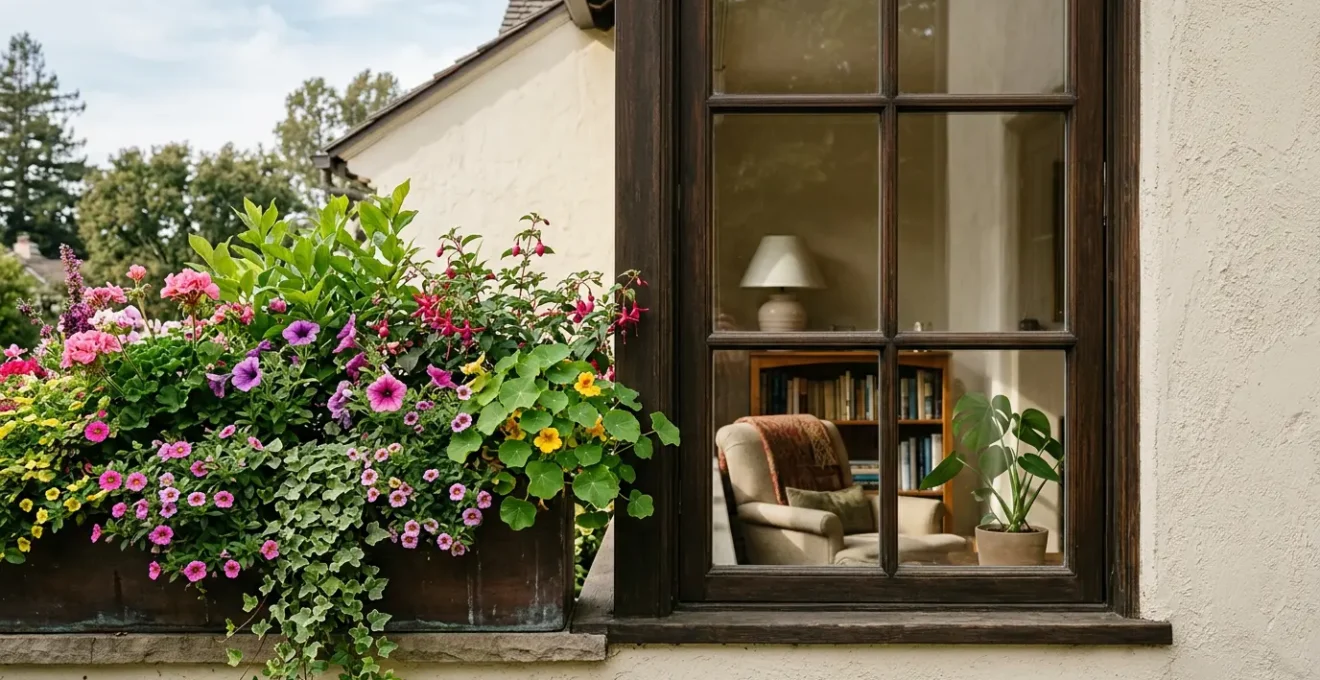
- Treat your window box as a “dual-view masterpiece,” designing it for both curb appeal and the view from inside your home.
- Prioritize proper installation and drainage to protect both your plants and your home’s structure, especially window frames and brick facades.
- Select plants using the “Thriller, Filler, Spiller” method, ensuring their style and scale echo your home’s architecture.
- Plan for seasonal transitions to maintain a beautiful interior and exterior view all year long.
A lush window box can instantly elevate a home’s facade, adding a touch of charm and personality that speaks volumes before anyone even steps inside. Most guides focus on this exterior impact—the “curb appeal” factor. They offer sound advice on classic planting formulas like “Thriller, Filler, Spiller,” the importance of good drainage, and choosing sun-appropriate plants. While essential, this advice only tells half the story. It overlooks the person who sees that window box more than anyone else: you, looking out from your kitchen, living room, or bedroom.
What if the true art of window box design lies in creating a dual-view masterpiece? This approach considers the planter not just as exterior decoration, but as a living frame for your interior world. It’s about designing a composition that delights the passerby while also curating a beautiful, personal vignette for your daily life. This perspective shifts the goal from simply filling a box with pretty flowers to crafting a dynamic architectural feature that bridges your indoor and outdoor spaces.
This guide will walk you through every step of creating window boxes that master this dual perspective. We will cover everything from the structural integrity of installation and the science of plant selection to the subtle psychology of color and the discipline of maintenance. By the end, you’ll be able to design a window box that is not just an asset to your home’s facade, but a constant source of joy from the inside looking out.
To help you navigate this dual-design approach, we’ve structured this guide to cover the essential pillars of creating a window box that is both beautiful and structurally sound. Explore each section to build your expertise from the ground up.
Summary: Designing Window Boxes for Interior and Exterior Beauty
- Why Do Window Boxes Increase the Perceived Value of a Home?
- How to Install Window Boxes on Brick Without Damaging the Facade?
- Classic or Modern: Which Plant Style Suits a Victorian Facade?
- The Drainage Error That Rots Your Window Frames
- How to Transition Window Boxes from Summer to Fall in 3 Steps?
- Why Does Yellow at the Door Make Guests Feel More Welcome?
- When to Trim Ivy to Prevent It form Invading Gutters?
- How to Design Front Door Floral Displays That Boost Curb Appeal?
Why Do Window Boxes Increase the Perceived Value of a Home?
Window boxes contribute to a home’s perceived value by acting as a powerful visual cue for care and maintenance. They are the facade’s jewelry, transforming a simple window into a deliberate design statement. While hard data on window box ROI is scarce, the principle is well-understood in real estate. As one industry analysis notes, “Clean, well-maintained windows signal that the home has been cared for. Outdated or damaged windows, on the other hand, often raise red flags during inspections.” A vibrant, healthy window box amplifies this signal tenfold.
From the outside, it demonstrates an owner’s investment in aesthetics and upkeep, suggesting the entire property is likely well-tended. This creates a strong first impression—or “curb appeal”—that can subconsciously elevate a potential buyer’s valuation. It’s an emotional appeal that translates into financial perception, making the home feel more inviting and complete.
From the inside, the value is experiential. A beautifully planted box transforms a window from a simple opening into a living portrait, an interior vignette that changes with the seasons. This enhancement of the daily living experience adds a layer of intangible, qualitative value. It’s not just a feature of the house; it’s a feature of the home. This dual impact—projecting care to the outside world while enriching the inner sanctum—is what gives window boxes their unique ability to boost a home’s soul and, by extension, its perceived worth.
How to Install Window Boxes on Brick Without Damaging the Facade?
Installing a window box on a brick facade requires a careful approach to prevent permanent damage to the masonry. The primary rule is to avoid drilling into the face of the brick itself, which is brittle and can crack. Instead, any drilling should be done into the softer mortar joints, which can be more easily repaired if the box is ever removed. A secure installation is also vital for the interior view; a perfectly level and stable box creates a serene interior vignette, whereas a sagging one is a constant, nagging distraction.
For those wishing to avoid drilling altogether, experts recommend several fully reversible installation methods, especially for lighter boxes. These include using adjustable tension rods that fit within the window reveal or specialized gripping hooks that use the weight of the box to clamp onto the top of a brick sill. While construction adhesives are an option, they offer less security and can be difficult to remove cleanly.
For heavier boxes or a more permanent solution, the mortar-drilling method is standard. This involves using a hammer drill with a masonry bit to create a hole in a mortar joint.
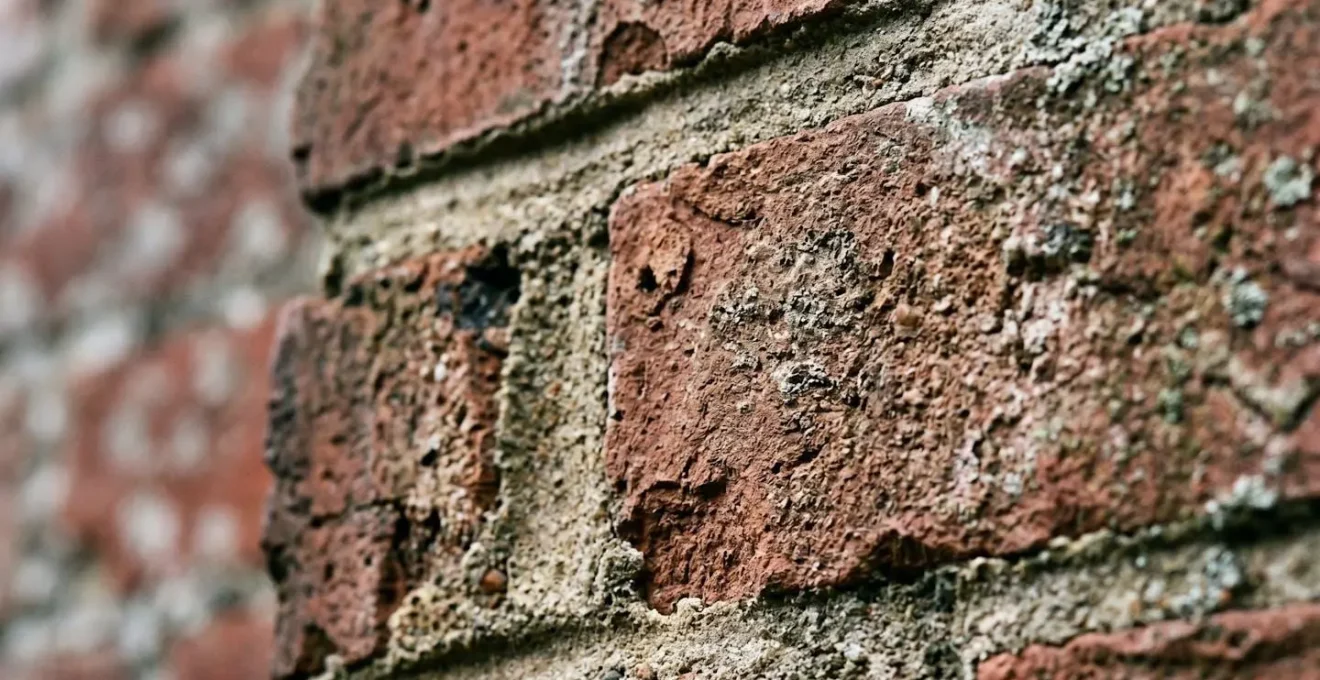
Into this hole, you insert a lead or lag shield (an anchor) that expands as you drive a lag bolt into it, creating a powerful, secure hold. This method provides the necessary strength to support a fully watered and planted box, ensuring it remains a safe and beautiful architectural feature for years to come without compromising the integrity of your brickwork.
Classic or Modern: Which Plant Style Suits a Victorian Facade?
Choosing a plant style for a Victorian facade is an exercise in creating an “architectural echo.” The goal is to complement the home’s ornate and detailed character, not compete with it. Victorian-era gardening itself was a study in controlled chaos, blending rigid structures with an abundance of exotic and colorful plants. A classic approach to a Victorian window box would honor this history by using plants that were popular during the period.
Geraniums are the quintessential choice, alongside the soft textures of ferns, trailing English ivy, and the profuse blooms of petunias. This creates an authentic look that enhances curb appeal by staying true to the home’s historical roots. For color, documented period design guides show a preference for soft pastels and whites, punctuated with strategic bursts of vibrant accent colors. This palette ensures the planting feels lush but not overwhelming against the intricate facade.
A modern interpretation can be equally successful. The key is contrast. Instead of mimicking the era’s profusion, a modern style might pair a traditional box with a minimalist arrangement of structured ornamental grasses or a simple, elegant display of succulents. This contrast highlights the home’s ornate details by providing a clean, sophisticated counterpoint. From the inside, this minimalist approach can be particularly rewarding, creating an uncluttered and serene interior vignette that frames the view without blocking light or feeling busy. Ultimately, whether classic or modern, the most successful design is one that respects the home’s architectural voice.
The Drainage Error That Rots Your Window Frames
The single most destructive error in window box maintenance is improper drainage. It creates a dual threat: from the inside, you watch your plants suffocate from root rot; from the outside, you face the silent, costly decay of your window sill and facade. When water cannot escape, it saturates the soil, starving roots of oxygen. Simultaneously, this trapped moisture is held directly against your house, seeping into wood and mortar, leading to rot, mold, and structural damage over time.
Every window box must have drainage holes. But holes alone are not enough. Soil can compact and clog them, or water can run out too quickly, carrying soil with it and staining your home’s exterior. The solution lies in a multi-layered system designed to manage water flow effectively. A proper drainage system ensures water escapes without taking soil with it, protecting both your plants and your property.
Implementing a robust drainage strategy is non-negotiable for the health of your plants and the integrity of your home. The following steps provide a comprehensive plan to prevent water damage.
Your 3-Point Window Frame Protection Plan: Mastering Drainage
- Create a false bottom: Pour a 1-inch layer of pea gravel or similar material at the bottom. This allows excess water to collect below the soil level, preventing roots from sitting in stagnant water and rotting.
- Install a filtration layer: Cut landscape fabric to fit the bottom of the box and lay it over the drainage holes before adding soil. This fabric allows water to pass through but traps soil particles, ensuring clean runoff that won’t stain your facade.
- Ensure an air gap: When mounting the box, use spacers to leave a small gap (about a quarter-inch) between the back of the box and the wall. This promotes air circulation, allowing the area to dry out quickly after rain and preventing trapped moisture from degrading your window sill or mortar.
By adopting this system, you create a healthy environment for your plants to thrive while actively protecting your home from the insidious damage of trapped water.
How to Transition Window Boxes from Summer to Fall in 3 Steps?
A successful window box is a dynamic feature, not a static one. The transition from the lush abundance of summer to the rich textures of fall is a critical moment in maintaining your dual-view masterpiece. From the inside, looking out at spent, browning annuals can be disheartening. From the outside, a neglected box signals the end of the season. A thoughtful transition, however, creates a brand new composition that celebrates autumn’s unique beauty.
The key is a philosophy of “edit, don’t erase.” Instead of ripping everything out and starting from scratch, you selectively preserve the hardiest elements of your summer display. This creates continuity and provides a structural foundation for your new fall additions. This process can be broken down into three simple, strategic steps.
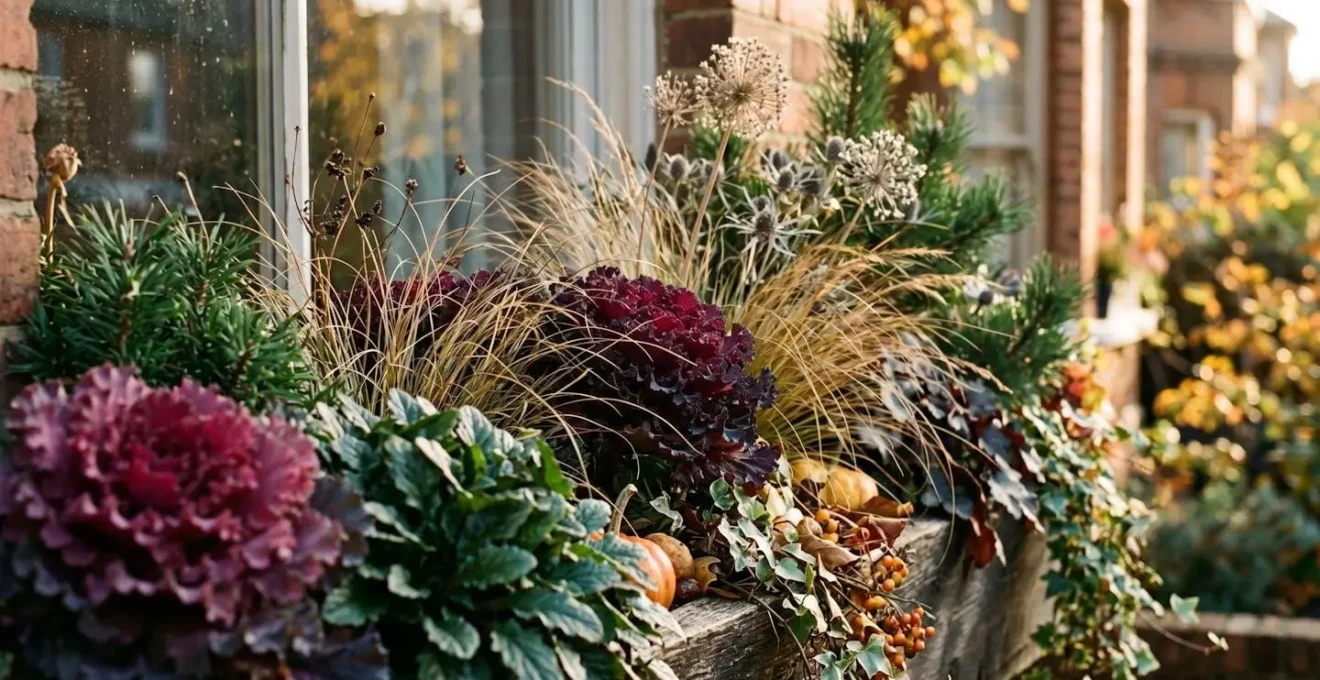
The goal is to create a layered, textural arrangement that has longevity. The result is a window box that looks beautiful on day one and continues to provide visual interest from both inside and out, even as the weather cools and the first frosts arrive. Your interior vignette is renewed with warm colors and sculptural forms, while your curb appeal remains strong and seasonally appropriate.
- Step 1 – Preserve the Foundation: Identify and keep the ‘bridge plants’ from your summer design. Trailing ivy, heuchera (coral bells), and many ornamental grasses have excellent staying power and will provide the structural backbone for the fall arrangement. Trim them back lightly to refresh their appearance.
- Step 2 – Inject Autumnal Texture: Remove the tired summer annuals (like petunias and zinnias) and replace them with plants known for their fall character. Ornamental kale and cabbage offer incredible color and ruffled texture, while chrysanthemums provide classic autumn blooms. Don’t be afraid to integrate dried elements like twigs, branches, or seed pods for sculptural interest.
- Step 3 – Plan for Winter’s Silhouette: As you place your fall plants, think ahead to winter. Strategically position small evergreen shrubs or plants with strong structural forms (like red-twig dogwood cuttings) where they will provide a “winter-ready” composition. These elements will create a beautiful silhouette against the snow long after the fall colors have faded.
Why Does Yellow at the Door Make Guests Feel More Welcome?
Color is a powerful tool in landscape design, and yellow holds a special place in creating a welcoming atmosphere. Psychologically, yellow is associated with happiness, optimism, and energy. When used at a home’s entrance, it acts as a cheerful, unambiguous beacon that says, “welcome.” It draws the eye, creates a clear focal point, and sets a positive emotional tone before a guest even rings the bell.
The key to using yellow effectively is sophistication. A single, bold pop of color is often more impactful than a chaotic mix. As one professional container designer explains, the strategy is about deliberate emphasis.
I chose to feature a joyful yellow in this design. For a sophisticated design, I recommend a base of green and white plants with a pop of one feature color. If there’s room to repeat that same color across several plants, or incorporate multiple shades of the feature color…even better!
– Professional Container Designer, Contained Creations
This principle of repetition is crucial for unifying the facade. If you have a yellow front door, repeating that yellow in the window boxes and porch containers creates a cohesive visual journey from the street to the entrance. From the interior, this pop of color in the window box serves as a vibrant focal point in your interior vignette, bringing a dose of cheerfulness indoors. It’s a simple yet highly effective way to leverage color theory to enhance both your home’s curb appeal and your daily view.
When to Trim Ivy to Prevent It form Invading Gutters?
Ivy, particularly English ivy, evokes a romantic, timeless aesthetic that pairs beautifully with many architectural styles. However, this classic vine requires disciplined maintenance to prevent it from becoming a destructive force. If left unchecked, its tendrils can invade gutters, clog downspouts, work their way under siding, and even damage window frames and rooflines. The difference between ivy as a design element and ivy as a problem is proactive trimming.
This duality was not always a concern. As one expert notes, the historical context was very different.
English ivy was allowed to ramble freely up a home’s exterior walls during the Victorian era. When planning a modern-day Victorian garden, plant ivy where it can be controlled and maintained. It spreads quickly and is considered invasive in many regions.
– Liz Jaros, Certified Master Gardener, Epic Gardening Victorian Garden Guide
From the outside, well-maintained ivy frames architectural features, creating clean lines around windows and doors. From the inside, this careful shaping prevents the ivy from darkening the room and allows it to act as a delicate, natural frame for the view. To achieve this control, a regular maintenance schedule with clear rules is essential. Rather than waiting to react to an invasion, you must trim to direct its growth away from vulnerable areas.
Adopt a simple, proactive schedule. The “Two-Hand Rule” is a memorable guideline: if an ivy tendril is within two hand-widths of a gutter, roof, or window, it’s time to trim it back. This should be part of a light, regular pruning every 4-6 weeks during the growing season. This consistent shaping transforms the ivy from a potential threat into an intentional part of your home’s facade design.
Key Takeaways
- A successful window box is a “dual-view masterpiece,” designed to be as beautiful from the inside looking out as it is from the street.
- Protect your home and plants with a robust drainage system and non-damaging installation techniques, especially on brick facades.
- Choose plant styles and colors that create an “architectural echo,” complementing your home’s character rather than competing with it.
How to Design Front Door Floral Displays That Boost Curb Appeal?
Designing an effective floral display, whether in a window box or a porch container, relies on a few timeless design principles. The most fundamental of these is the “Thriller, Filler, Spiller” method. This formula is the grammatical structure of a great container arrangement, ensuring it has balance, volume, and dynamism. It’s a technique that works beautifully for both the exterior view and the interior vignette, providing a composition with clear structure and lush fullness.
This method organizes plants by their function within the arrangement. A respected guide from Carmen Johnston Gardens breaks down the roles clearly. The “Thriller” is the tall, vertical element that serves as the focal point. The “Filler” provides mass and volume in the middle, and the “Spiller” trails over the edges, softening the container and connecting it to its surroundings.
| Plant Type | Position | Function | Examples |
|---|---|---|---|
| Thriller (Tall) | Center or back row | Creates height and focal point | Salvia, Angelonia, Dracaena spike |
| Filler (Thick) | Middle section | Provides volume and color mass | Geraniums, Hydrangeas, Petunias |
| Spiller (Trailing) | Front and edges | Softens edges and adds movement | Ivy, Sweet potato vine, Plectranthus |
Beyond this formula, the principle of scale is paramount. The arrangement must be in proportion to the feature it is accenting. For planters near a front door, a key professional design guideline suggests the tallest plant should be 1/2 to 2/3 the height of the door. This ensures the display is substantial enough to make an impact from the street without overwhelming the entrance. For a window box, the thriller provides the visual interest for curb appeal, while the fillers and spillers create the dense, beautiful foreground that becomes the heart of your interior view.
Now that you are equipped with the principles of dual-view design, from installation to plant selection, the next step is to begin envisioning your own project. Start by assessing your windows from both inside and out, and design a planting plan that brings joy to both perspectives.