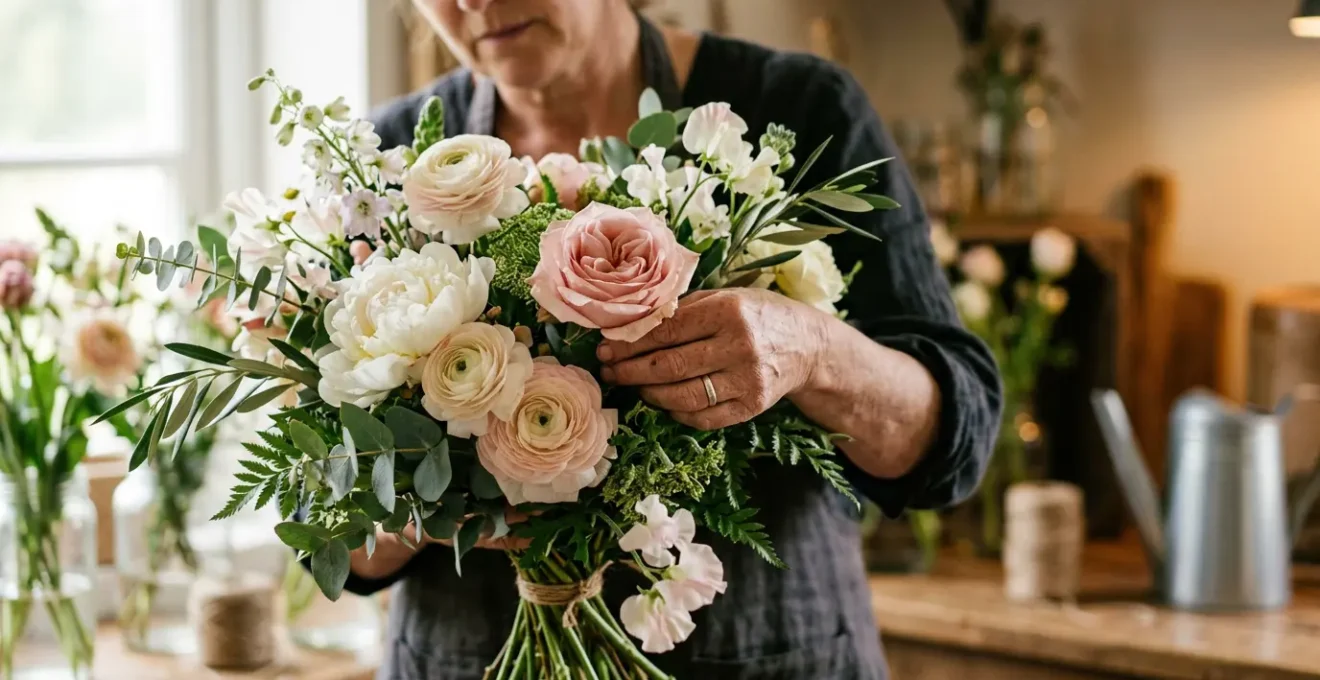
A bespoke bouquet’s true value lies in its ability to act as a narrative vessel, translating a specific emotion or shared memory into a tangible, multi-sensory story.
- Unlike pre-made options, every element in a custom arrangement—from color harmony to petal count—is a deliberate choice that contributes to a unique emotional message.
- The higher investment reflects superior artistry, advanced preservation techniques, and a design that evolves over time, making the emotional impact last longer.
Recommendation: Approach your florist not with a list of flowers, but with a story you want to tell. This shift in perspective is the key to unlocking a truly meaningful gift.
In a world saturated with fleeting digital messages, the desire for tangible, heartfelt connection has never been stronger. We often turn to flowers, nature’s most eloquent messengers, to convey what words cannot. Yet, reaching for a pre-made bouquet at the grocery store, while convenient, can feel like sending a generic greeting card when a handwritten letter is required. The colors are pleasant, the flowers are fresh, but the message is universal, not personal. It whispers appreciation, but rarely speaks to a shared history, a complex feeling, or a nuanced personality.
The common solution is to seek out a florist, but even then, the focus often remains on superficial choices like favorite colors or specific blooms. This approach misses the fundamental power of floral design. What if the secret to a profoundly moving arrangement wasn’t just about picking the right ingredients, but about commissioning a piece of art? What if the true potential of a bouquet lies in its capacity to become a narrative vessel—a carefully constructed story told through form, texture, and scent?
This is the core difference between a purchase and a personal commission. A bespoke bouquet transcends decoration to become a piece of storytelling. Its creation is an act of translation, converting the abstract language of memory and emotion into the physical grammar of flowers. The result is an object that doesn’t just say “I’m thinking of you,” but “I remember this specific thing about you, and I am celebrating it.” This article explores the mechanics behind that magic, from the initial brief to the final, breathtaking display.
To fully understand how this emotional translation works, this guide deconstructs the key elements that transform a simple collection of flowers into a powerful and personal statement. We will explore the art of briefing a florist, the hidden value behind the cost, and the nuanced rules of floral grammar that make a bespoke bouquet an unparalleled gesture of connection.
Summary: The Art of Floral Storytelling
- How to Brief a Florist for a Custom Bouquet Without Misunderstandings?
- Why Custom Arrangements Cost 30% More but Last Longer?
- How to Design a Masculine Bouquet That Avoiding Clichés?
- The Color Clash That Ruins 60% of DIY Custom Bouquets
- Tall or Wide Vase: Which Best Supports a Heavy Bespoke Arrangement?
- Why Are Peonies the Ultimate Symbol for Prosperity and Success?
- Why Does High Petal Count Matter for the Opening of the Rose?
- How to Navigate the Social Rules of Floral Gifting in Professional Settings?
How to Brief a Florist for a Custom Bouquet Without Misunderstandings?
The journey to a deeply personal bouquet begins not with flowers, but with words. A successful brief is the bridge between your intention and the florist’s artistry. The common mistake is to provide a simple list of flowers and colors, which is like giving a novelist a list of words instead of a plot. To create a true narrative vessel, you must provide the story itself. This means shifting from prescriptive instructions to descriptive inspiration. Instead of saying “I want pink roses and white lilies,” try describing the feeling you want to evoke: “a sense of calm after a storm” or “the quiet excitement of a new beginning.”
A skilled florist is an interpreter. Give them the emotional raw material, and they will find the corresponding floral language. Share three to five keywords that describe the recipient’s personality, a specific shared memory, or a meaningful quote. This provides concrete narrative anchors for the design. Equally important is communicating what to avoid. Disliked colors, flowers with negative personal connotations, or cliché styles are not limitations; they are productive creative constraints that help the florist focus the design and ensure the final piece feels authentic and considered.
Finally, transparency about budget is not a crude necessity but a vital part of the creative dialogue. An upfront budget discussion allows the florist to make strategic choices, perhaps suggesting a spectacular but less-known bloom over a costly, out-of-season one, ensuring the final arrangement delivers the maximum emotional impact without financial surprises. It is the foundation of trust upon which a beautiful, co-created story can be built.
Your Action Plan: How to Communicate Your Floral Vision Effectively
- Create Visual Mood Boards: Organize images by category (e.g., bouquets, centerpieces) instead of a single board to clarify your vision and simplify communication.
- Use Emotion-Based Language: Describe feelings like ‘calm after a storm’ or ‘quiet excitement’ rather than just listing specific flower types.
- Share Narrative Material: Provide 3-5 keywords, a specific shared memory, or a meaningful quote to give the florist concrete storytelling elements to work with.
- Communicate What to Avoid: Clearly state disliked colors, flowers with negative associations, or cliché styles to establish productive creative boundaries.
- Discuss the Budget Upfront: Be transparent about your budget to guide design choices, manage expectations, and prevent misalignments.
Why Custom Arrangements Cost 30% More but Last Longer?
The price tag of a bespoke bouquet can initially seem high compared to off-the-shelf options. However, this difference reflects a fundamental shift from a commodity to a service—the service of artistry, engineering, and storytelling. You are not just paying for flowers; you are investing in the expertise and time required to construct a durable, evolving piece of art. The higher cost is directly tied to unseen techniques that dramatically extend the life and beauty of the arrangement.
Professional florists employ advanced methods that are absent in mass-produced bouquets. As detailed in an analysis of the complex calculations behind floral design services, this includes creating internal water sources for delicate stems, specific wiring for directional placement, and hand-balancing the entire structure for stability. This meticulous labor, which can account for a significant portion of the total cost, ensures the arrangement maintains its intended shape and, more importantly, its hydration far longer than a simple bunch of flowers in a vase.
One of the most crucial techniques is “bloom staging.” A master florist will intentionally select flowers at different stages of their life cycle—from tight buds to partially open blooms. This is a deliberate narrative choice that turns the bouquet into a slow-motion performance. Instead of every flower peaking and fading at once, the arrangement evolves over days, with new buds opening as others reach their full glory. This extends the visual enjoyment and symbolizes growth and unfolding beauty, a story that lasts much longer than a single moment.
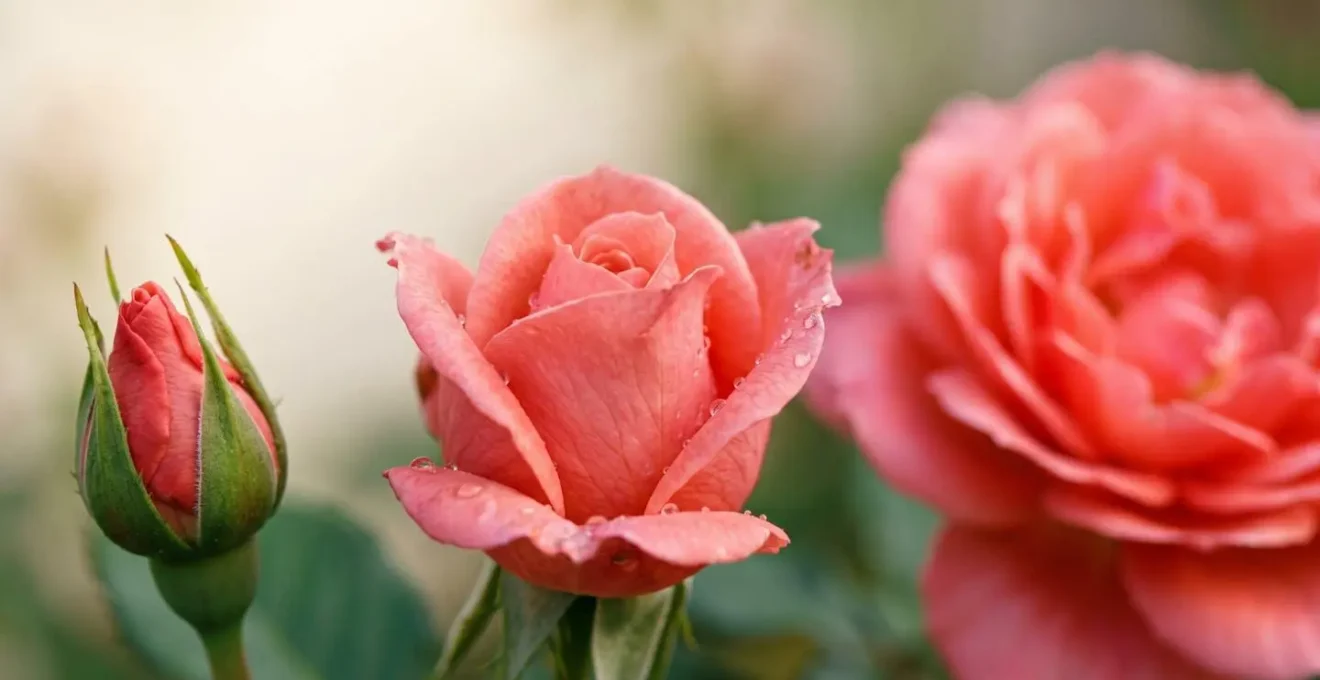
As this image demonstrates, this progression is not accidental but a core part of the bespoke value. The initial investment secures not just a beautiful object for a day, but a dynamic floral experience that continues to tell its story over time. The longevity of a custom bouquet is a direct result of the artistry and engineering hidden within its structure, making it a far more enduring emotional gesture.
How to Design a Masculine Bouquet That Avoiding Clichés?
The concept of a “masculine” bouquet is often fraught with clichés—stiff arrangements, predictable colors, and an over-reliance on “strong” architectural elements. Crafting a truly sophisticated bouquet for a man requires moving beyond these stereotypes and applying the same principles of personal storytelling used for any other arrangement. The goal is not to create something generically “masculine,” but to design something that reflects the specific individual’s personality.
Instead of defaulting to tired tropes, focus on texture and structure. Combine soft, lush blooms with more defined elements like thistle, eryngium (sea holly), or dramatic foliage like eucalyptus or monster-a leaves. This interplay of textures creates visual interest and depth that feels sophisticated and modern. The structure should feel confident and grounded, perhaps using a lower, wider vase or an asymmetrical design that has a clear sense of direction and movement, rather than a perfectly round, soft dome.
Color is another area where nuance is key. While bold and deep shades like burgundy, indigo, and forest green can be effective, they are not the only options. A palette of muted, earthy tones—slate grey, terracotta, and mossy green—can feel just as powerful and far more unique. Consider a monochromatic arrangement that plays with different shades and tints of a single color, such as various blues, to create a look that is both cohesive and complex. Ultimately, the most successful “masculine” bouquet is one that forgets the label and focuses on telling an authentic story about the person receiving it, using the full, un-gendered grammar of floral design.
The Color Clash That Ruins 60% of DIY Custom Bouquets
Color is the most immediate language of a bouquet, but it is also the easiest to get wrong. Many DIY arrangements, even when using beautiful flowers, can feel subtly “off” or visually jarring. The culprit is often not the choice of hues themselves, but a failure to understand a critical, yet often overlooked, aspect of color harmony: color temperature. Every color has an undertone that makes it lean either “cool” (with blue undertones) or “warm” (with red/yellow undertones).
The most common source of visual disharmony occurs when colors of the same family but different temperatures are placed side-by-side. For example, pairing a cool, blue-based fuchsia with a warm, orange-based coral creates a subtle but powerful visual clash. As floral educators explain, the viewer may not be able to articulate why it feels wrong, but the arrangement lacks a sense of peace and cohesion. This is the hidden trap that can undermine an otherwise thoughtful selection of blooms.
Professional florists master this by identifying and harmonizing these undertones. According to an in-depth guide on the use of the flower color wheel, the solution often involves using a “bridge” color. This is a neutral or transitional hue, such as a creamy white, a soft green, or a muted silver, that shares undertones with both the cool and warm colors in the palette. This bridge element creates a smooth visual transition, allowing disparate temperatures to coexist harmoniously within the same arrangement. It’s a sophisticated technique that elevates a bouquet from a simple collection of colors to a unified, painterly composition.
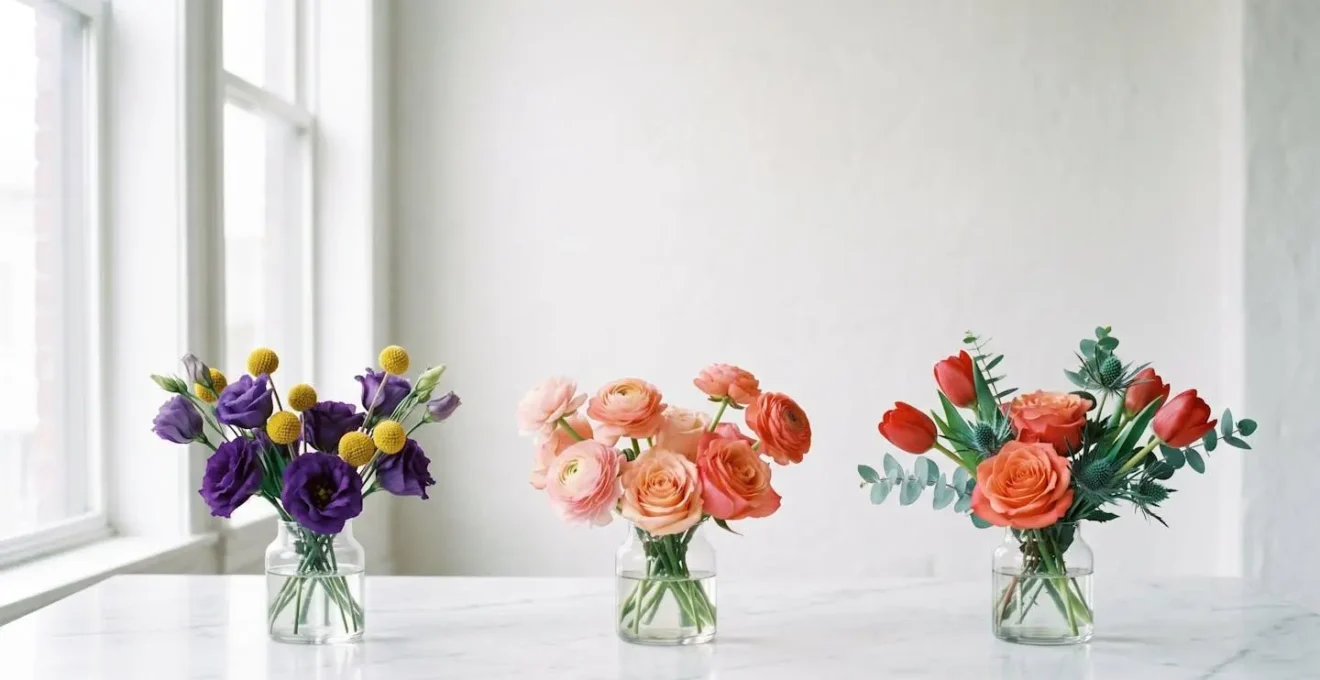
Understanding and respecting color temperature is a hallmark of expert design. It is the invisible architecture that supports the entire emotional narrative of the bouquet. By ensuring all colors “speak” the same thermal language, or by using a masterful bridge to translate between them, a florist can create a visual experience that feels intentional, serene, and deeply resonant.
Tall or Wide Vase: Which Best Supports a Heavy Bespoke Arrangement?
The vase is not a mere container; it is the stage upon which the floral story unfolds. The right choice is essential for both the aesthetic presentation and the physical longevity of a heavy, complex bespoke arrangement. While a tall, slender vase can be elegant, it is often the wrong choice for a substantial bouquet. The high center of gravity and narrow base create instability, making the arrangement prone to tipping. More importantly, the tight neck can crush stems, restricting water uptake and shortening the life of the blooms.
For most heavy bespoke arrangements, a wide, low vase is superior. Its primary advantage is stability. A wider base provides a solid foundation, ensuring the weight of the blooms is securely supported. This is crucial for designs that are lush, asymmetrical, or feature long, dramatic stems. The wider opening also gives the stems ample room, preventing crushing and allowing them to drink freely. This functional aspect is paramount for the health and longevity of the bouquet.
From an aesthetic perspective, a wider vase offers more creative freedom. It allows the florist to create a more natural, garden-style arrangement where blooms can arc and drape gracefully over the edge. This creates a sense of movement and generosity that is difficult to achieve in a restrictive tall vase. The general rule of thumb for proportion is that the height of the arrangement should be about 1.5 to 2 times the height of the vase. For a wide vase, this creates a pleasing, grounded composition where the vessel and the flowers are in harmonious balance, ensuring the floral narrative is both beautifully presented and securely supported.
Why Are Peonies the Ultimate Symbol for Prosperity and Success?
Few flowers carry the symbolic weight of the peony. Its association with prosperity, honor, and success is not a modern marketing invention but a narrative deeply rooted in cultural history and the flower’s own physical characteristics. The peony is a living metaphor for wealth, making it a uniquely powerful choice for bouquets celebrating major life achievements, new ventures, or milestones.
The symbolism begins with its history. As detailed in a study on the cultural economics of floral symbolism, certain rare peony varieties in Imperial China were so revered that they could only be owned by the Emperor. This established them as direct symbols of exclusive power, status, and immense wealth—a connotation that persists in the collective consciousness today. To give a peony is to bestow a flower with a royal lineage, implicitly wishing the recipient a similar level of honor and success.
This historical narrative is powerfully reinforced by the peony’s dramatic blooming process. It begins as a tight, unassuming ball, representing a seed of an idea, an initial investment, or a period of hard work. Over several days, it slowly unfurls, layer by magnificent layer, into an opulent, multi-petaled bloom of breathtaking size. This visual transformation serves as a perfect metaphor for compounding returns and the gradual build-up of wealth. It visually represents the journey from humble beginnings to a triumphant and abundant outcome. The sheer generosity of its form—its size and extravagant petal count—creates an undeniable feeling of opulence and magnanimity, symbolizing not just having success, but having more than enough to share.
Why Does High Petal Count Matter for the Opening of the Rose?
At first glance, the number of petals on a rose might seem like a minor detail. However, for a floral storyteller, the petal count is a critical element of the floral grammar, transforming a simple bloom into a complex and captivating performance. High-petal-count roses, such as heritage or David Austin varieties, offer a level of depth and narrative potential that standard, lower-petal-count roses cannot match. This investment in complexity is why such blooms are central to high-end arrangements that aim to convey deep and nuanced emotions.
The primary function of a high petal count is aesthetic. It turns the opening of the rose into a form of slow-motion kinetic art. Each of the dozens, sometimes hundreds, of petals unfurls at a slightly different rate, creating a constantly shifting architecture of light and shadow. This captivating process mirrors the complexity of human emotion and the gradual unfolding of a story. A study of wedding floral trends notes that this quality represents emotional depth, with the countless layers symbolizing the recipient’s nuanced personality, making the flower itself a tribute. Given that the national average cost spent on wedding flowers in 2024 was $2,723, choosing blooms that offer this level of narrative depth is a significant part of the investment.
Beyond the visual, high petal count serves a crucial functional purpose: it creates a more powerful and efficient “scent engine.” The fragrance of a rose is produced by volatile organic compounds released from its petals. More petals mean a vastly increased surface area for the diffusion of these compounds. This results in a richer, more immersive, and longer-lasting fragrance experience. A high-petal-count garden rose doesn’t just have a scent; it creates an atmosphere. This multi-sensory experience—the visual performance of its opening and the depth of its fragrance—is what makes it an unparalleled vehicle for conveying profound affection and admiration.
Key Takeaways
- A bespoke bouquet is a “narrative vessel” that translates personal stories and emotions into a tangible, multi-sensory experience.
- The value of a custom arrangement lies in the unseen artistry, including color temperature harmony, bloom staging for longevity, and structural engineering.
- Effective communication with a florist involves sharing emotions and memories, not just flower preferences, to co-create a meaningful design.
How to Navigate the Social Rules of Floral Gifting in Professional Settings?
Gifting flowers in a professional environment is a delicate art. The goal is to express appreciation, congratulations, or sympathy without crossing into territory that feels overly personal or potentially romantic. The principles of bespoke floral storytelling are perfectly suited for this challenge, as they allow for a message that is both thoughtful and appropriate. The key is to shift the narrative from “I am thinking of you” to “We, as a team or company, appreciate you.”
To ensure appropriateness, several strategies are highly effective. First, always make the gift from a group. A bouquet from “The Marketing Team” or “Your colleagues at ABC Corp” immediately frames the gesture as a collective expression of esteem, neatly sidestepping any hint of personal favoritism. This simple change in attribution is the most important rule for maintaining professional boundaries.
Second, consider the type of arrangement. In a corporate context, long-lasting potted plants like orchids or ZZ plants are often a safer and more symbolic choice than cut flowers. They represent growth, endurance, and lasting success—all positive corporate values. They sidestep the ephemeral, emotional, and sometimes romantic connotations of a traditional bouquet. If cut flowers are preferred, the design itself should be carefully considered. Modern, architectural arrangements that prioritize structure and unique foliage over overtly pretty or soft blooms are ideal. Avoid single-flower-type bouquets, especially red roses, and opt for sophisticated, mixed arrangements with plenty of green elements.
By following these guidelines, you can leverage the power of flowers to strengthen professional relationships in a way that is respectful, memorable, and unequivocally appropriate. The bouquet becomes a story of collective appreciation and shared success, a powerful tool for corporate culture and morale.
The next time you wish to convey a message of genuine depth and personality, consider commissioning a floral story. By collaborating with a skilled florist, you can create a bespoke arrangement that serves as a lasting and powerful testament to your unique connection.